A543
Sculptures, Bronze
Seema Kohli
With Her Hair Running Wild
18 January – 15 March 2026
Gallerie Nvya, Triveni Kala Sangam, New Delhi
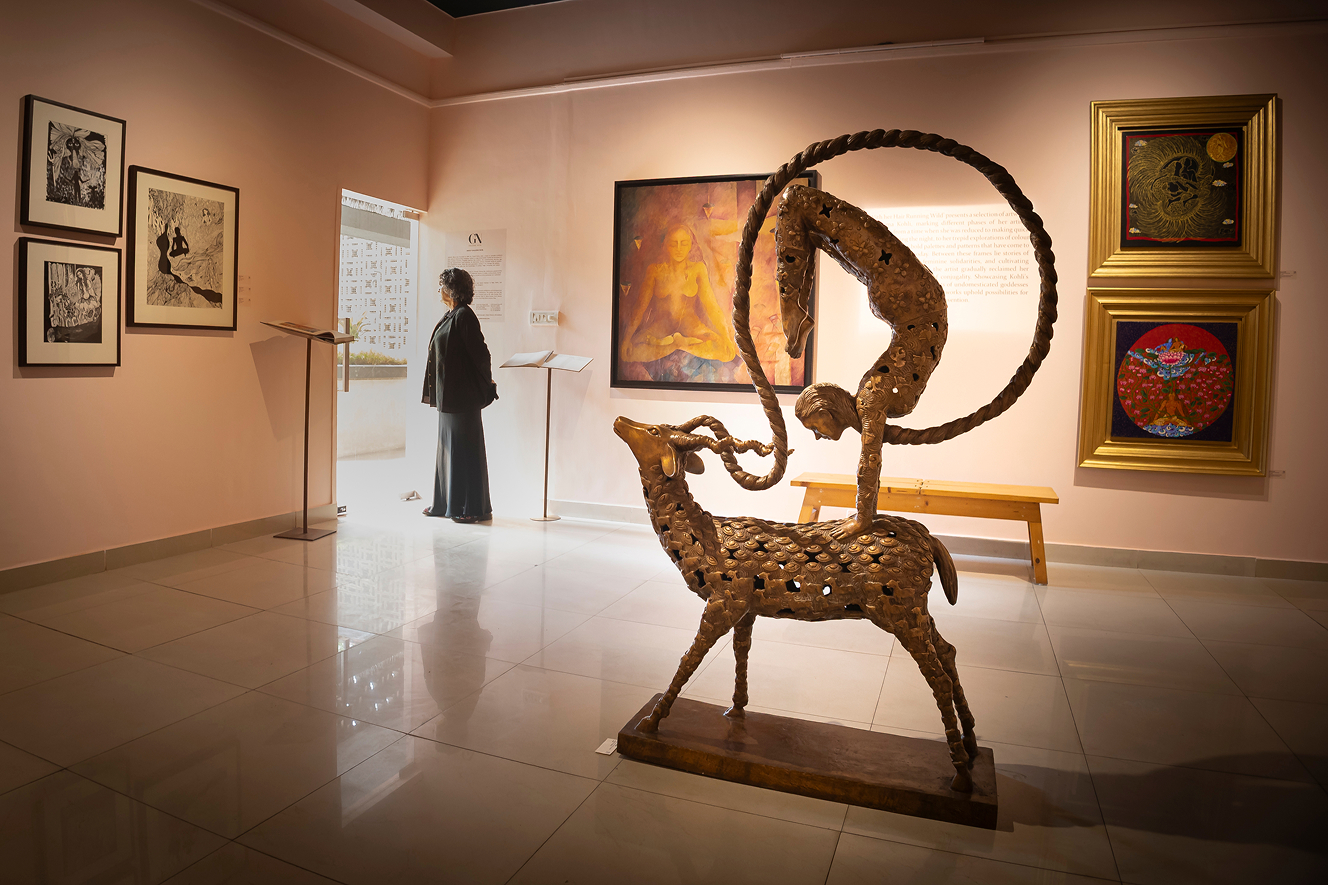
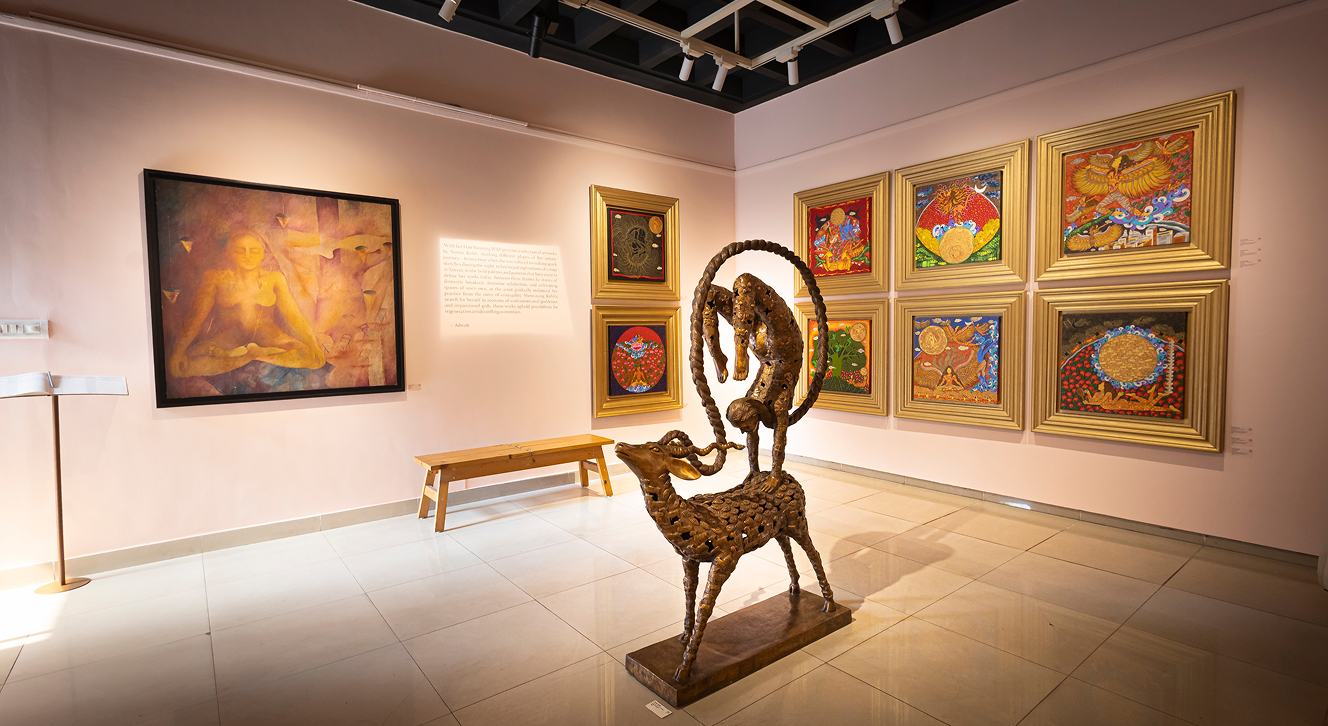
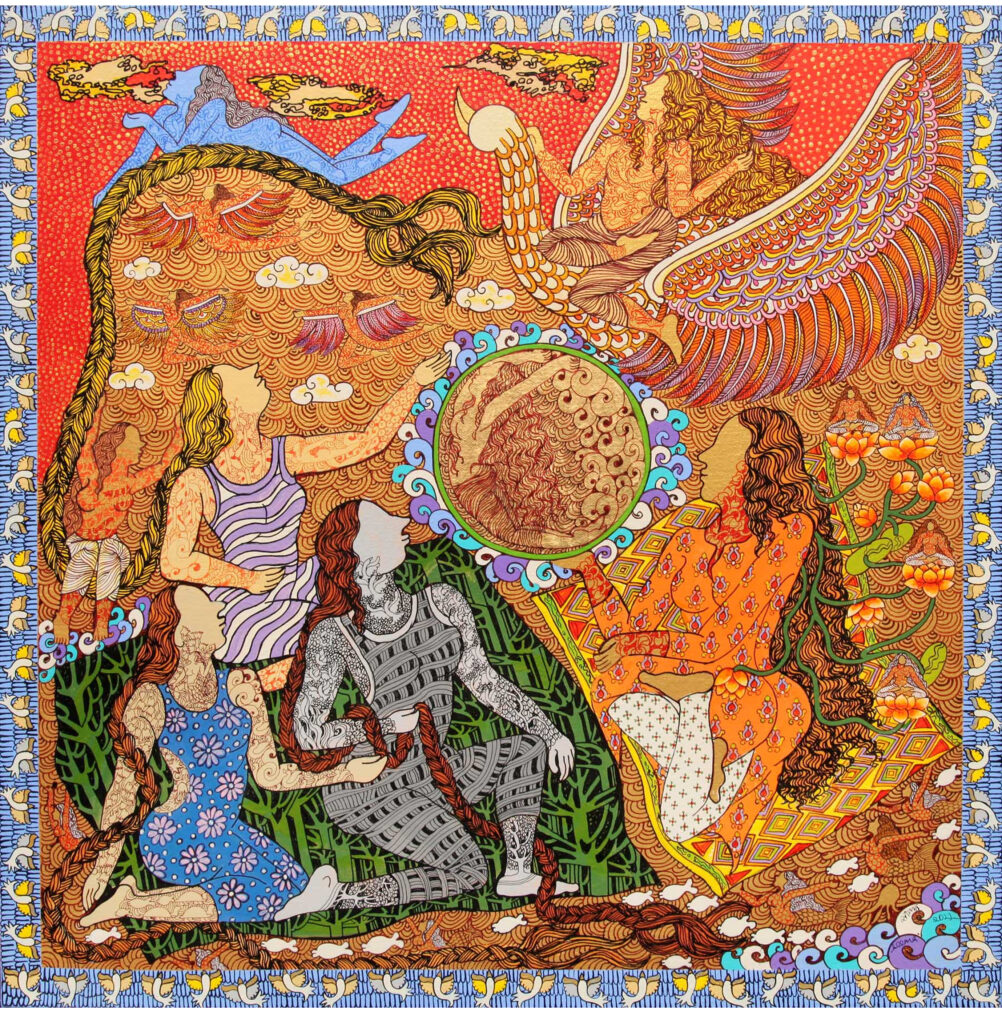
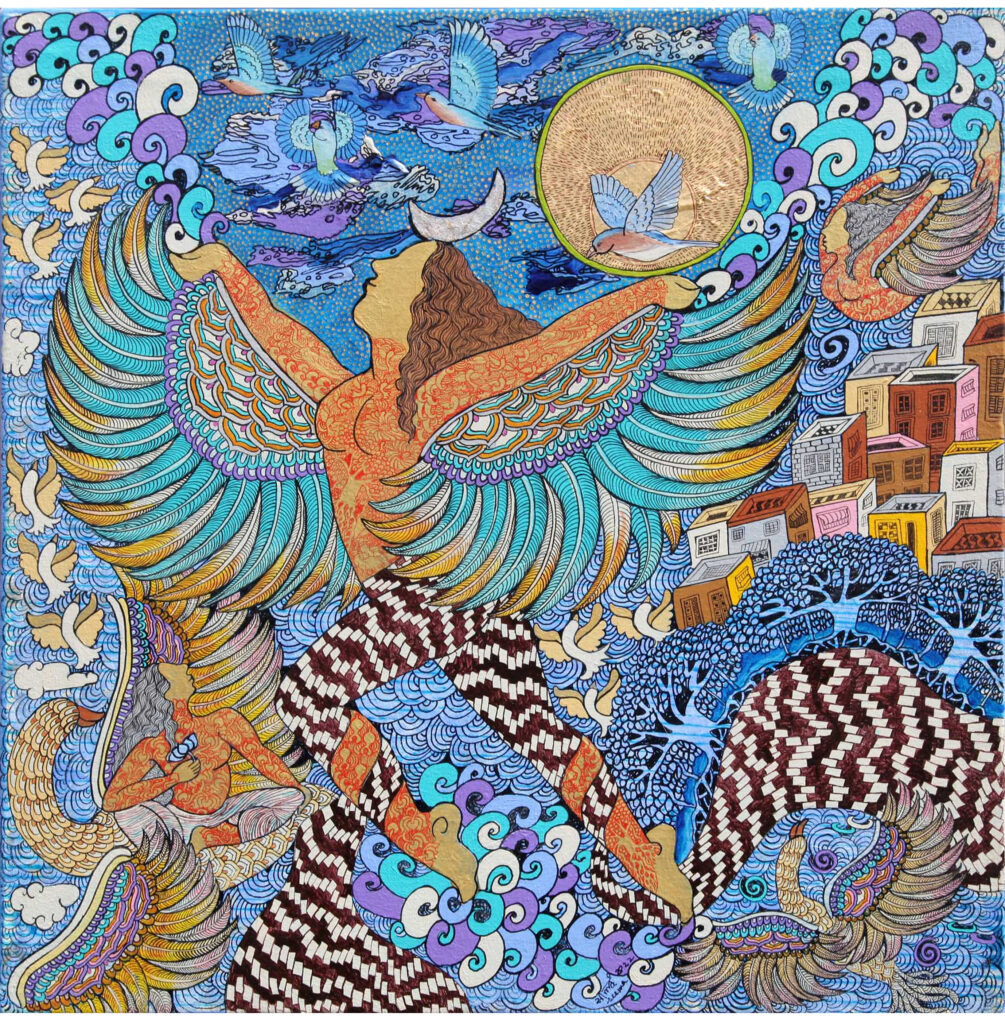
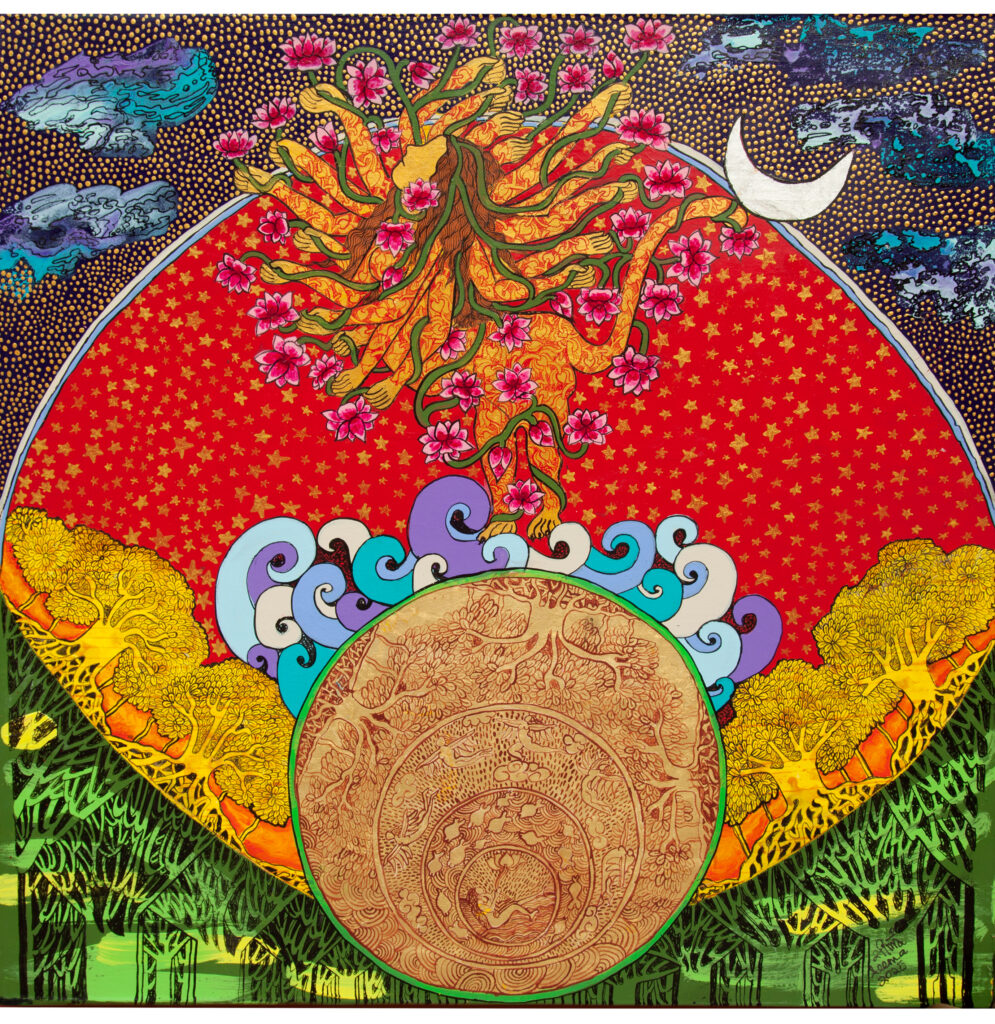
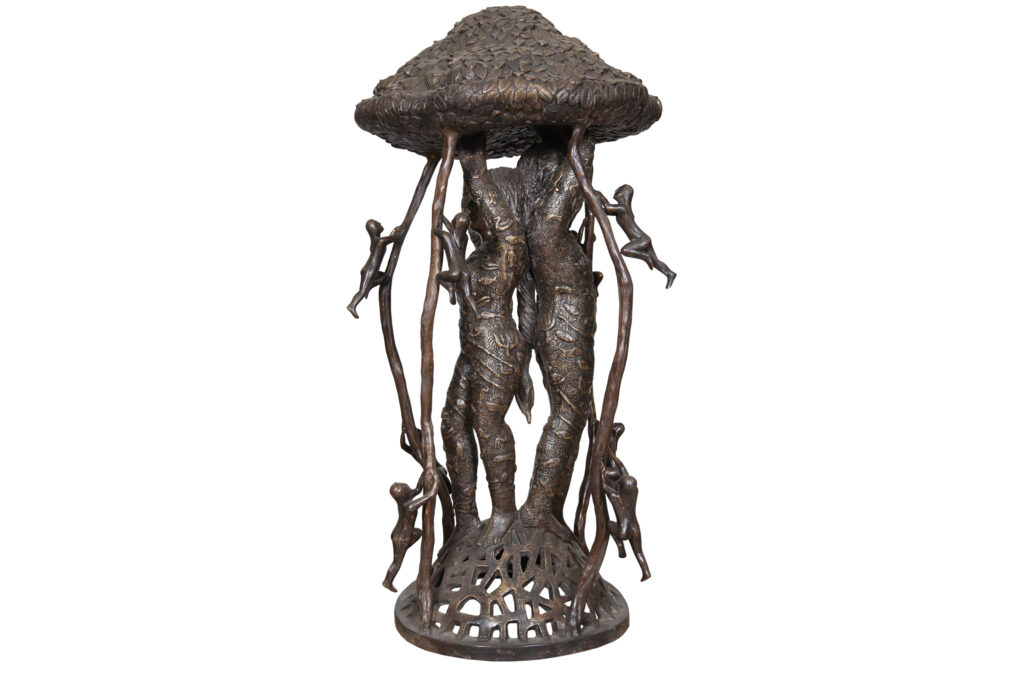
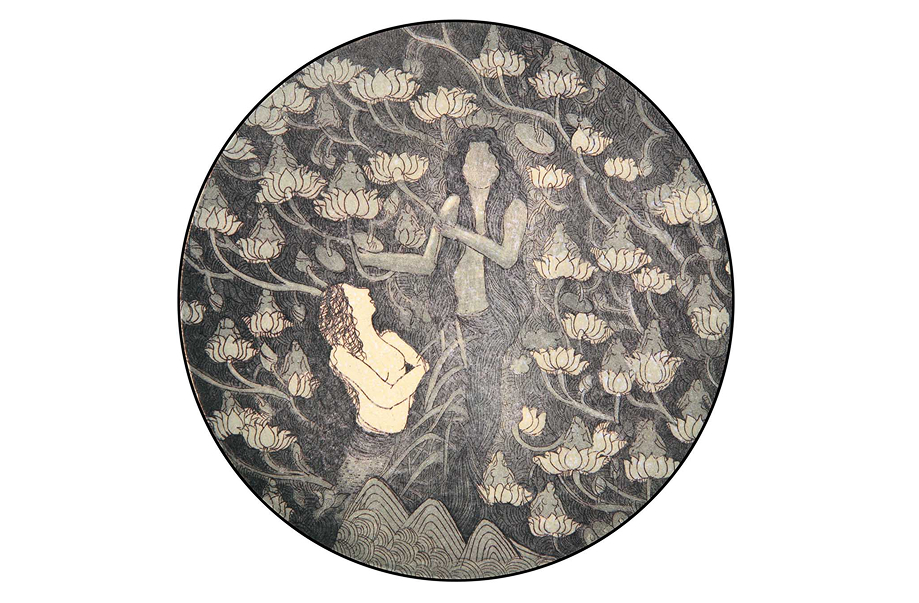
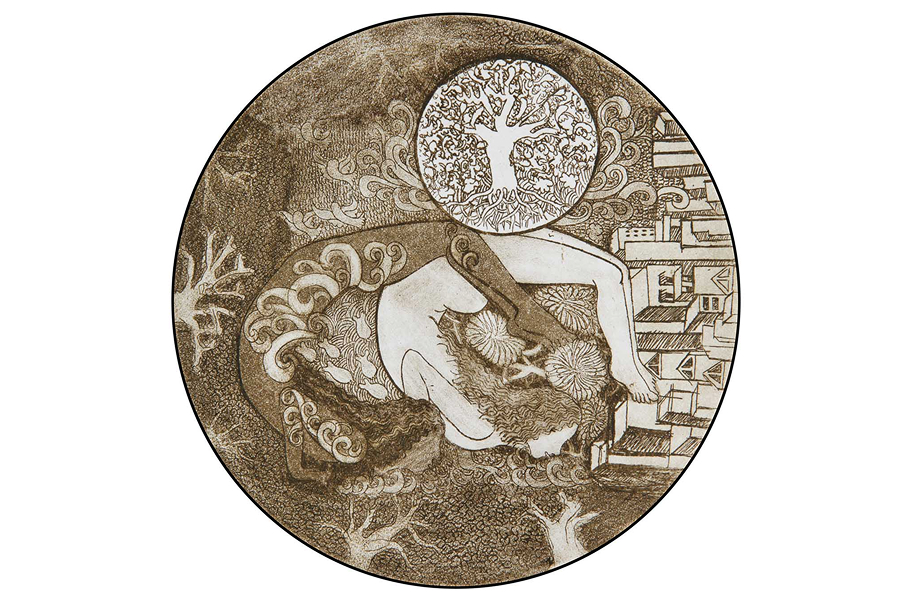
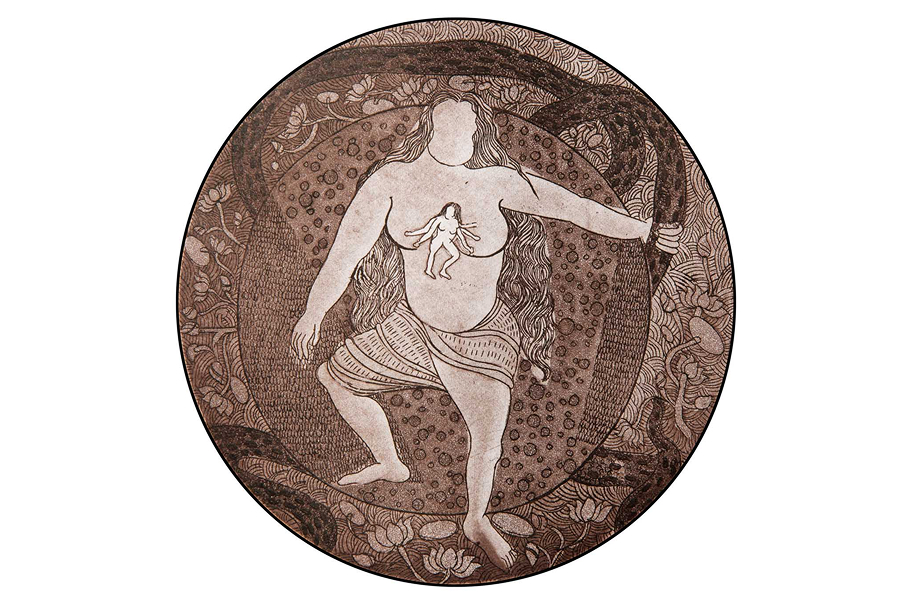
‘With Her Hair Running Wild’ presented a selection of artworks by Seema Kohli, marking different phases of her artistic journey—from a time when she was reduced to making quick sketches during the night to her trepid explorations of colour at Triveni, and the emergence of bold palettes and patterns that came to define her oeuvre. Behind these frames lay stories of domestic breakout, unexpected support and solidarity, and a gradual cobbling together of a space of one’s own from conjugal ruins. Showcasing Kohli’s search for herself in accounts of undomesticated goddesses, impassioned gods, and self-sacrificing saints, the exhibition revealed possibilities for regeneration amidst stifling convention.
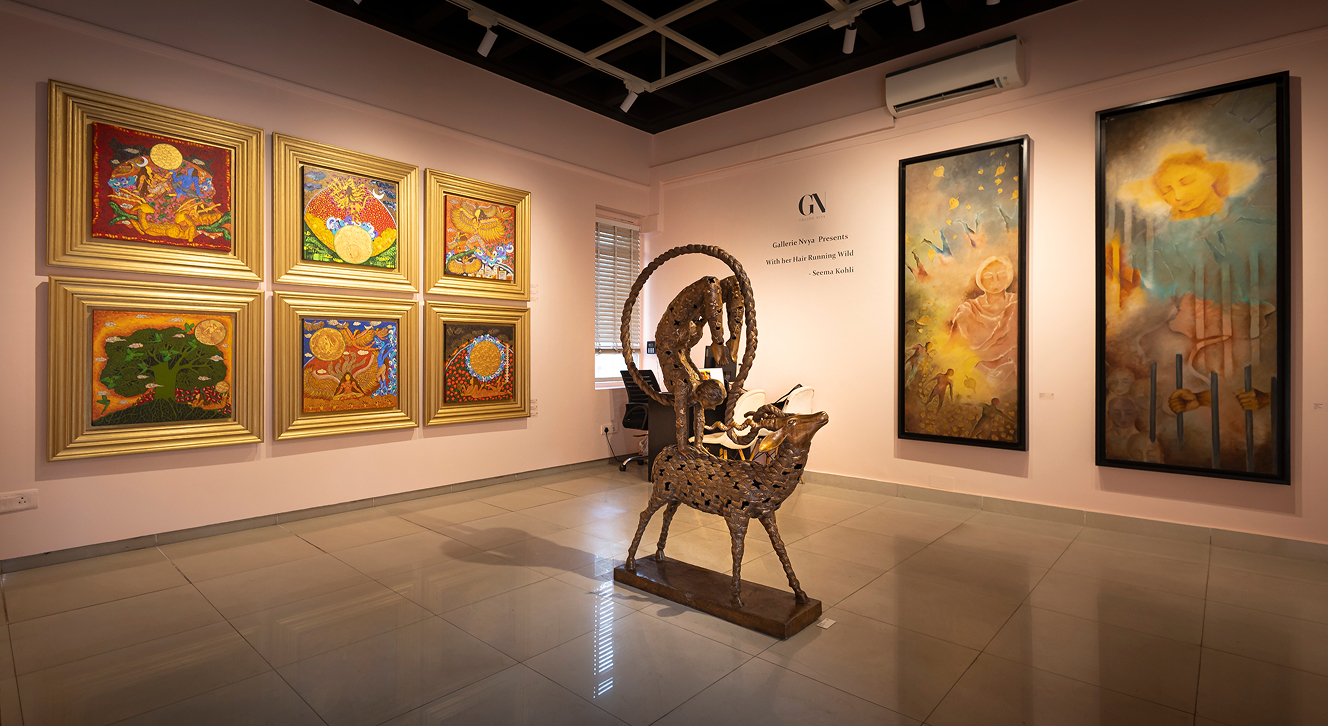
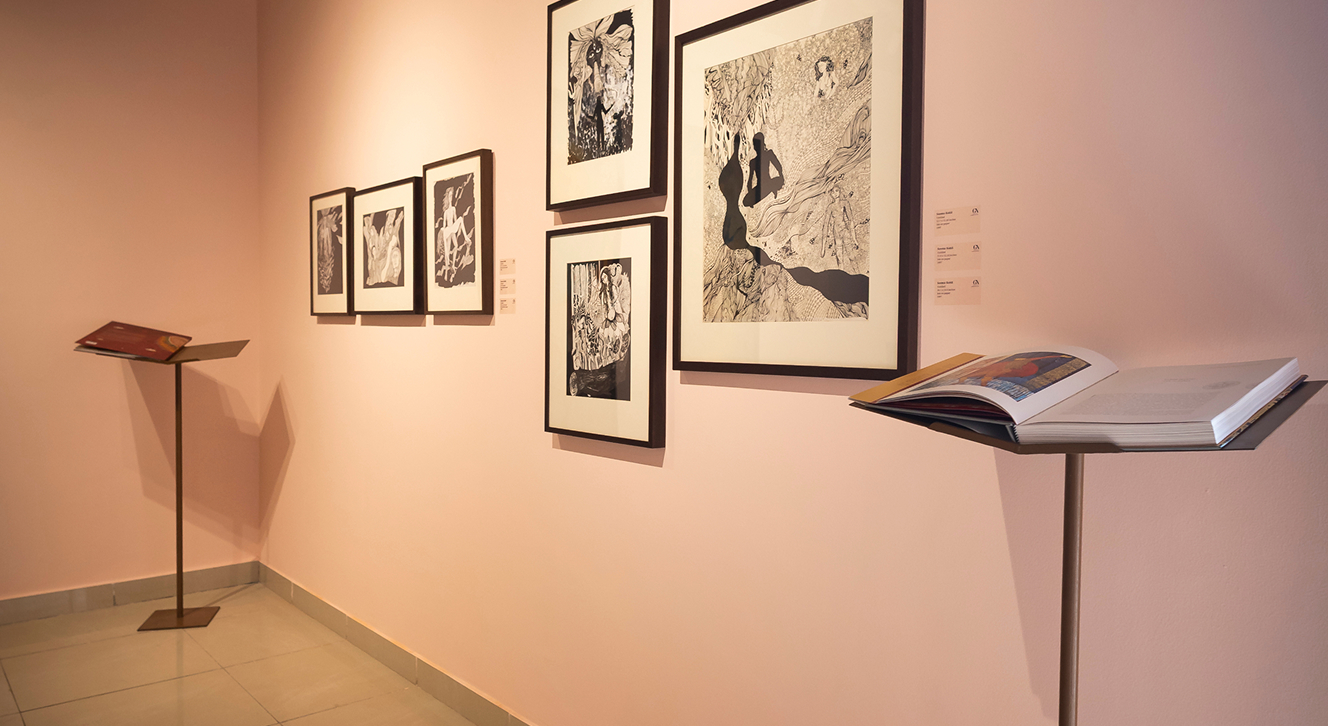
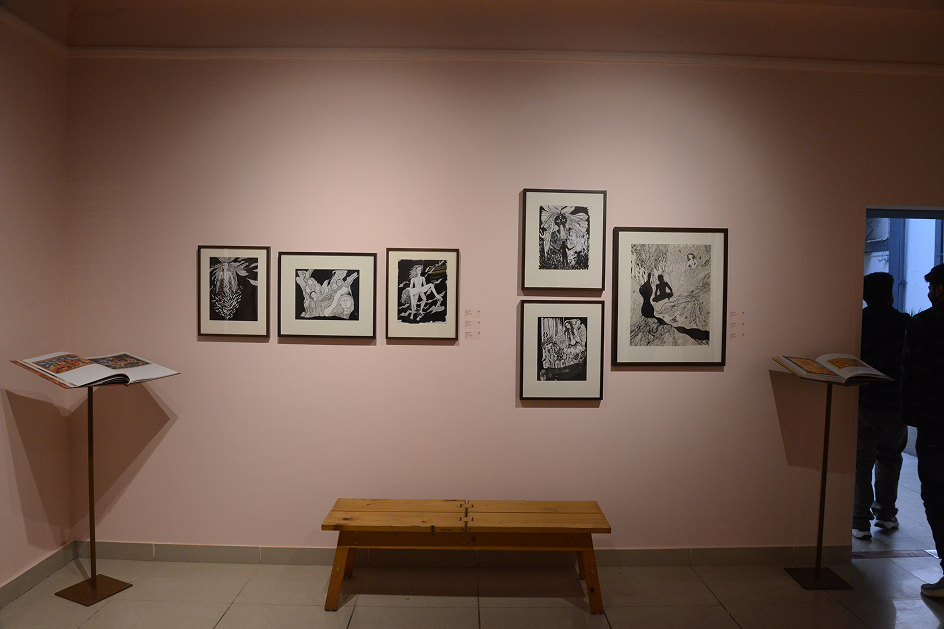
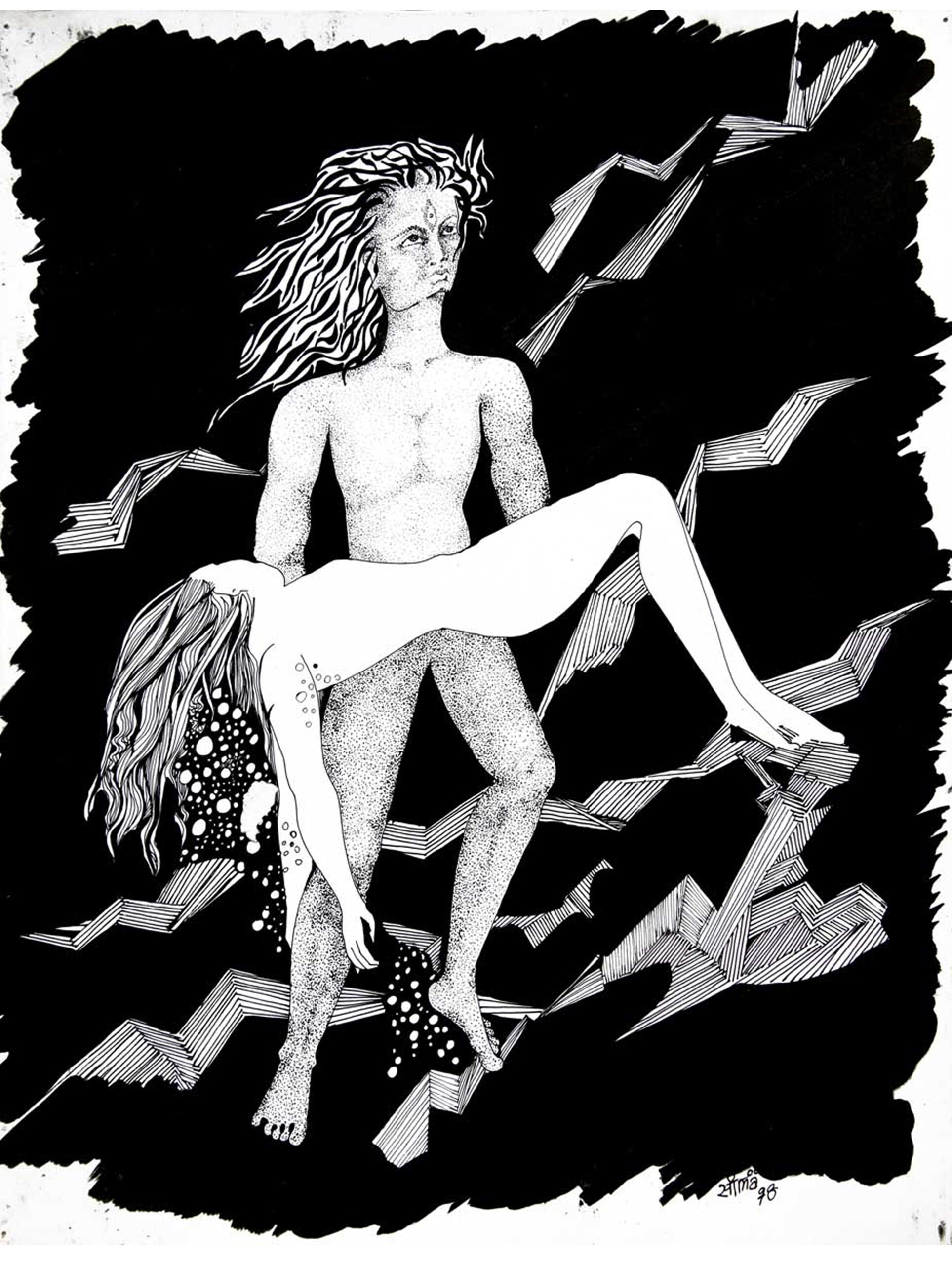
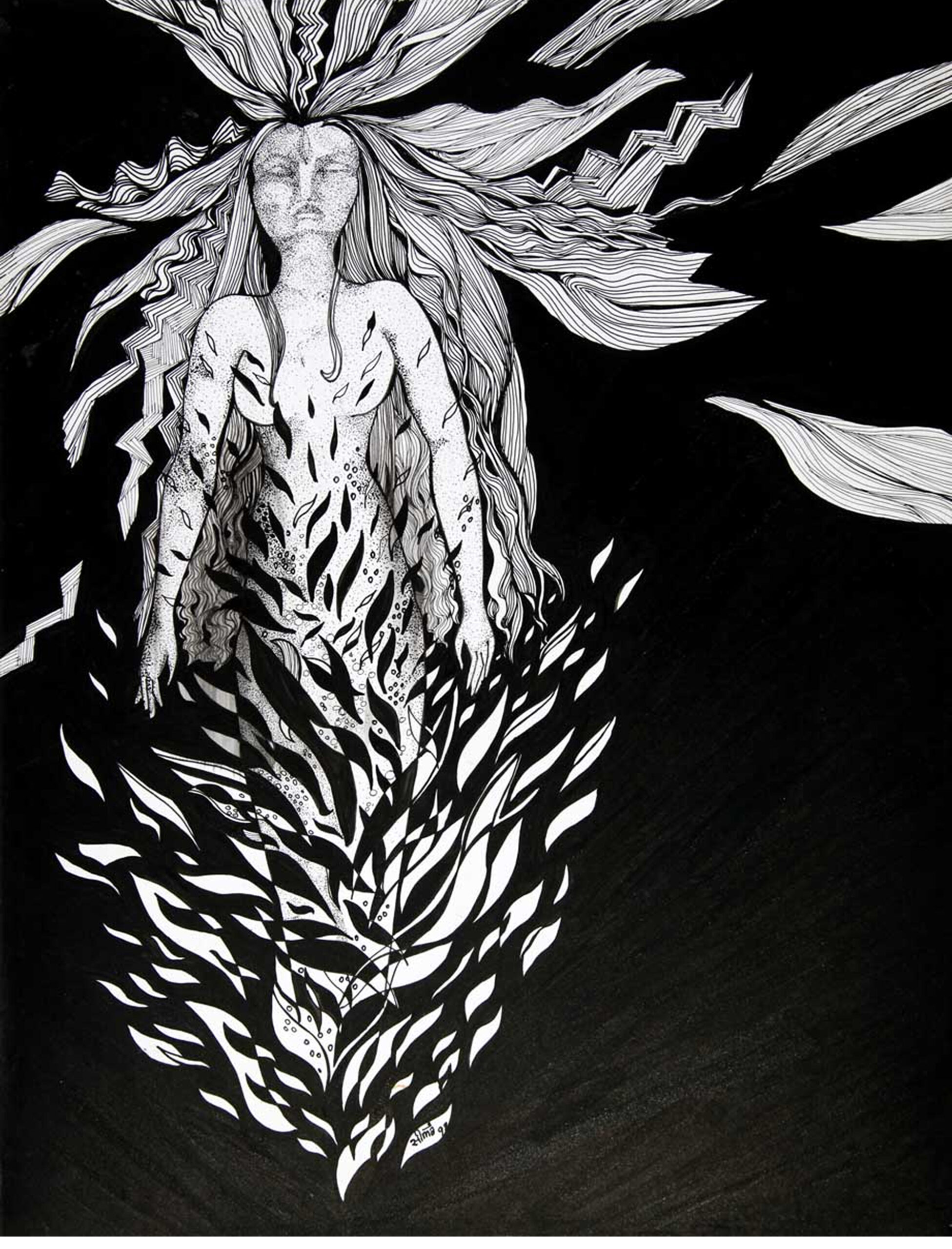
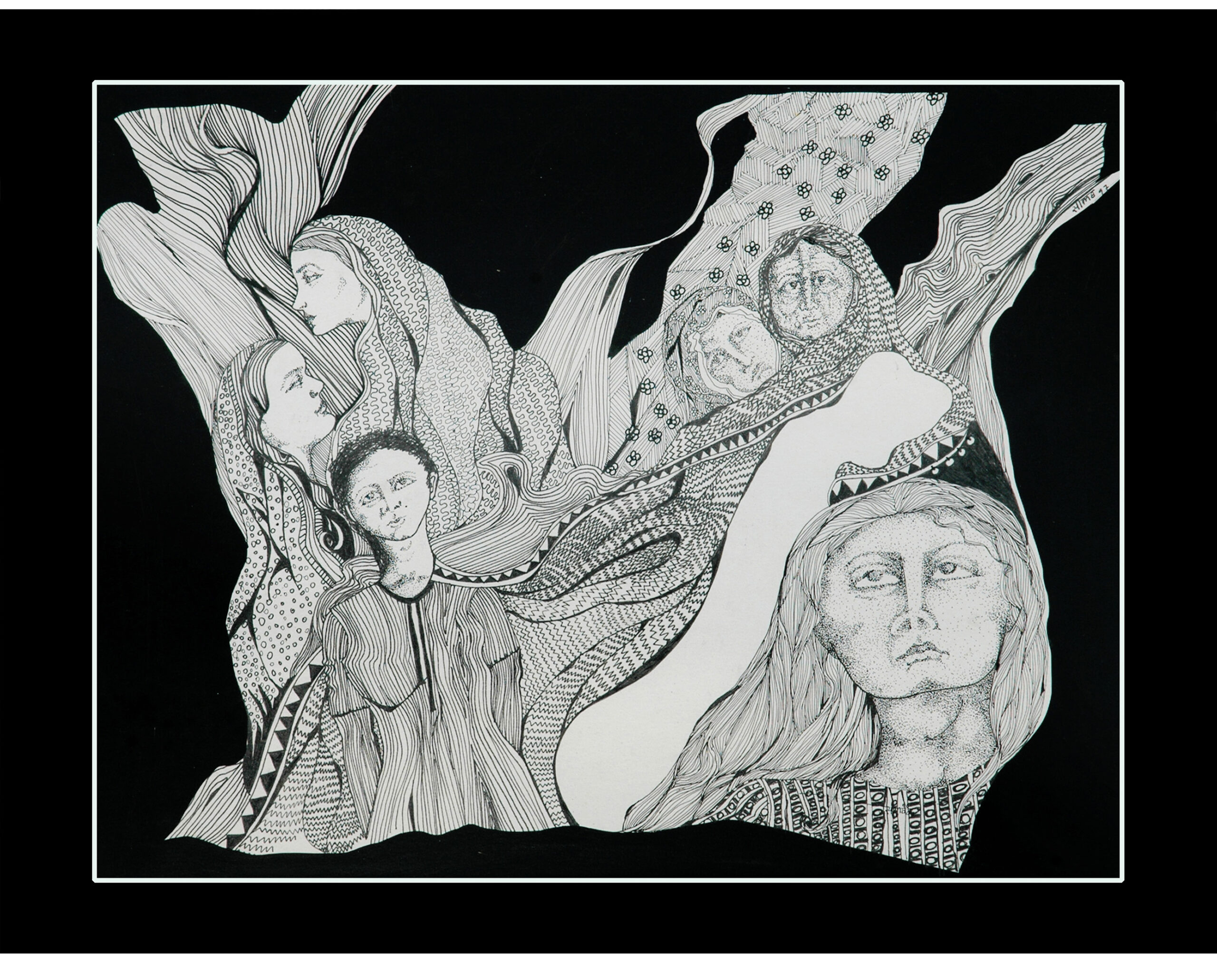
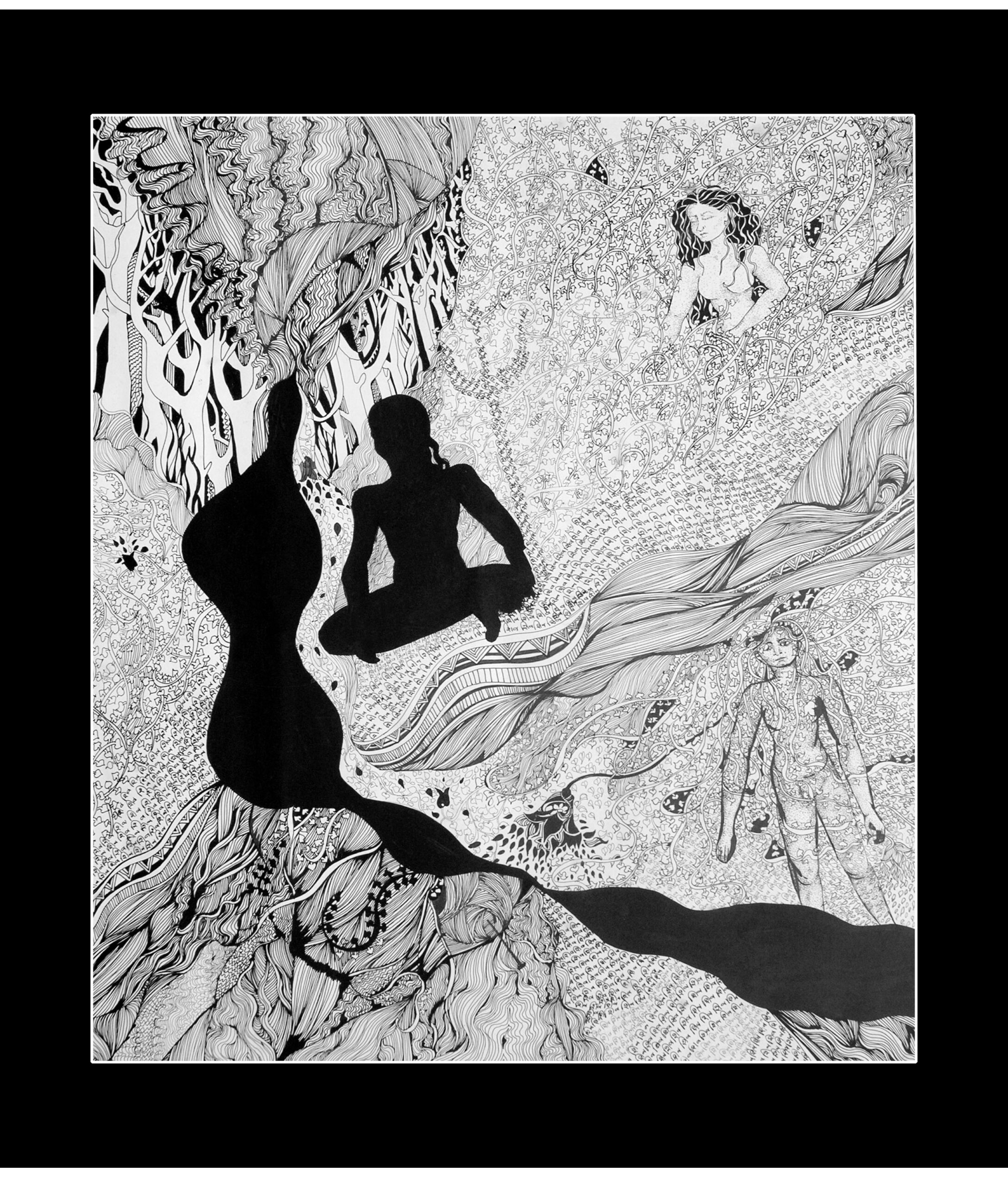
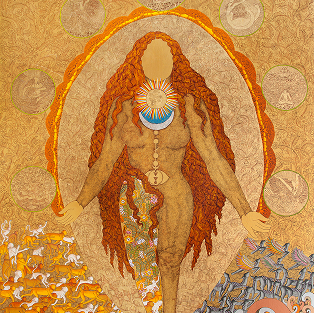
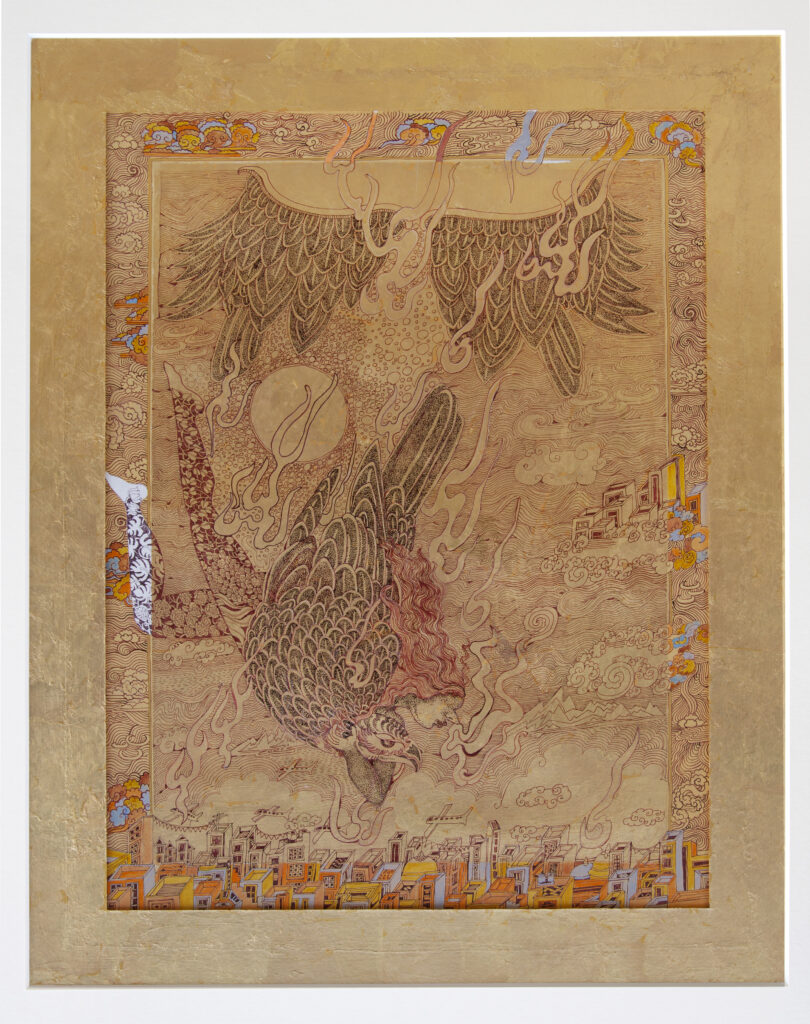
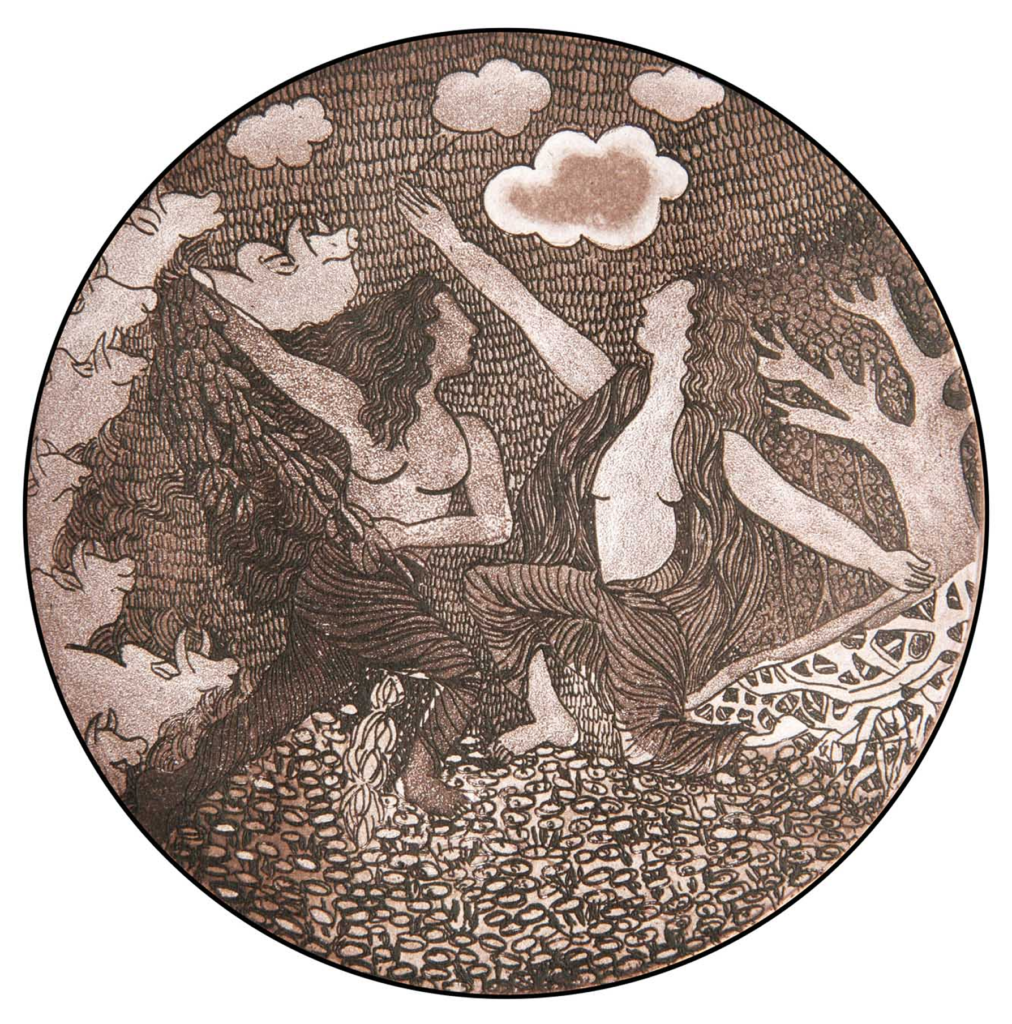
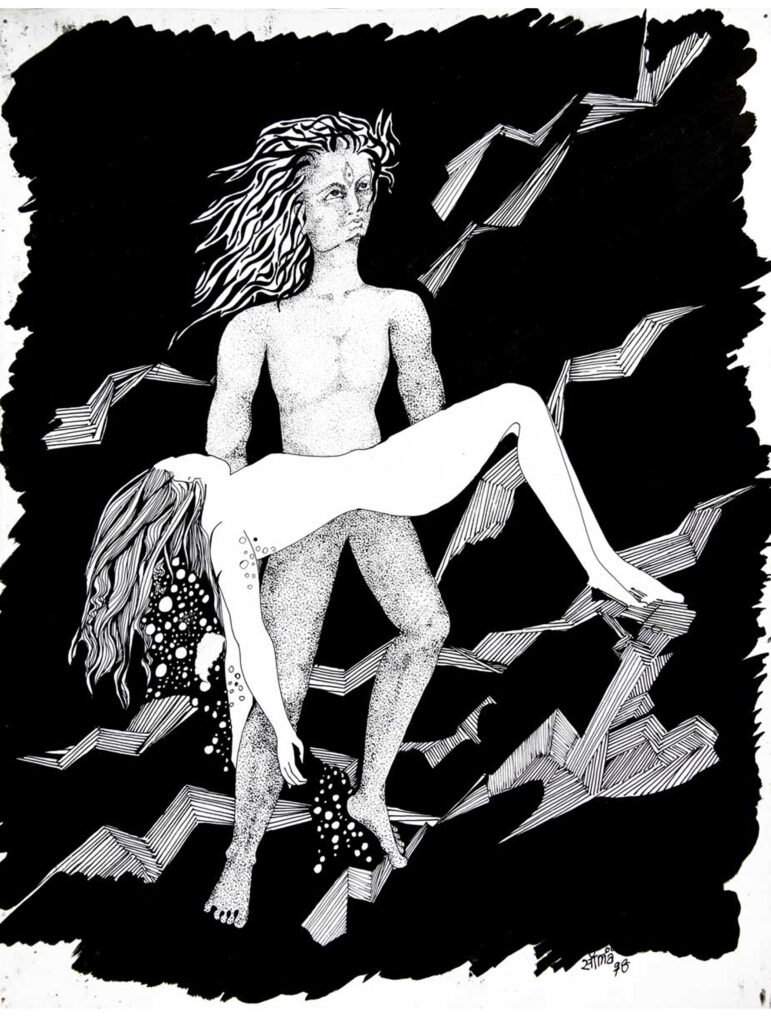
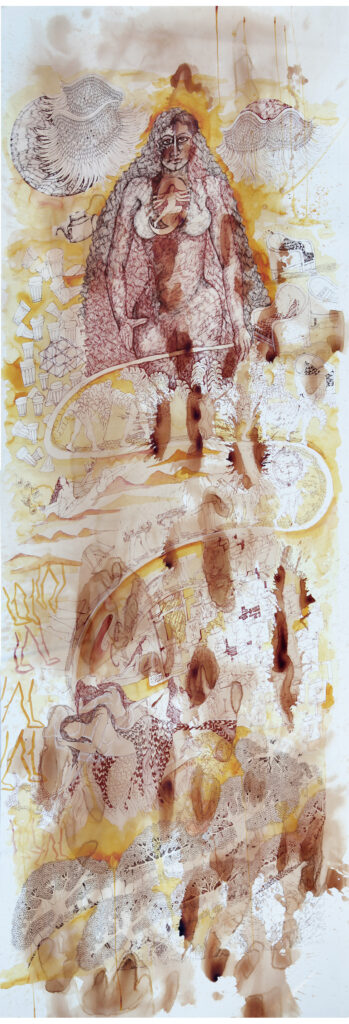
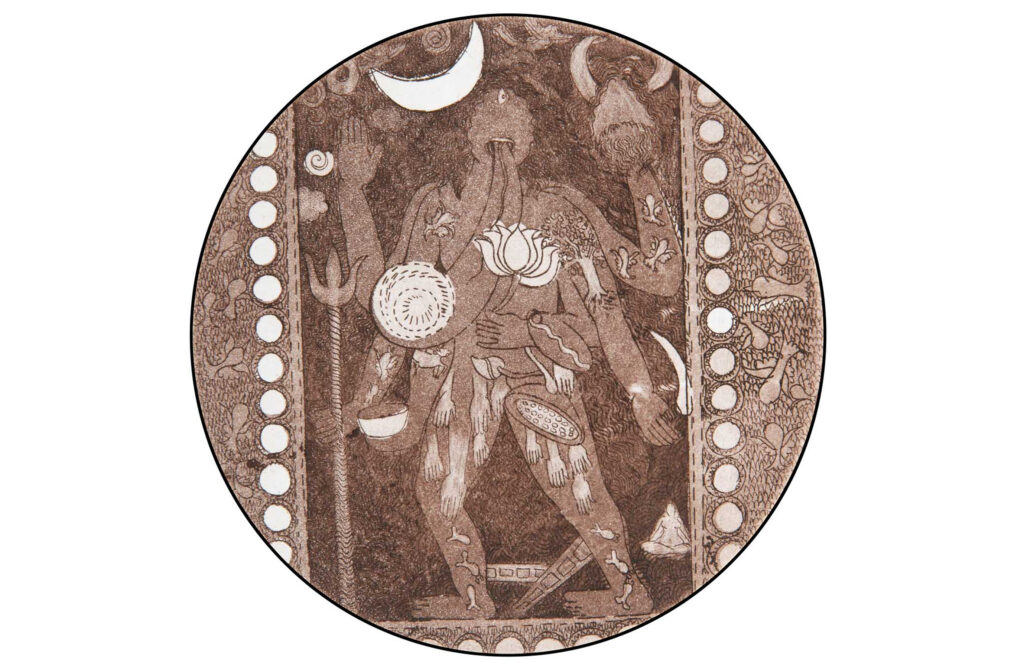
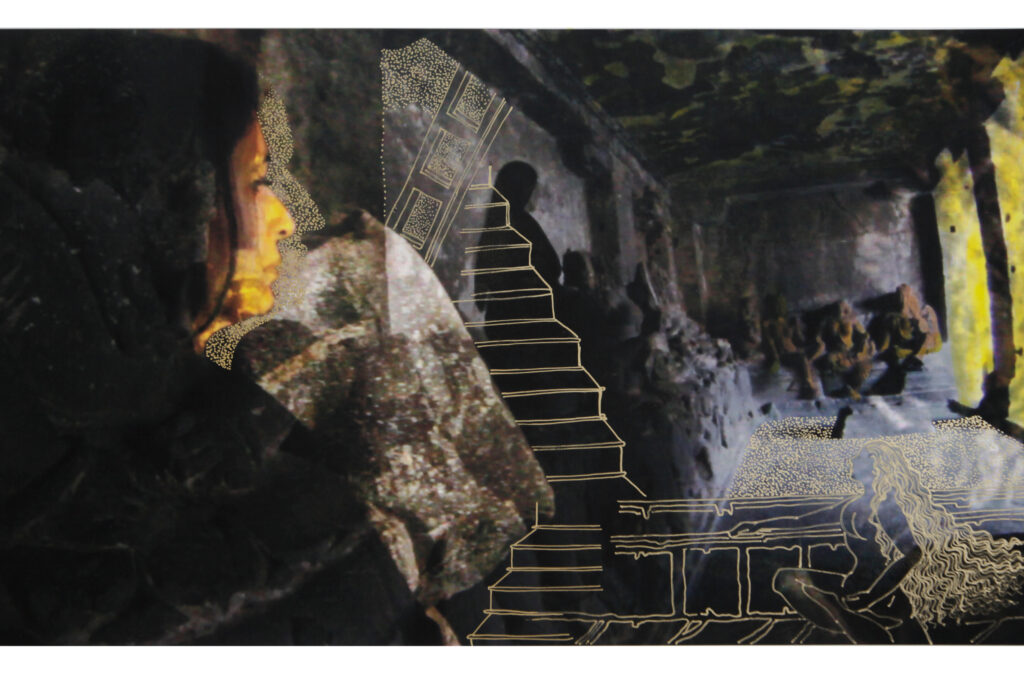
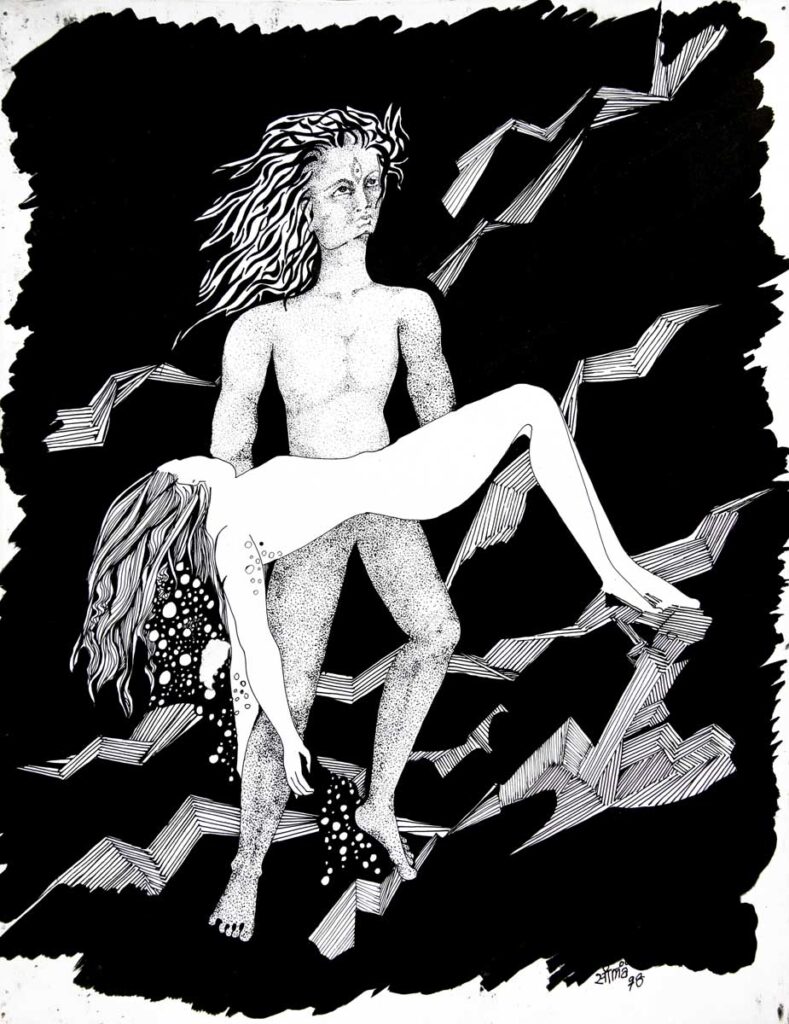
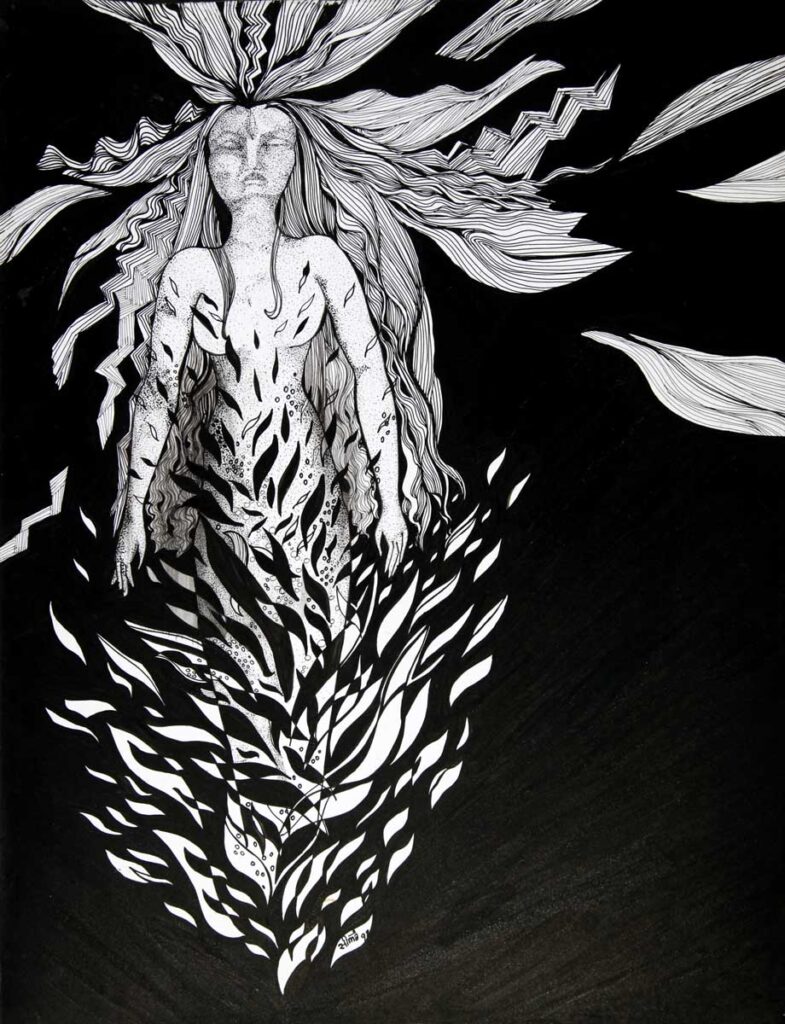
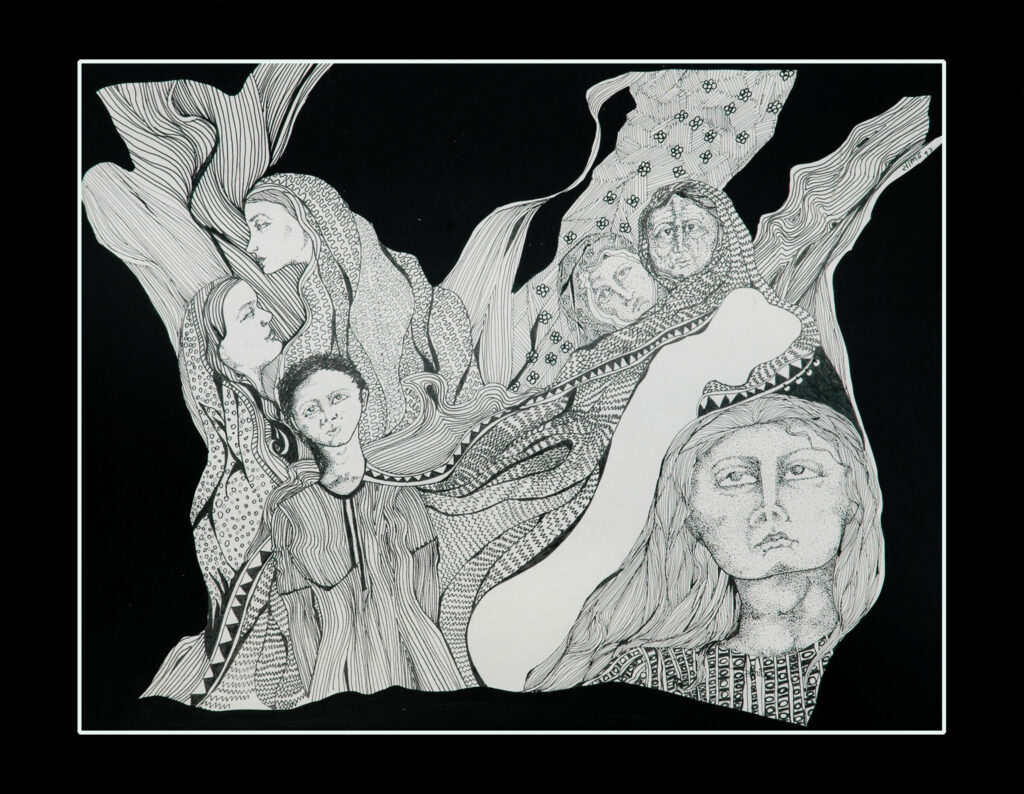
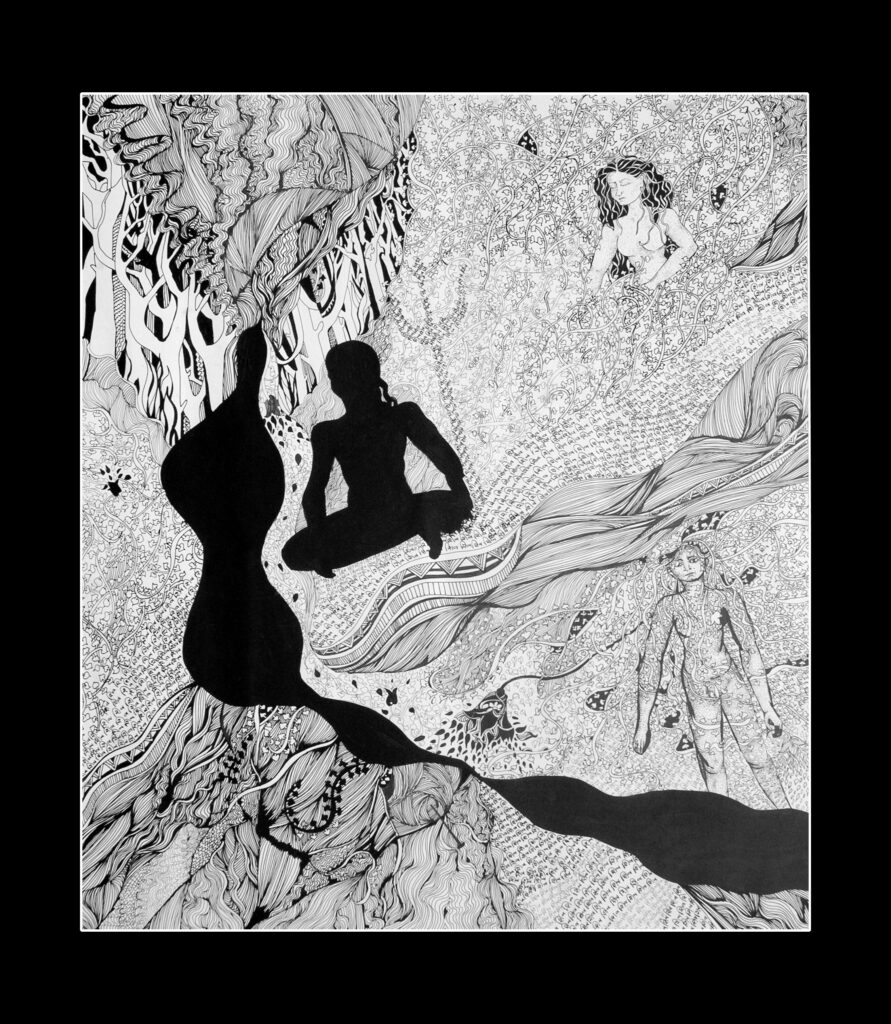
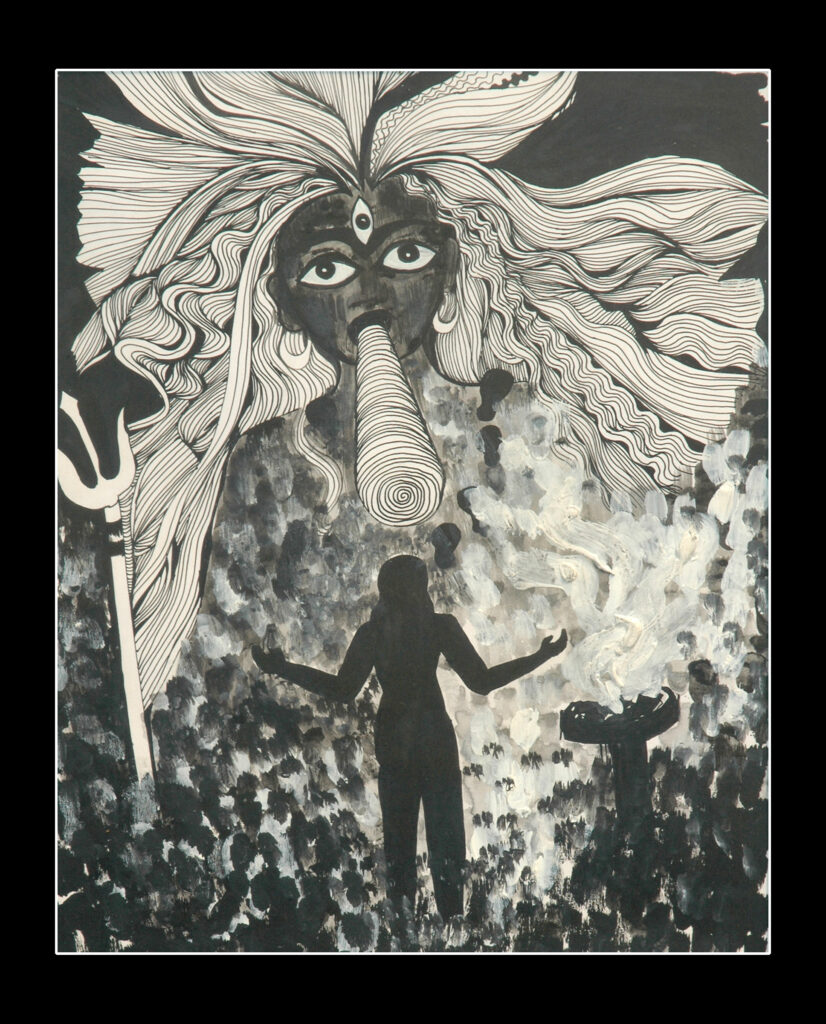
The oldest works in the exhibition were a series of pen and ink drawings from the 80s, excerpted from the artist’s sketchbook. These drawings were executed quickly under the cover of night, once the artist had dispensed with her chores for the day. Given that paints were a frowned-upon commodity in her hymeneal household, Kohli had turned to the material at hand—pen, ink, paper, and occasionally makeup—in a feverish bid to keep her skills honed. Labouring under these creative and societal constraints, the artist found herself turning towards accounts of recalcitrant and unrestrained femininity in mythology, folklore, and day-to-day life, epitomised by the figure of Kali roaming the shamshan. The goddess’ transfixing gaze, abject appearance, and lolling tongue offered a sharp contrast to the demure devinities, bestowing smiles and benedictions from the walls of Hindu homes. In her truculent dishabille, Kali offered a model of liberation—a welcome break from gruelling social conventions, regimenting women’s bodies, appearance, and movement; her streaming halo of hair, like Medusa’s snakes, pointed to myriad possibilities for bodily rewilding.
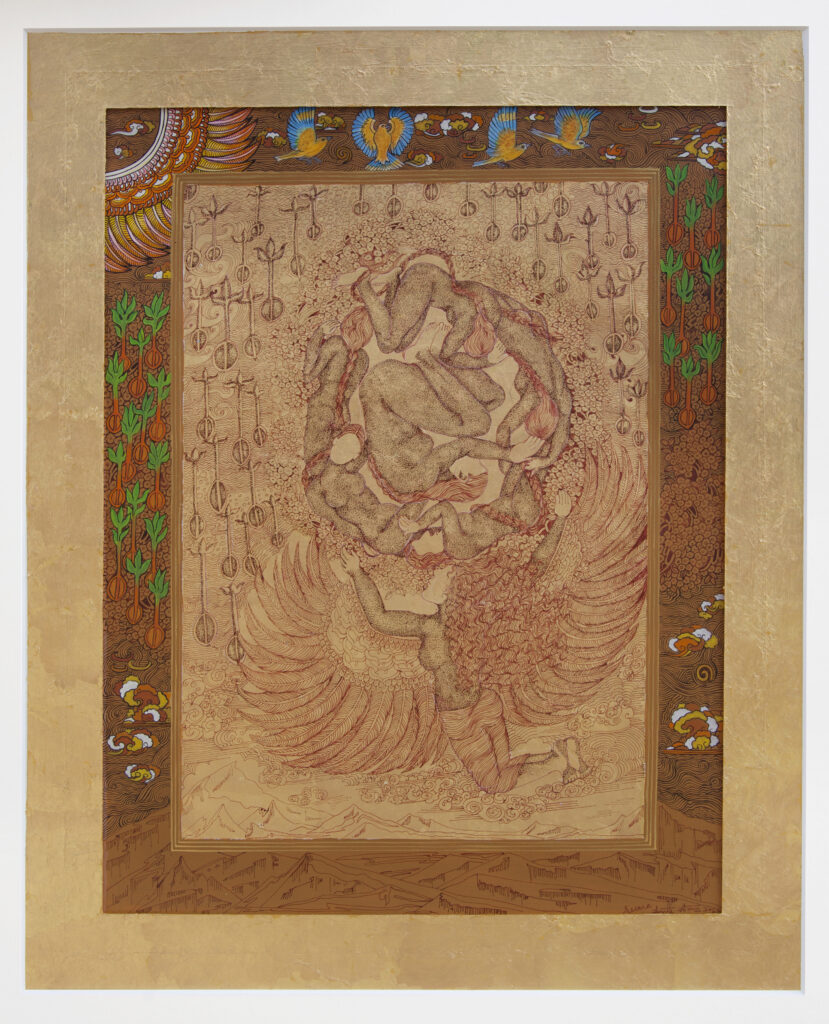
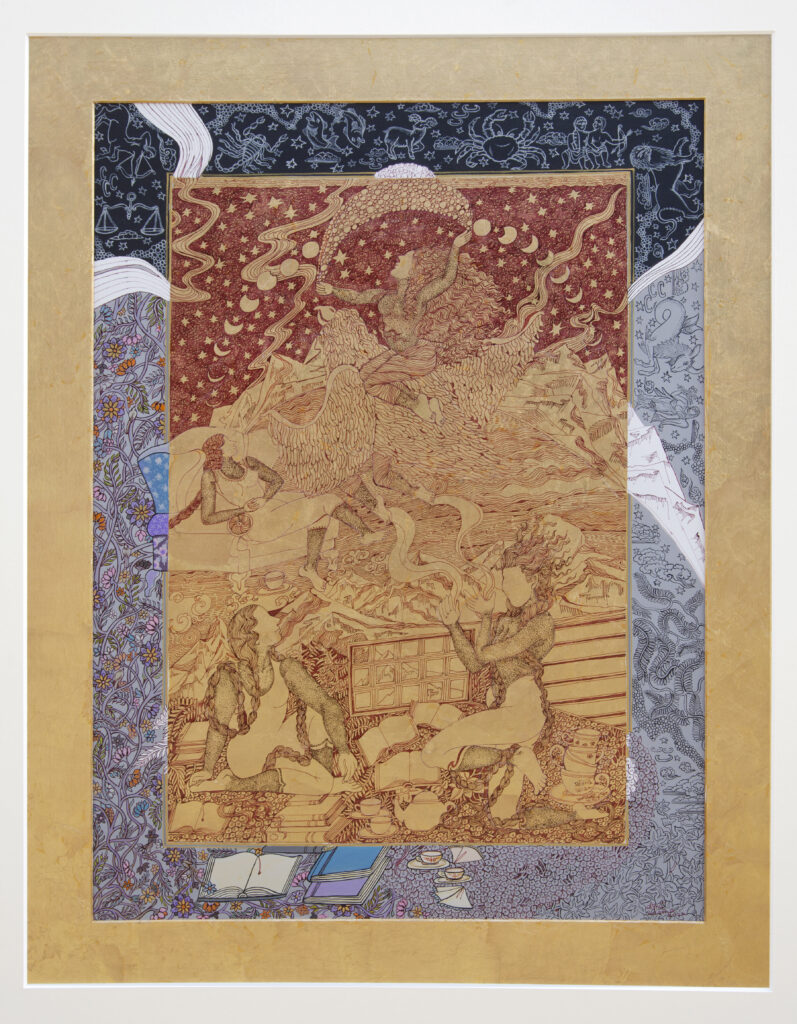
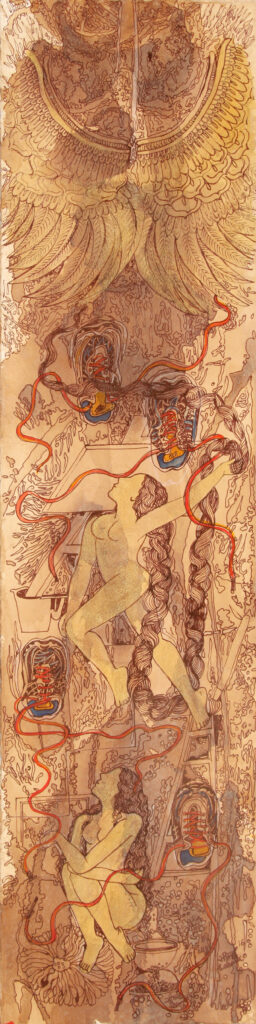
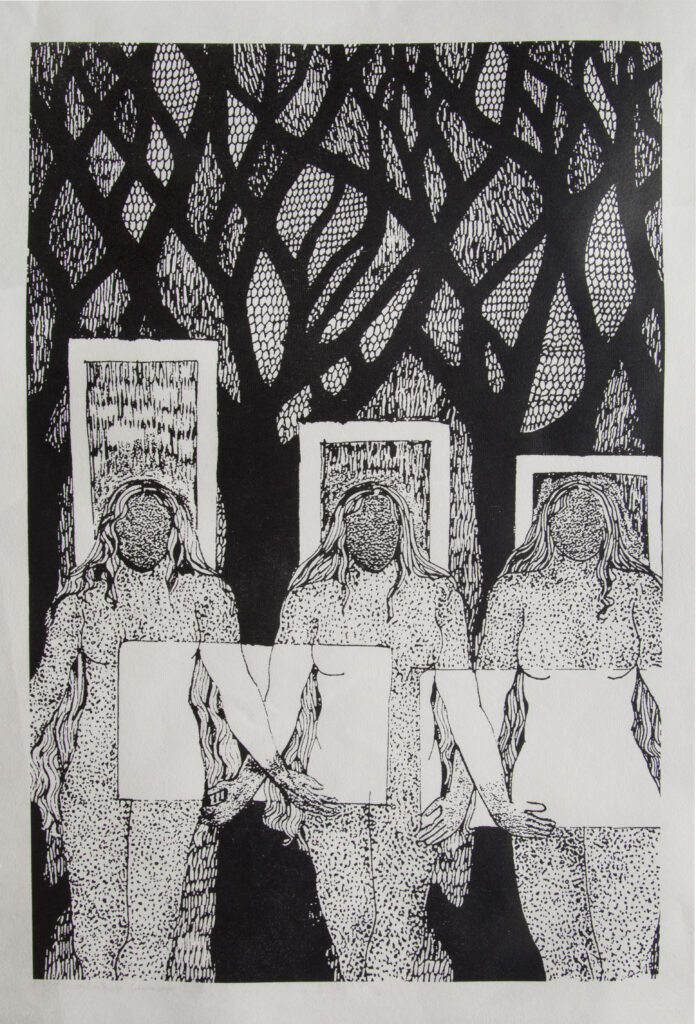
Aside from Kali, there were two drawings of Sati, whose radical act of protest against her father echoed the artist’s own questioning of patriarchal rituals like kanya daan and soft instillings of gender hierarchies through narratives that defined what constituted female self-pride and the correct behaviour for a married woman. Subsequently, in the second drawing dedicated to the subject, the mourning Shiva took on feminine features as the realisation dawned on the artist that she would have to be her own saviour. The celebration of defiance and burning desire continued in the sketch portraying the irreverent episode of Kamadev and Rati awakening Shiva from his meditations. Given the context of its making, the work could be read as a venting of emotional volcanism that simmered underneath the crust of social mores and gender performance. Occasionally, this magma solidified into overtly political expressions, as in the drawing with female figures enjoined by their clothing. Long before the #MeToo movement, this work called out the ogling eye, corralling women across generations and professions into a tight pen of encoded modesty and the violence of gaze. The tangle of women, immobilised by their clothing, seemed to question the skewed logic of sexual harassment that pivoted on what she was wearing—a rhetoric that was still heard in the media with regularity. Against these diktats of acceptable self-presentation, the artist advanced the empowering and liberating imagery of the wild woman, who censored neither her appearance nor affective self.
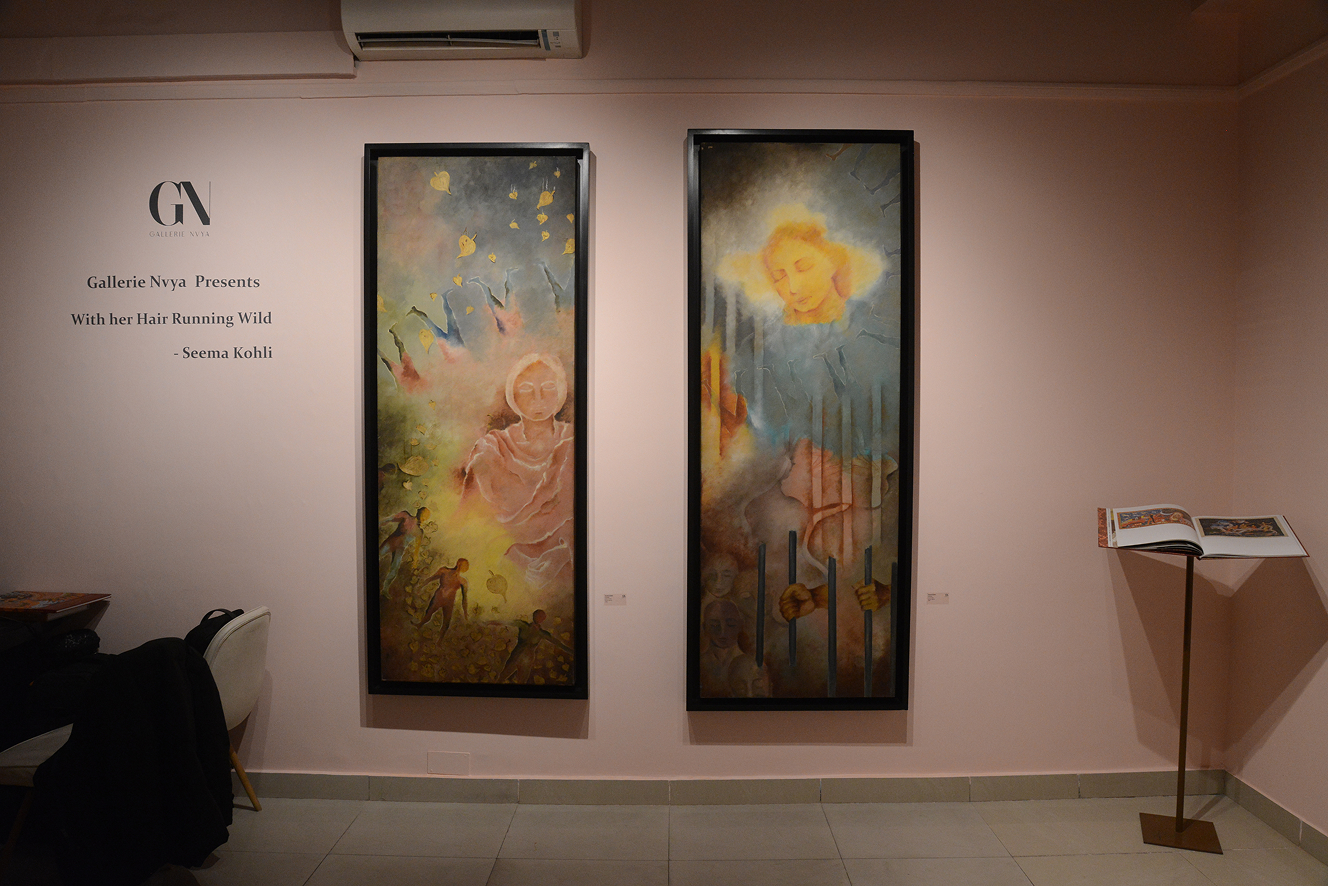
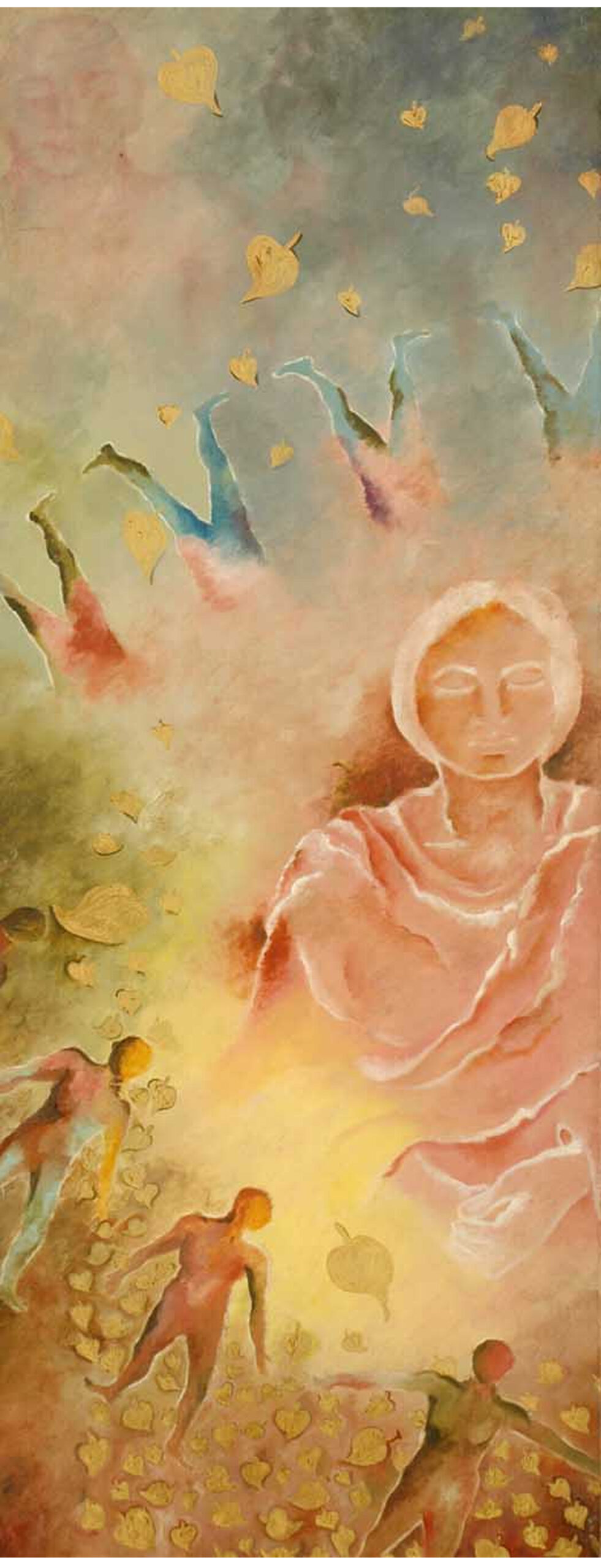
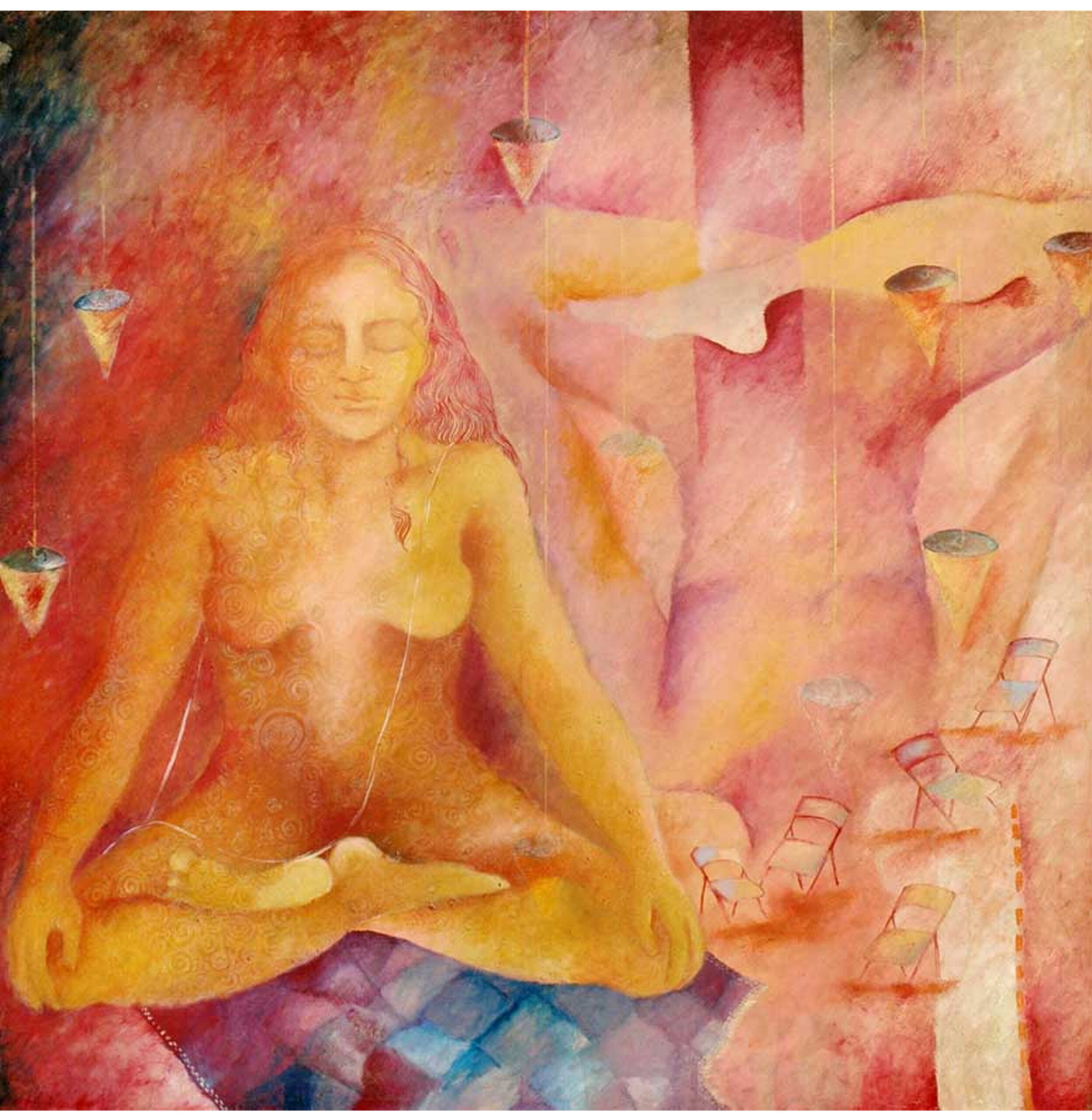
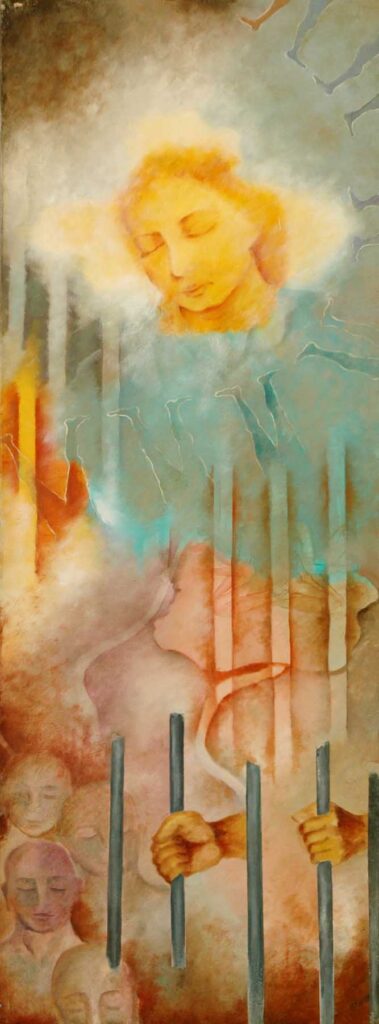
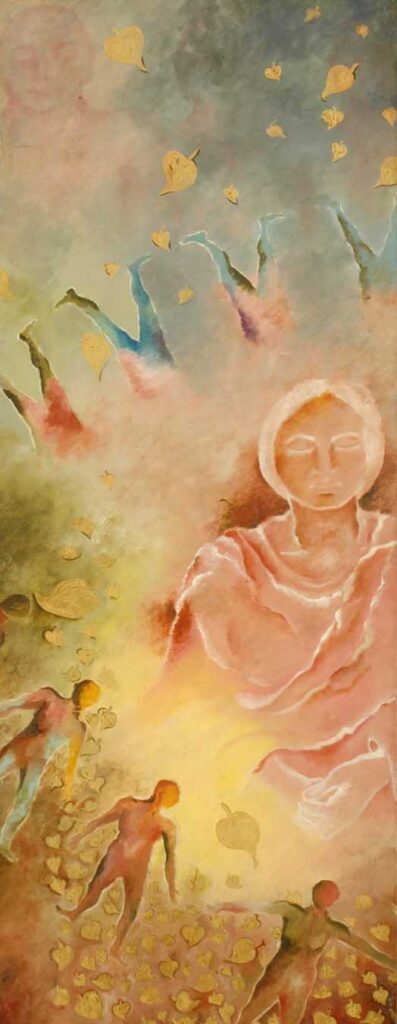
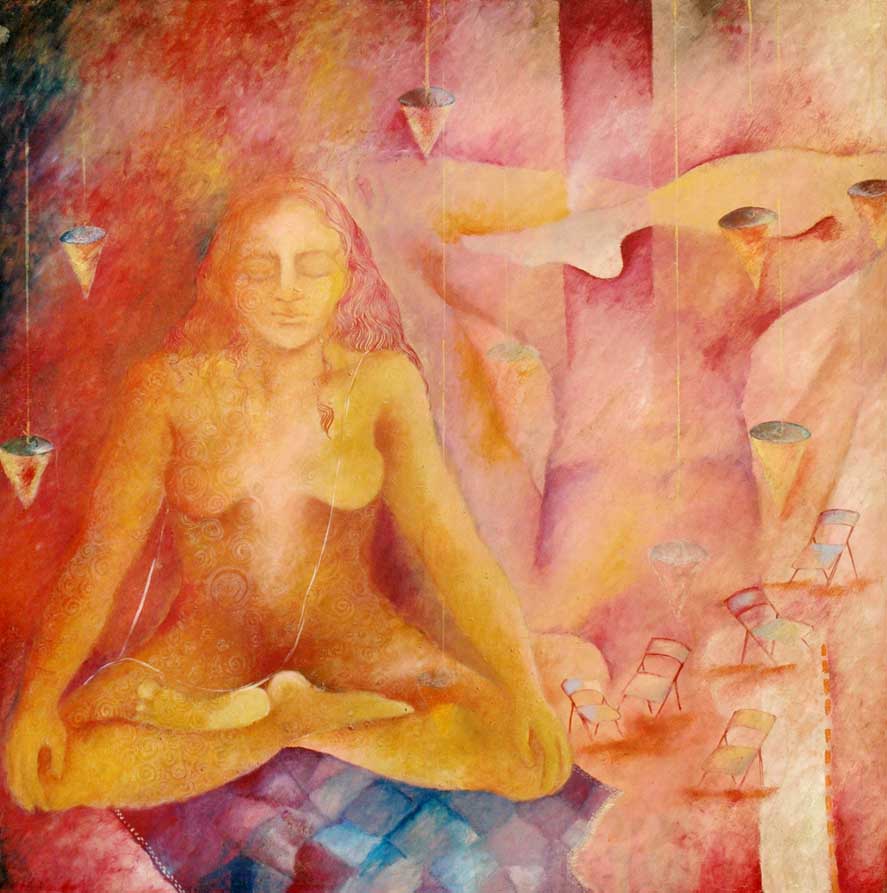
On the surface, the three oil paintings from 2002 appeared to be a far cry from the open defiance signalled by the pen and ink drawings. Painted on these very premises under the tutelage of the artist Rameshwar Broota, these canvases marked Kohli’s tottering steps towards painterly reclamation. Soon after the birth of her son, the artist’s mother had insisted that she be allowed to return to the studio. Subsequently, Kohli joined Triveni Kala Sangam in 1994, having her first solo across the road at FICCI in 1998. The shared studios of Triveni, resonant with chau music that floated up from the amphitheatre, and the quiet presence of figures like Ebrahim Alkazi and Sundari K. Shridharani provided much needed encouragement to the artist, teetering on the cusp of breaking out. The toll taken by years of mandatory matrimony could be made out from the austere poses and parallels struck by the artist in these canvases. The saintly, self-sacrificing profiles stood in contradistinction to the irreverent exploits of Kama Dev and Rati of former years—a fact that only served to emphasise her desperation for an escape, even a renunciatory one. Symbols of confinement—hands grabbing at prison bars and plumb bobs signalling a stalemate between conjugality and creativity—hinted at torrential currents underneath surficial placidity. And yet, not all hope was lost. In the faint outline of a janeu—the sacred thread, traditionally denied to women under Brahmanical patriarchy—running across her meditating body, one caught a glint of resistance. Similarly, the featuring of folding chairs from Triveni as well as of human chains, symbolising eternal return, heralded an end of dormancy.
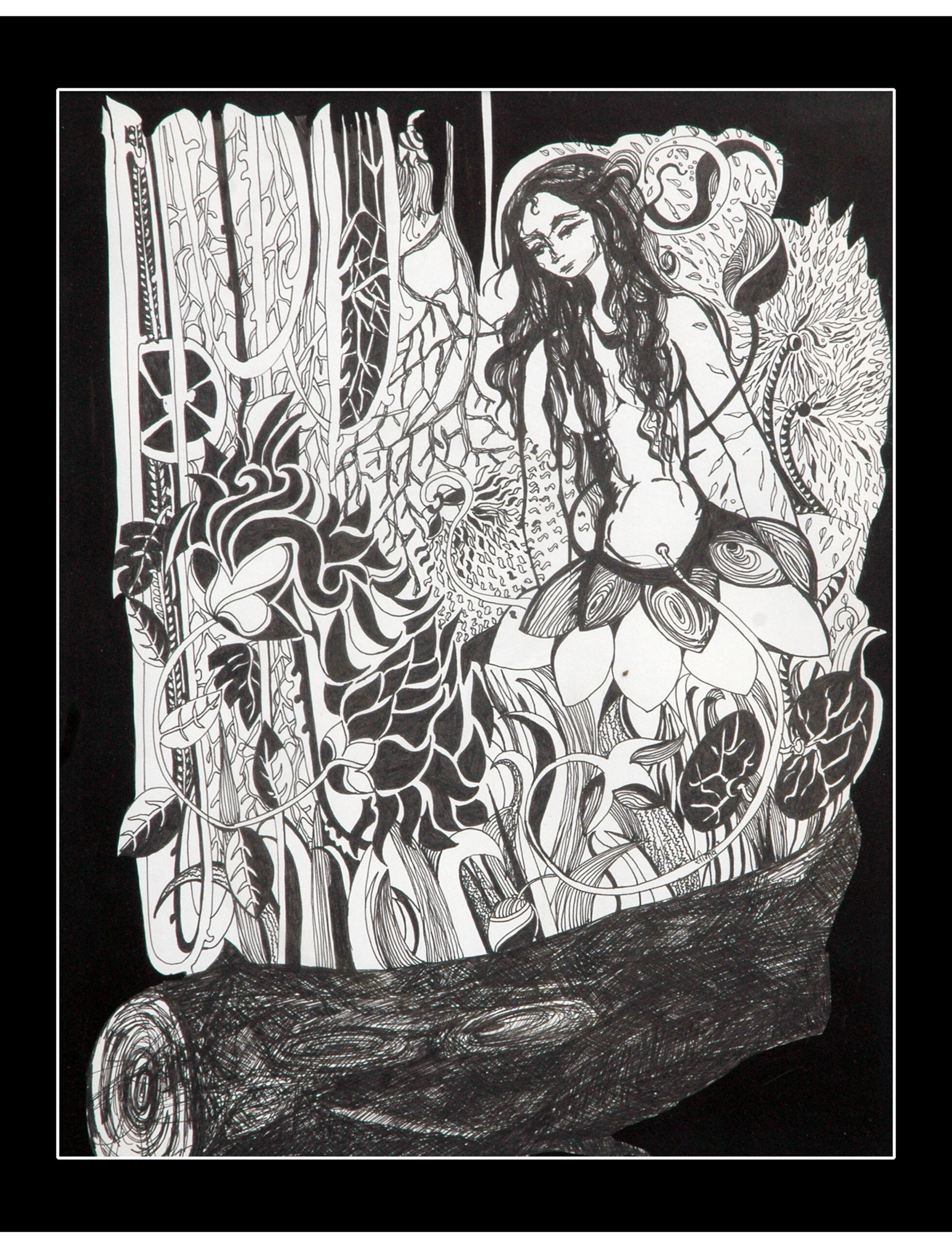
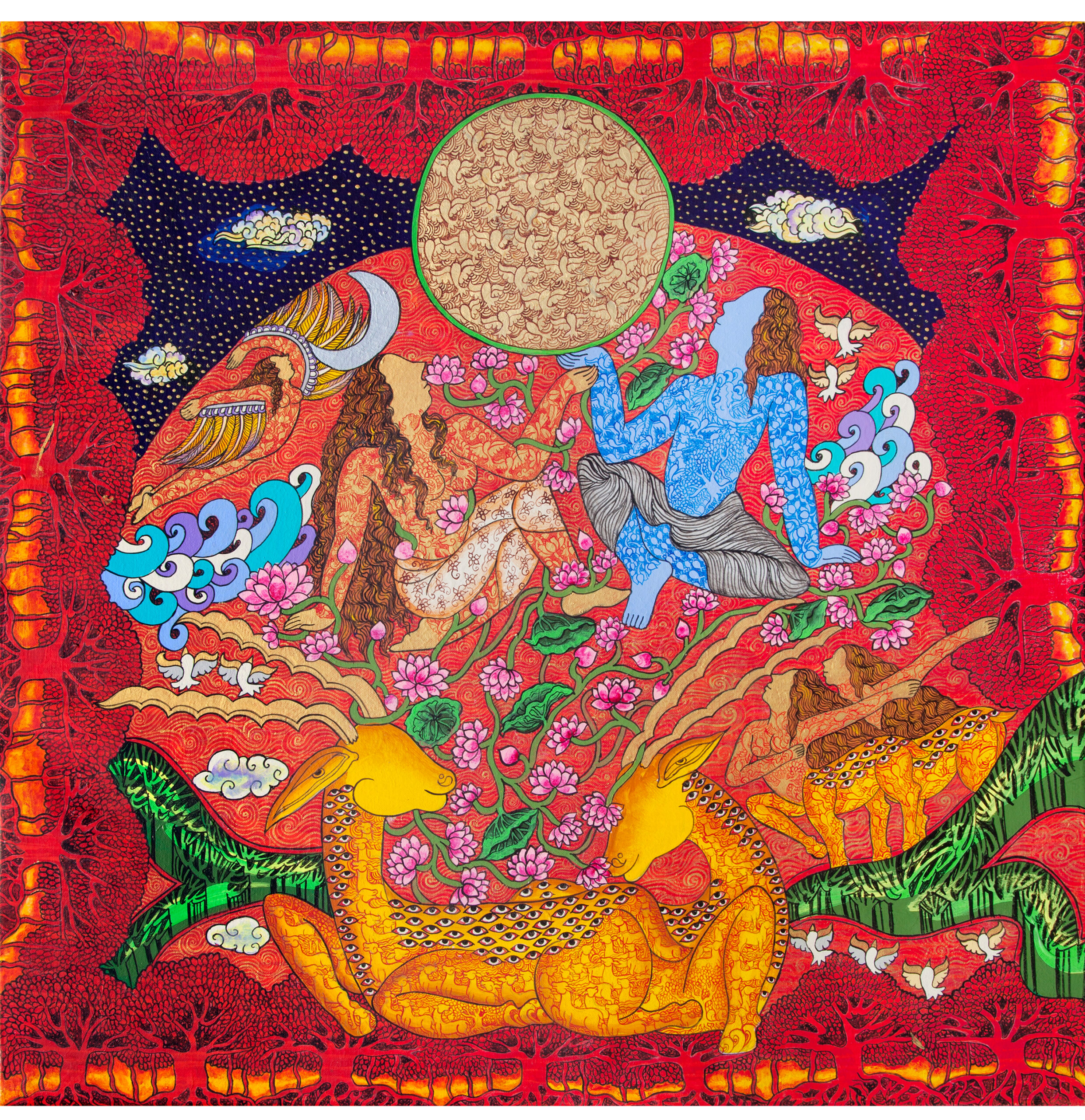
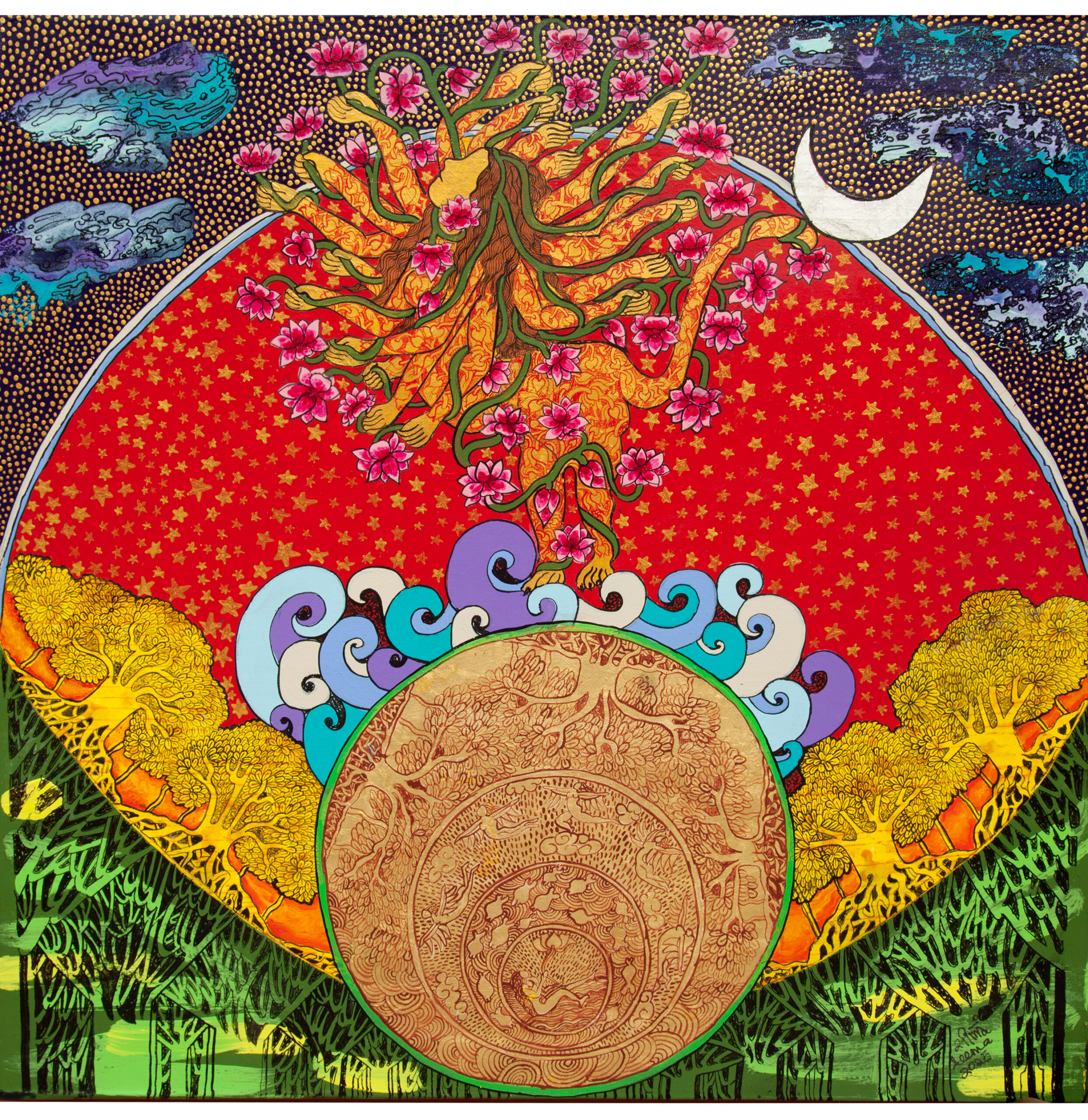
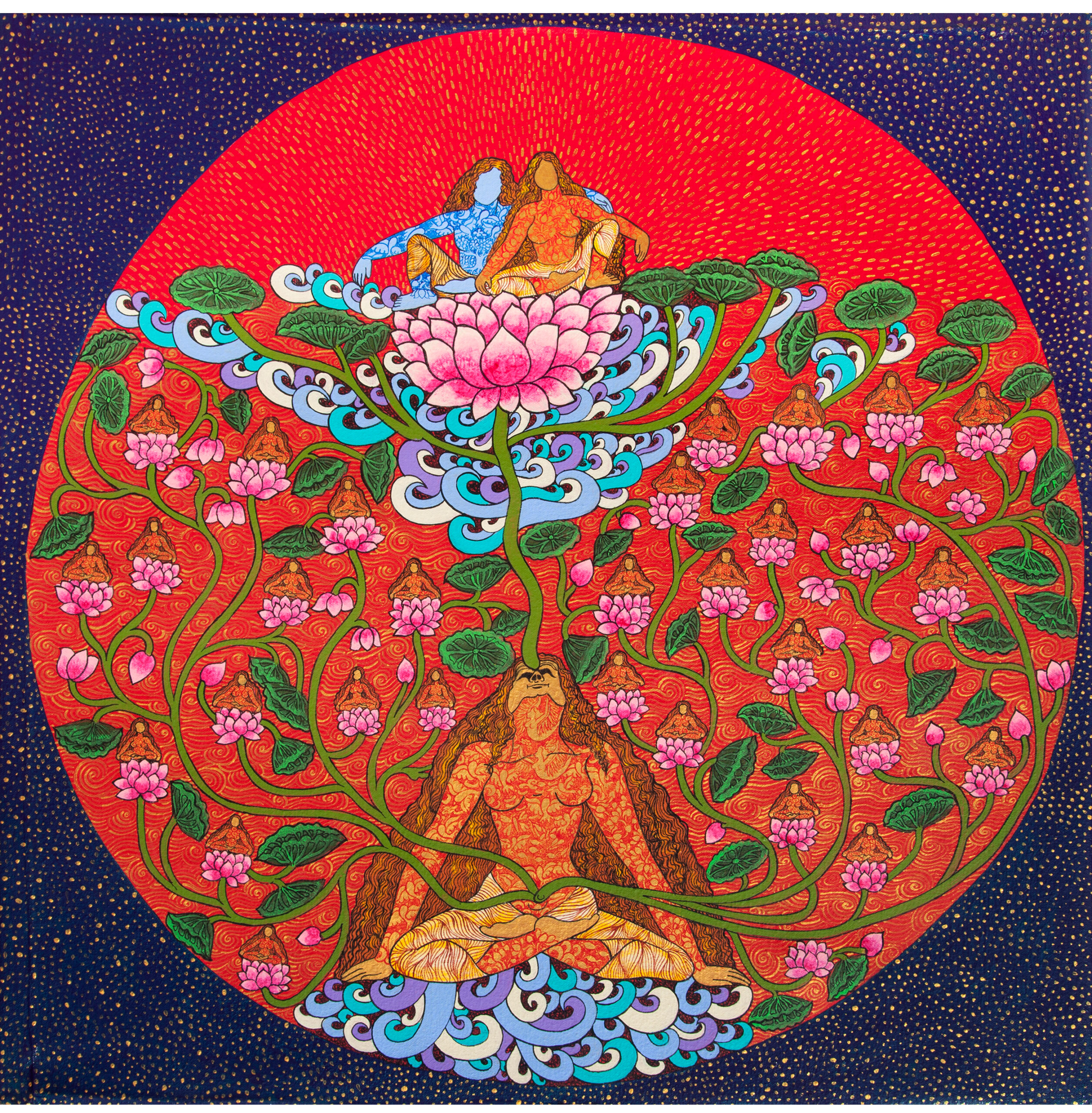
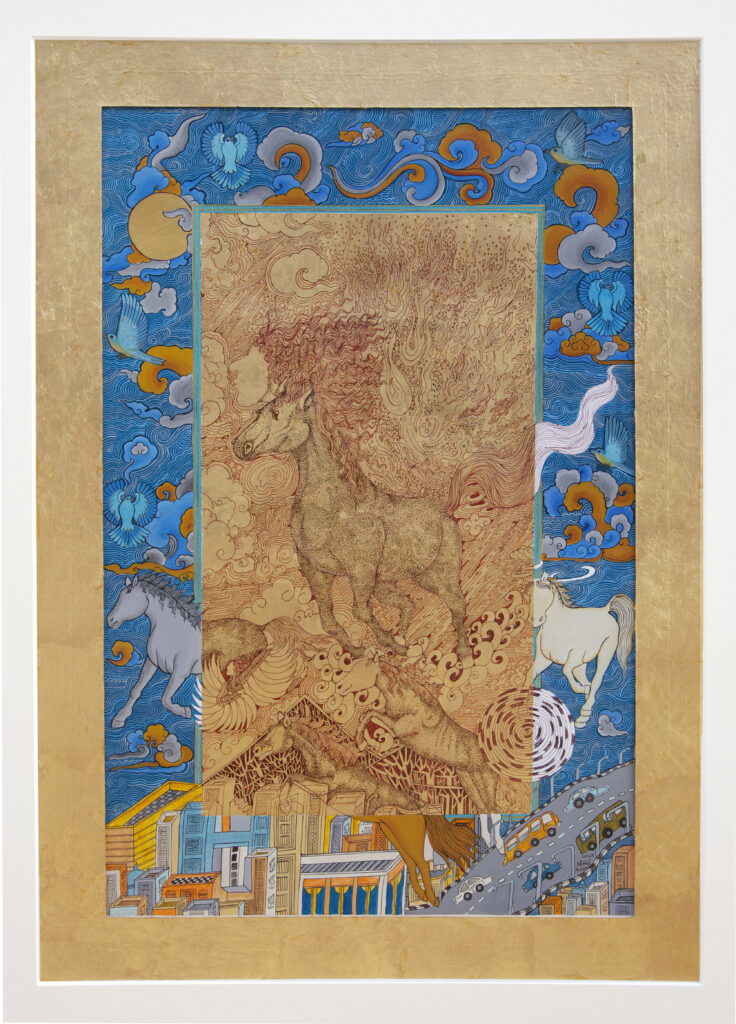
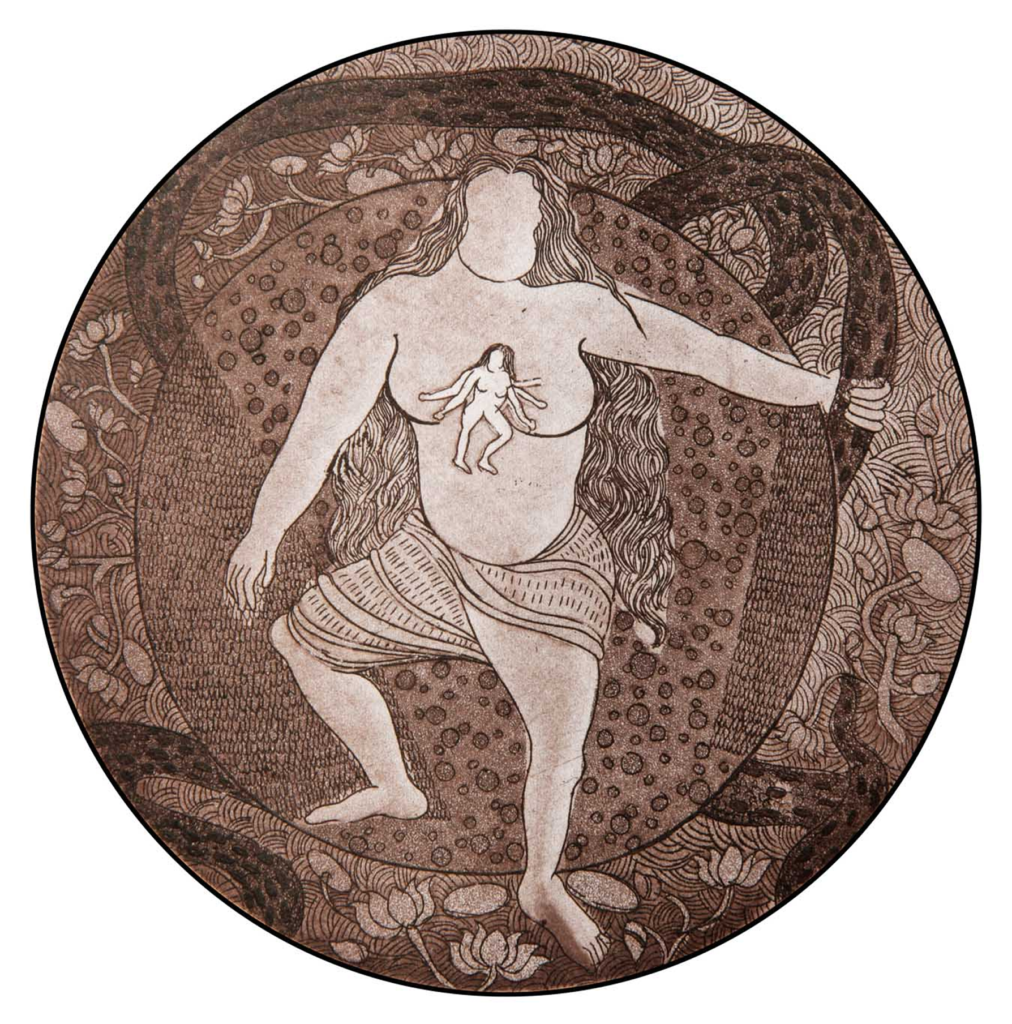
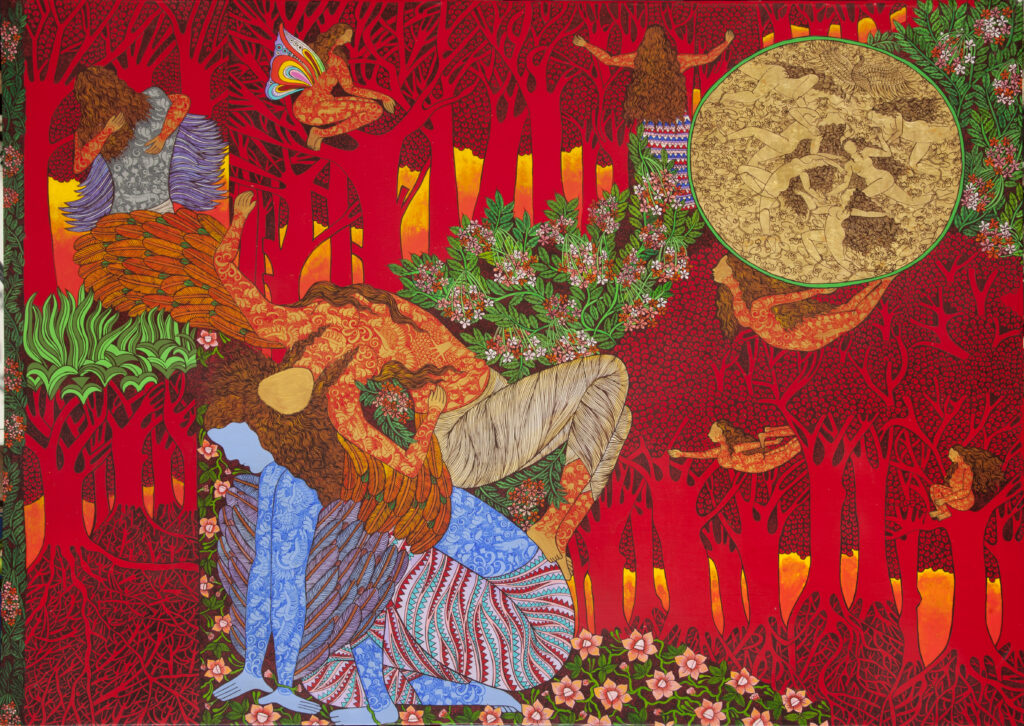
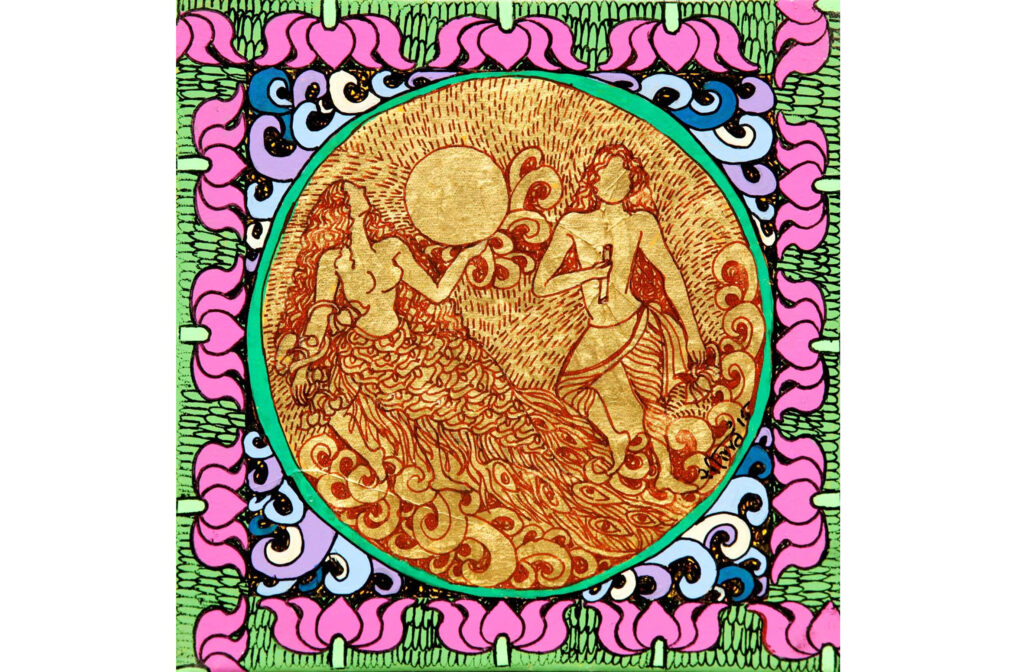
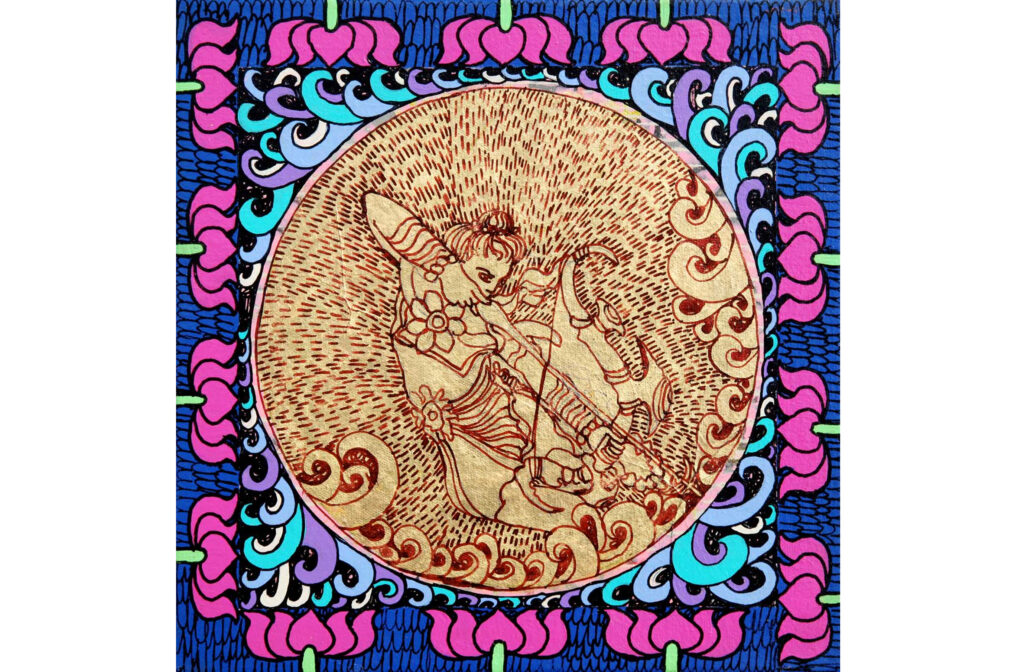
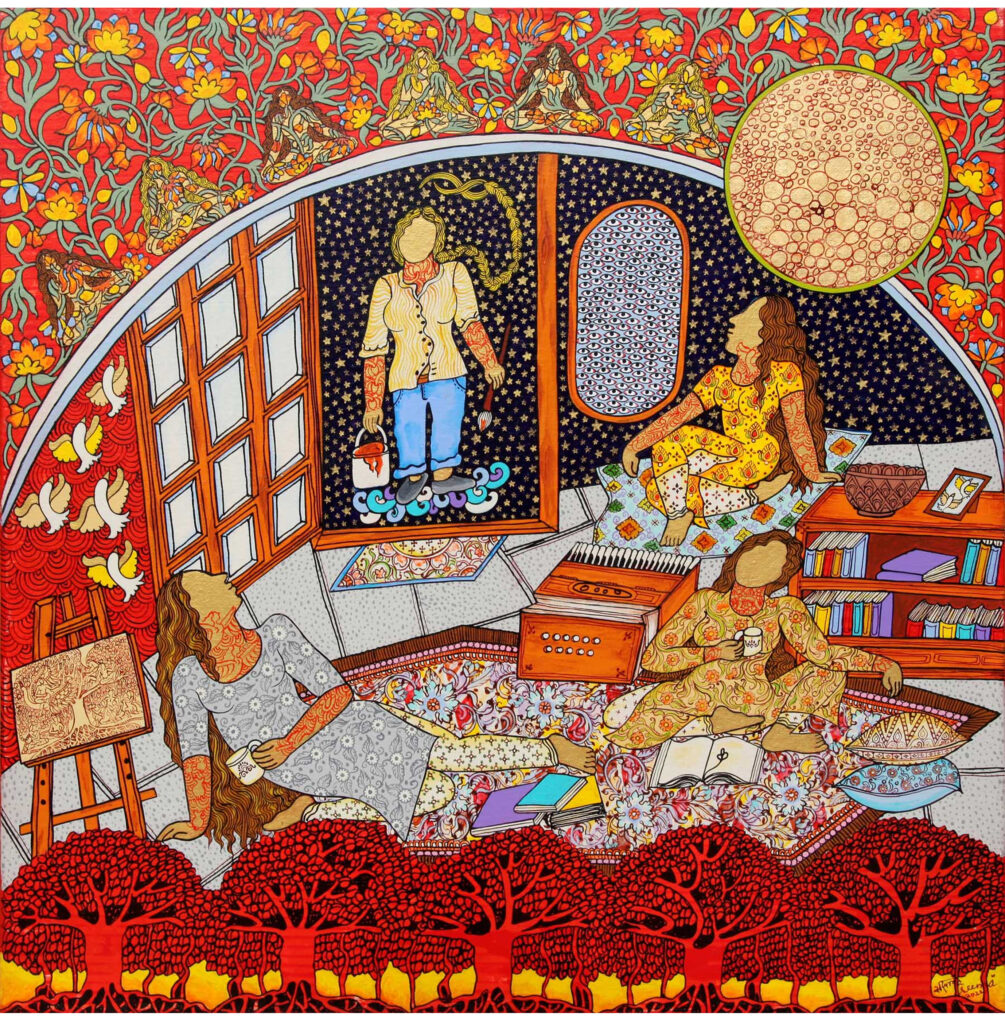
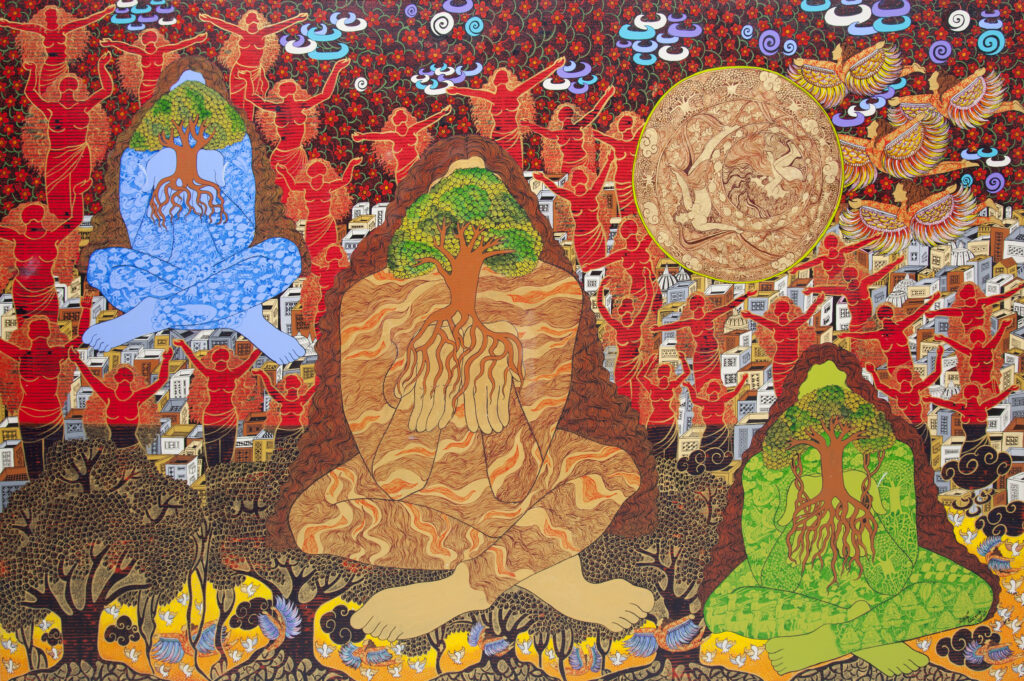
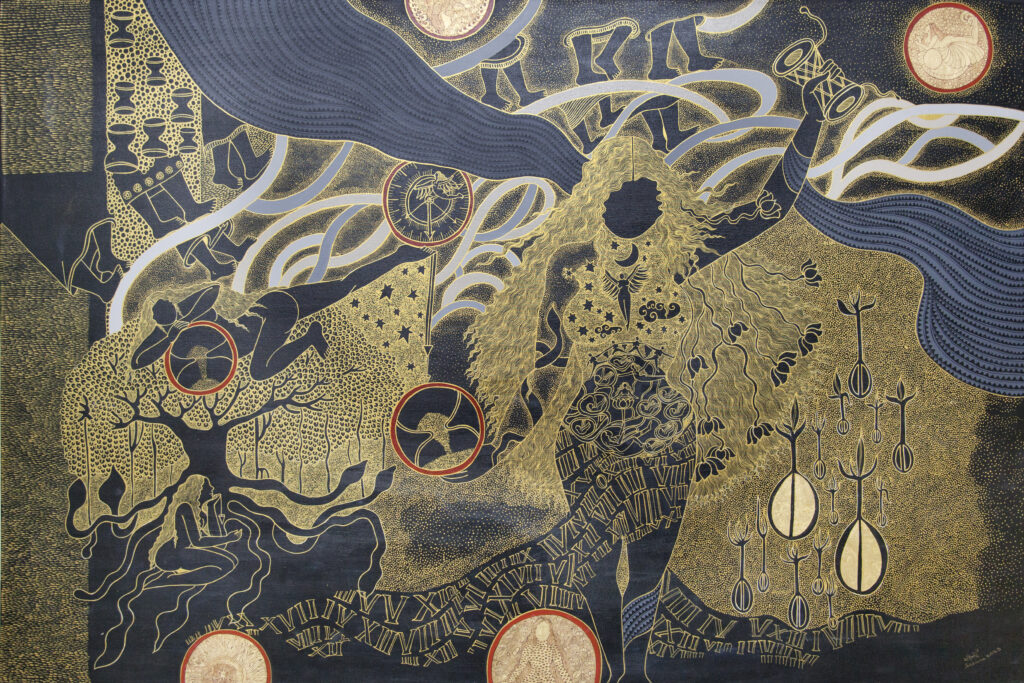
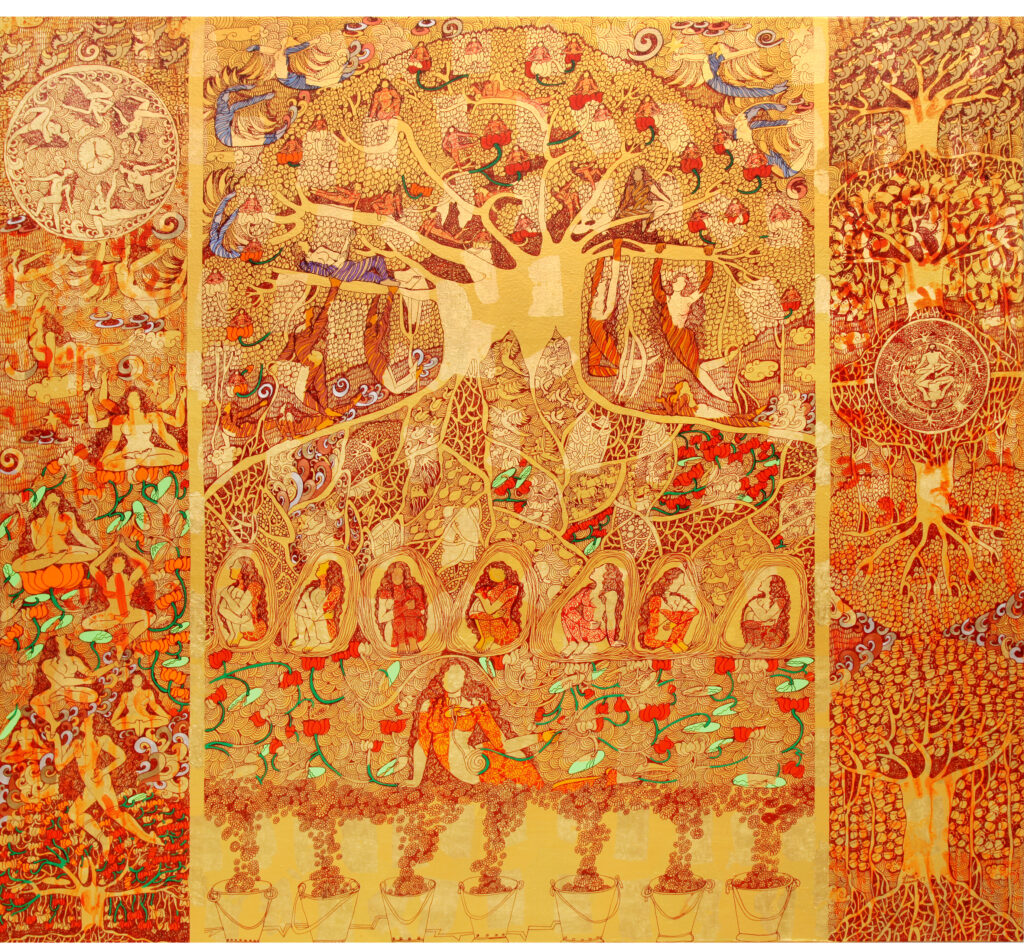
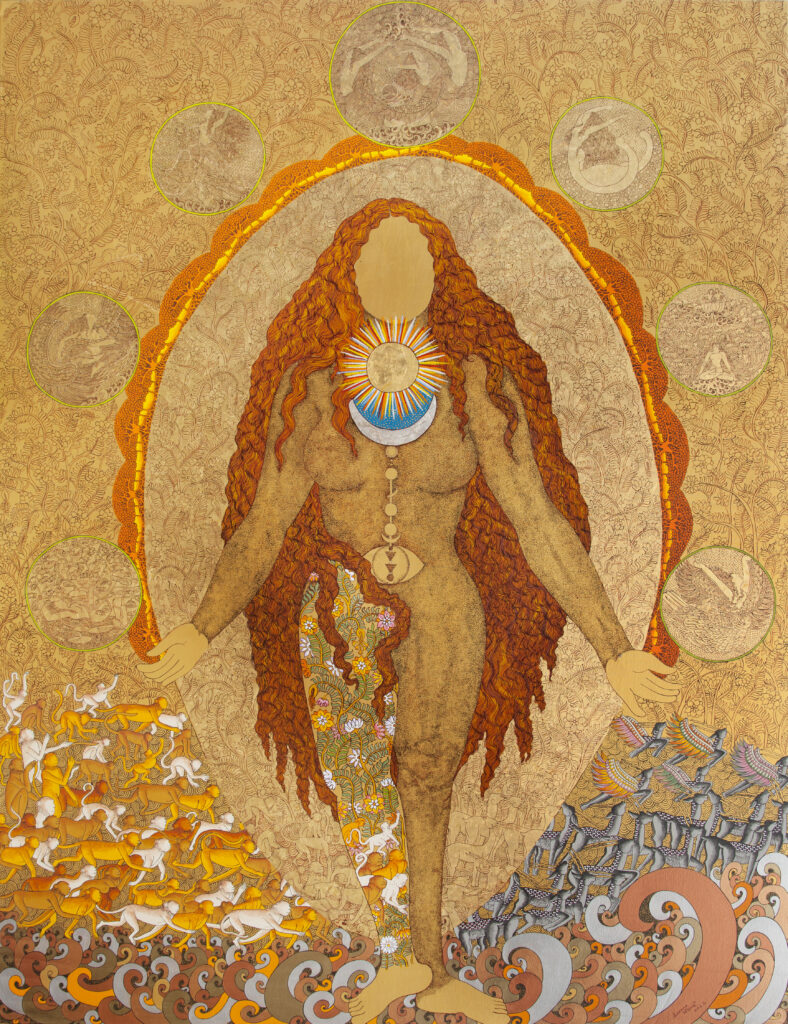
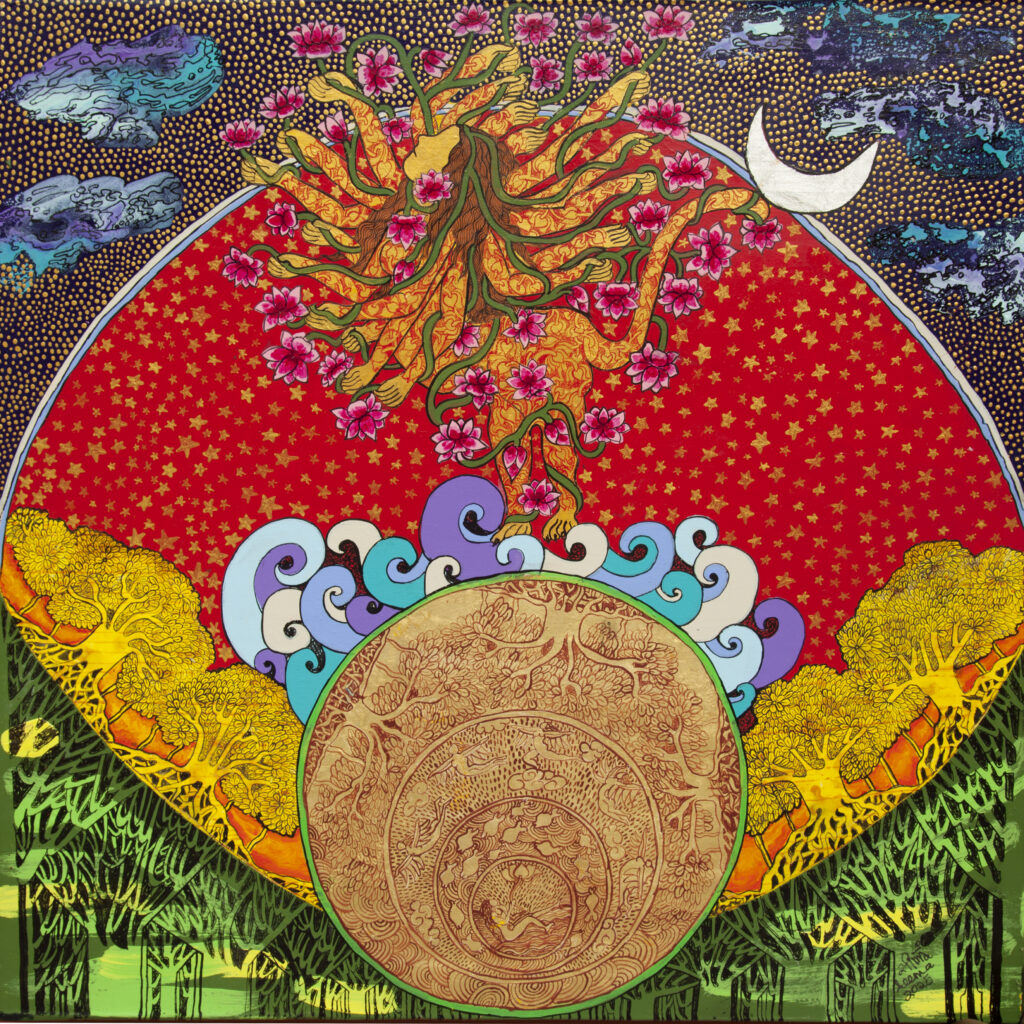
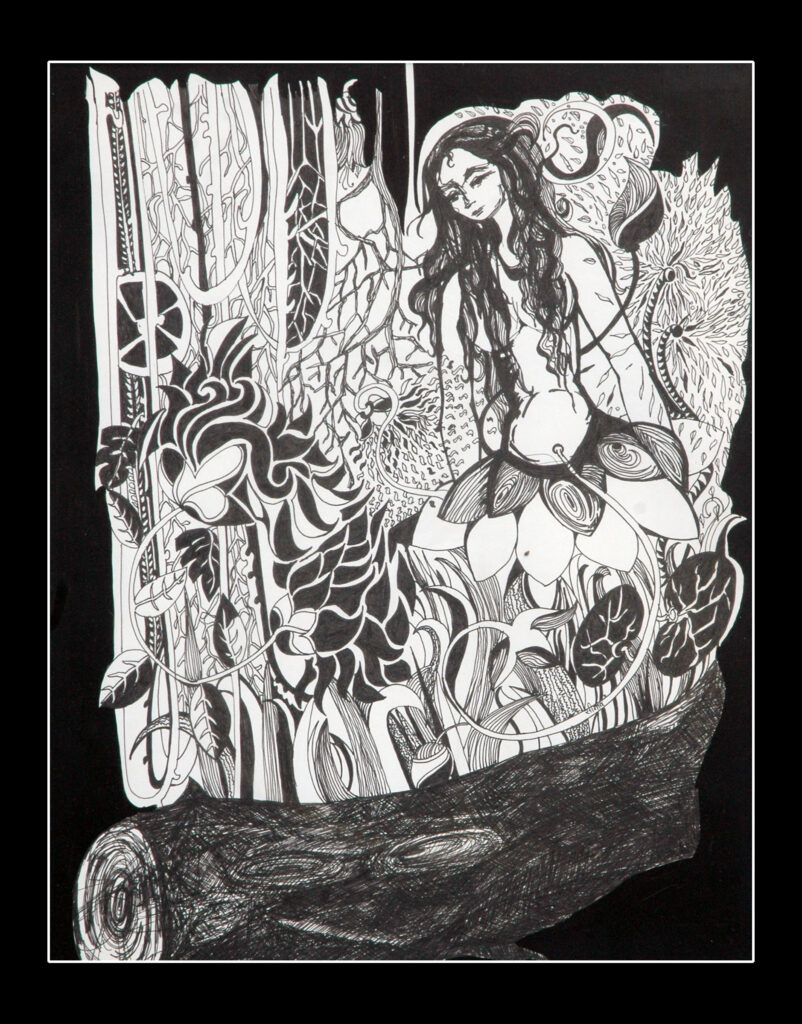
However, the strongest revolutionary flare was borne not by figuration but by chroma, which entered the frames on padded paws, like the first flush of spring. This was the vernal return foretold by the untitled mixed media work from 1999, or the pen and ink drawing dedicated to Prakriti, both featuring a log of wood as a reminder that things seeming dead on the outside may very well have been teeming with life within. Before long, the muted palettes and sfumato of these paintings yielded to the bolder expressions, typified by the Golden Womb series, as a life of comforts was swapped for a barsati of her own, and a new domesticity was discovered. This emergent, ebullient, and ennobling domesticity continued to animate her subjects and palettes for many years to come.
—Text by Adwait

Sculptures, Bronze
Paperworks, Paintings
Paperworks, Paintings
Paperworks, Paintings
Paperworks, Paintings
Paperworks, Paintings

Paperworks, Paintings
Canvas, Oil On Canvas
Canvas, Oil On Canvas
Canvas, Acrylic on Canvas
Canvas, Acrylic on Canvas
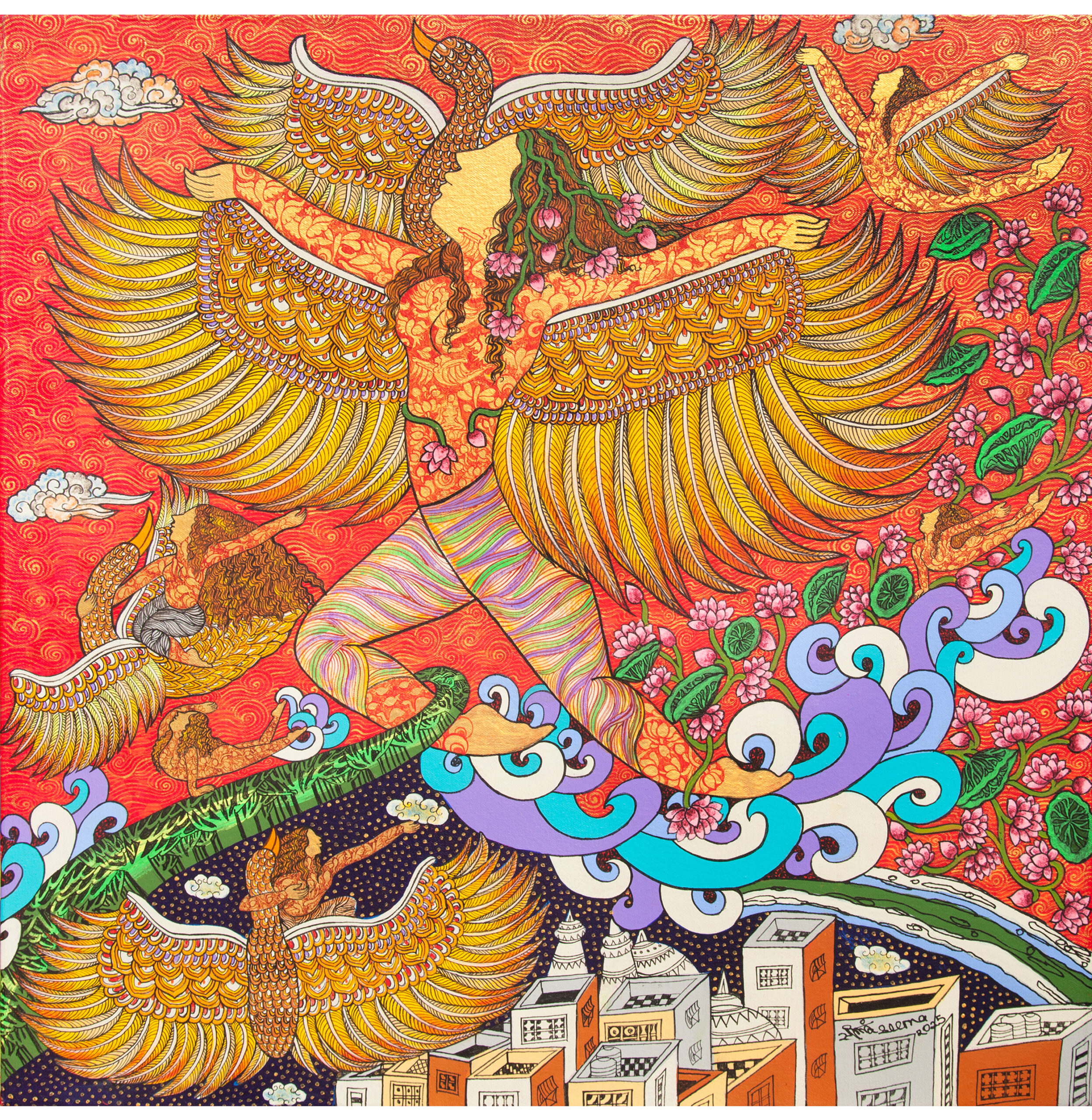
Canvas, Acrylic on Canvas
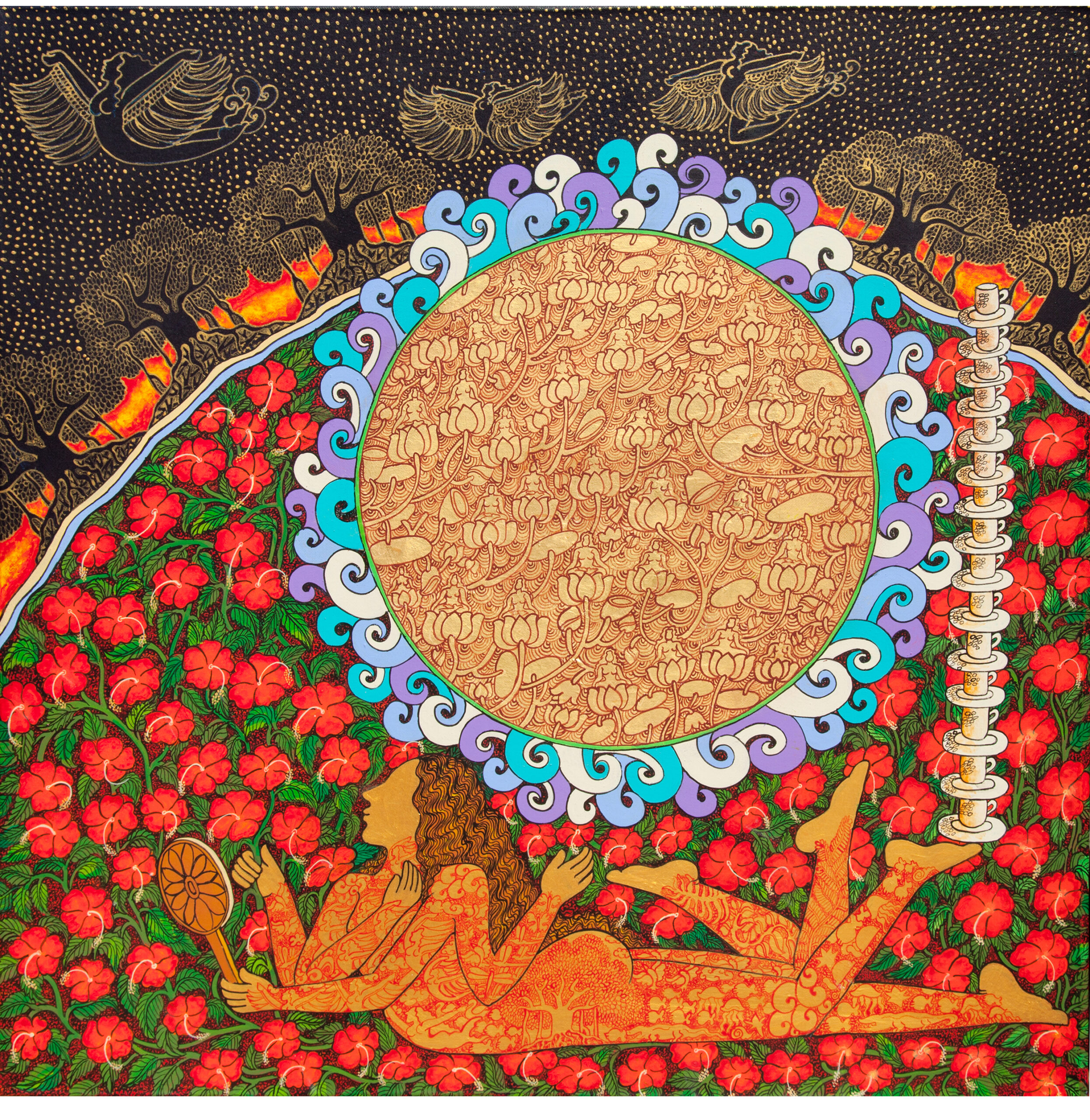
Canvas, Acrylic on Canvas
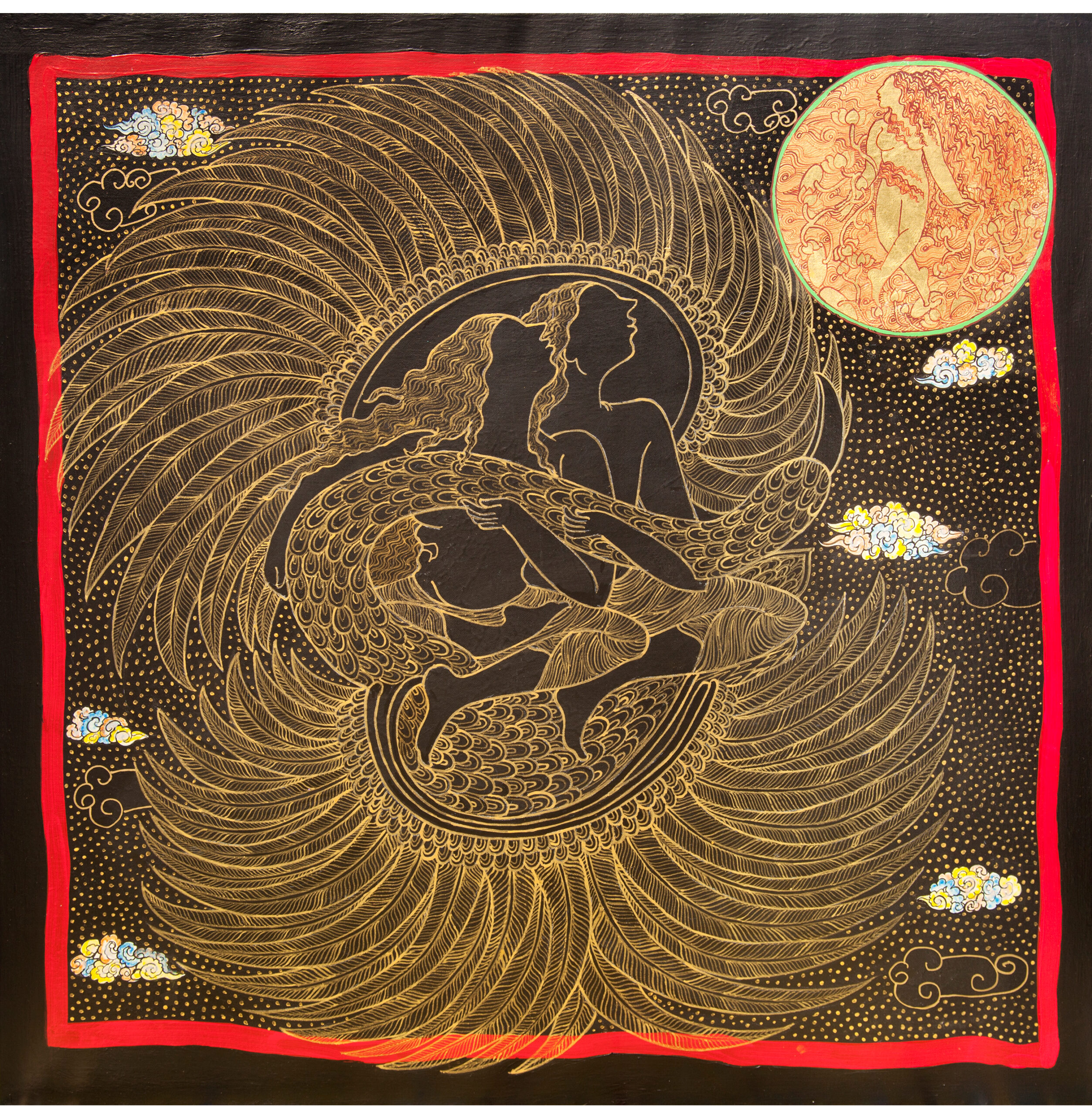
Canvas, Acrylic on Canvas
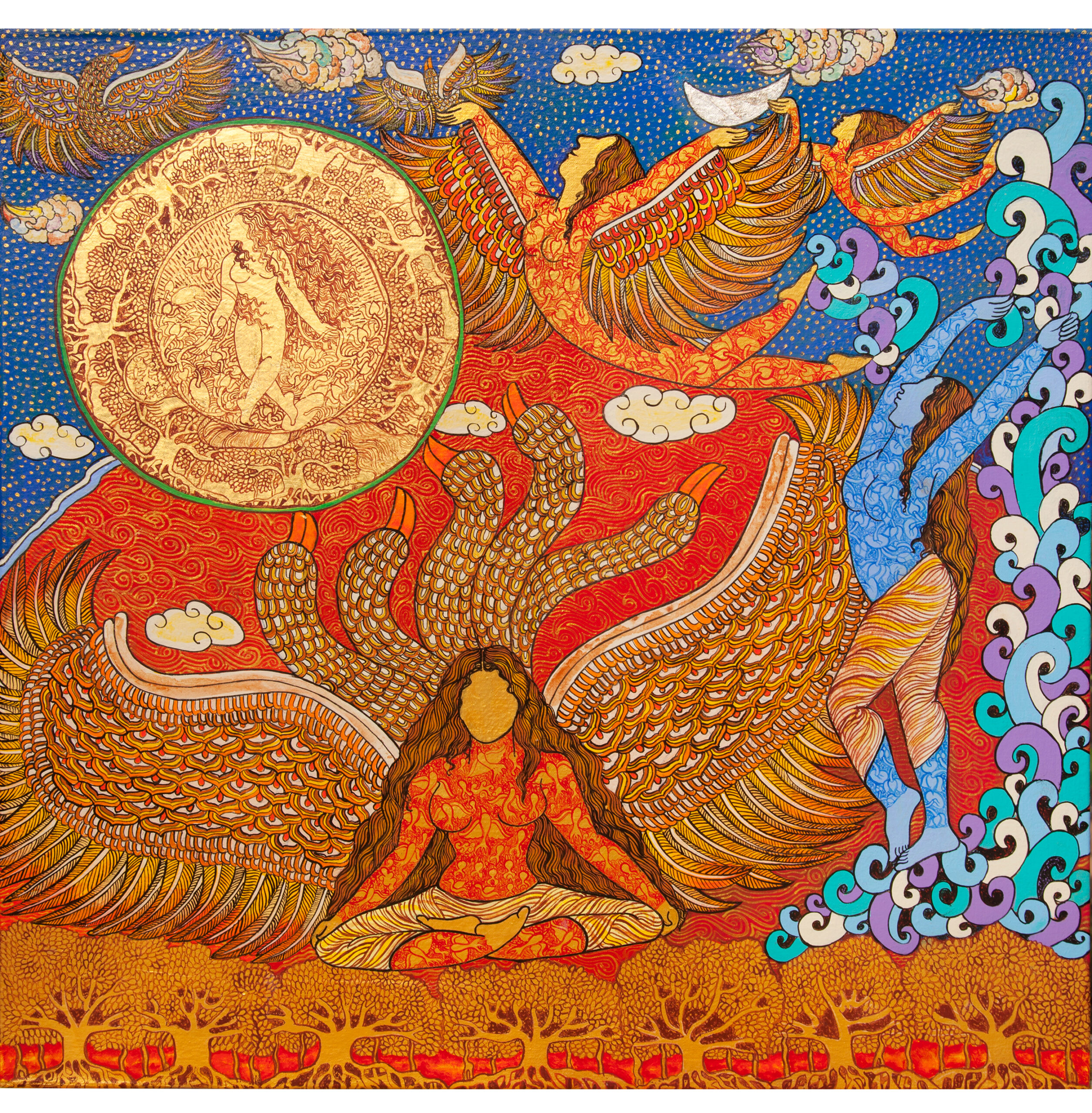
Canvas, Acrylic on Canvas
Canvas, Acrylic on Canvas


Concept & Direction: Seema KohliCinematography Edit & Sound: Sakthi Doss A 12 minute capturing Seema Kohli’s involvement and the whole process of the making of the artworks at...

Grid of 84 archival prints of self-portraits, of 10x10inch. The cycle of life revolves around birth, death and the eventual liberation from mortality. All forms of life follow...

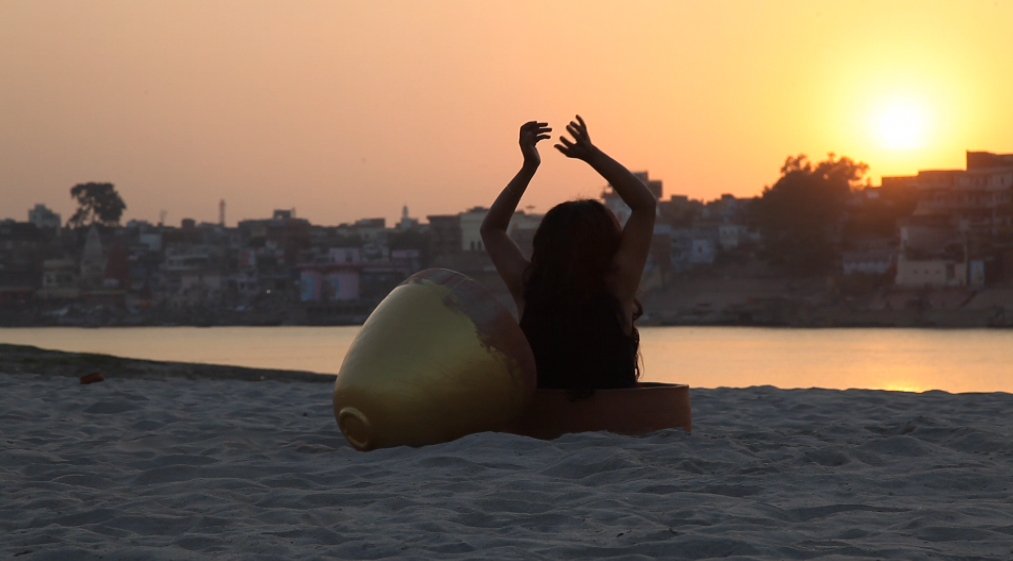
Single Channel Installation Performance & Concept: Seema KohliCinematography: Marlène Ila Popovic, Sakthi BhagatEditing: Marlene Ila PopovicSound Design: Sahil Vasudeva “We see death as a full stop. But it...

Concept, Script & Direction: Seema Kohli Photography & Videography: Sakthi Bhagat Editor: Tariq Vasudeva Music: Sahil Vasudeva Animation: Gaurav Singh Bedi “Seema Kohli’s Enter Stillness is a fable...

Art Heritage Gallery, NSIC Grounds, New Delhi

Art Heritage Gallery, NSIC Grounds, New Delhi

Bihar Museum
Presented by Sanchit Art Gallery At The Arts House, Singapore
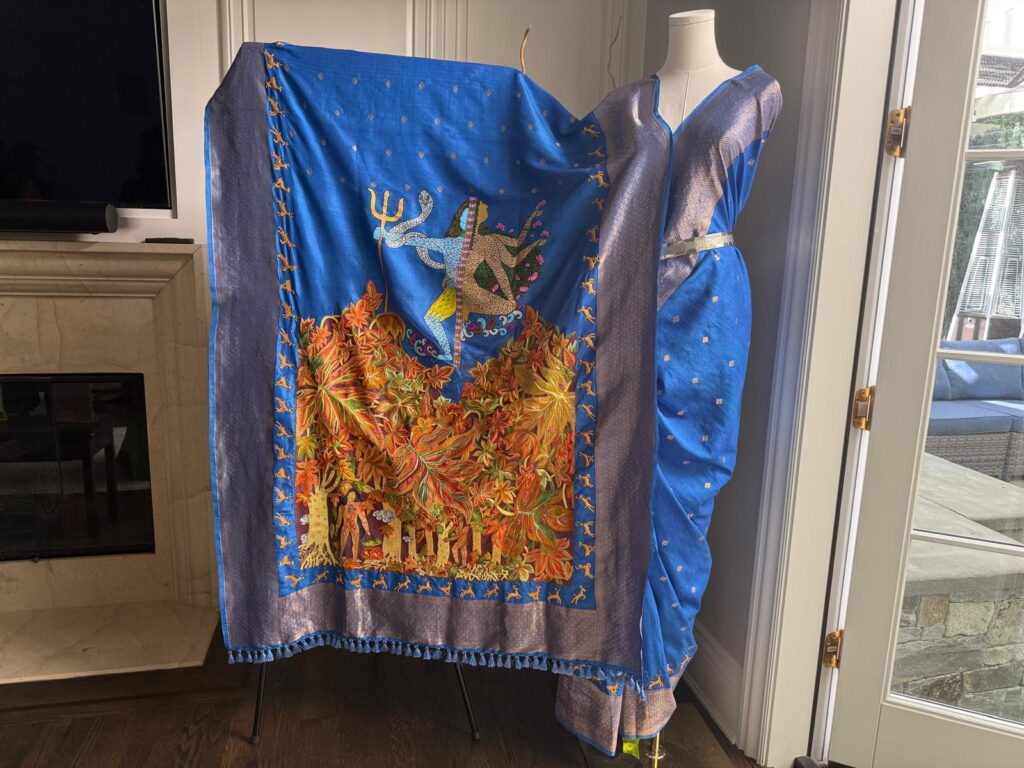
Asian Art Museum, San Francisco presented by the Lara Lakshimi Foundation
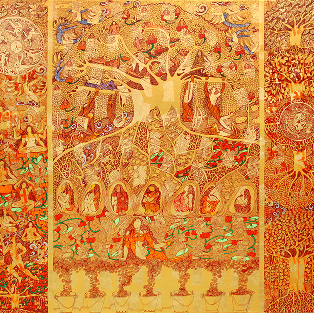
Tao Art Gallery

Pacific Art League, Palo Alto, California

National Gallery of Modern Art (NGMA) New Delhi
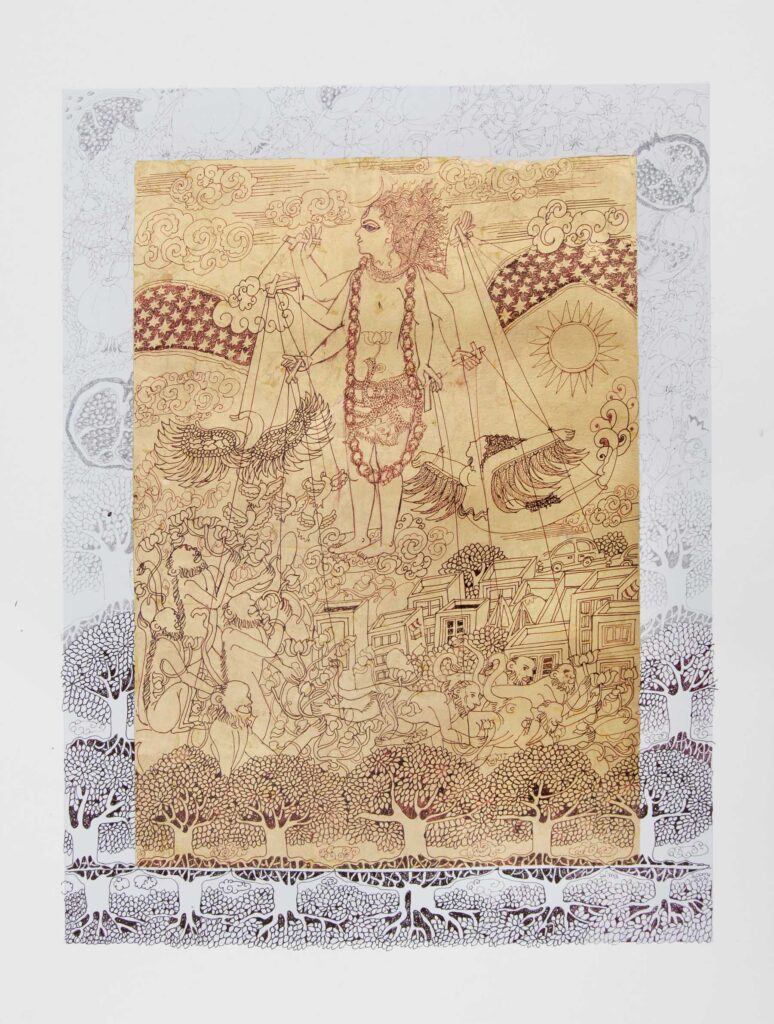
Travancore Palace • Bikaner House • India Habitat Centre, New Delhi

Presented by Museum of Sacred Art At MOSA Radhadesh Gallery, Belgium
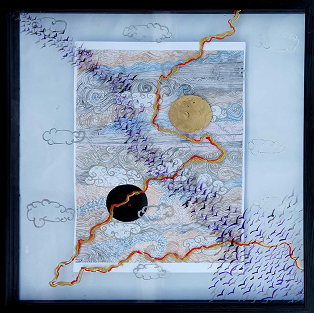
Kolkata Centre for Creativity, Kolkata
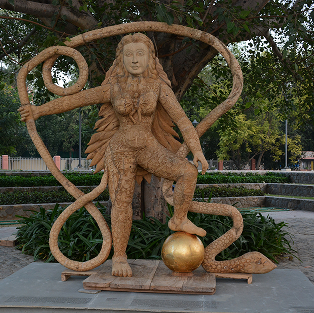
Venue: Sunder Nursery, New Delhi, Presented by Gallery Ragini

Hong Kong Visual Arts Center, Hong Kong, presented by Sanchit Art Gallery

Archer Art Gallery Ahmedabad, India
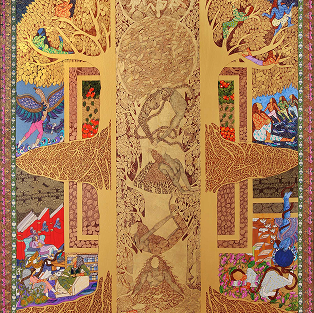
S.A. Fine Arts, Cromwell Place, London

Bikaner House, New Delhi presented by Gallerie Nvya

Gallerie Nvya, Triveni Kala Sangam, New Delhi

Bihar Museum, Patna
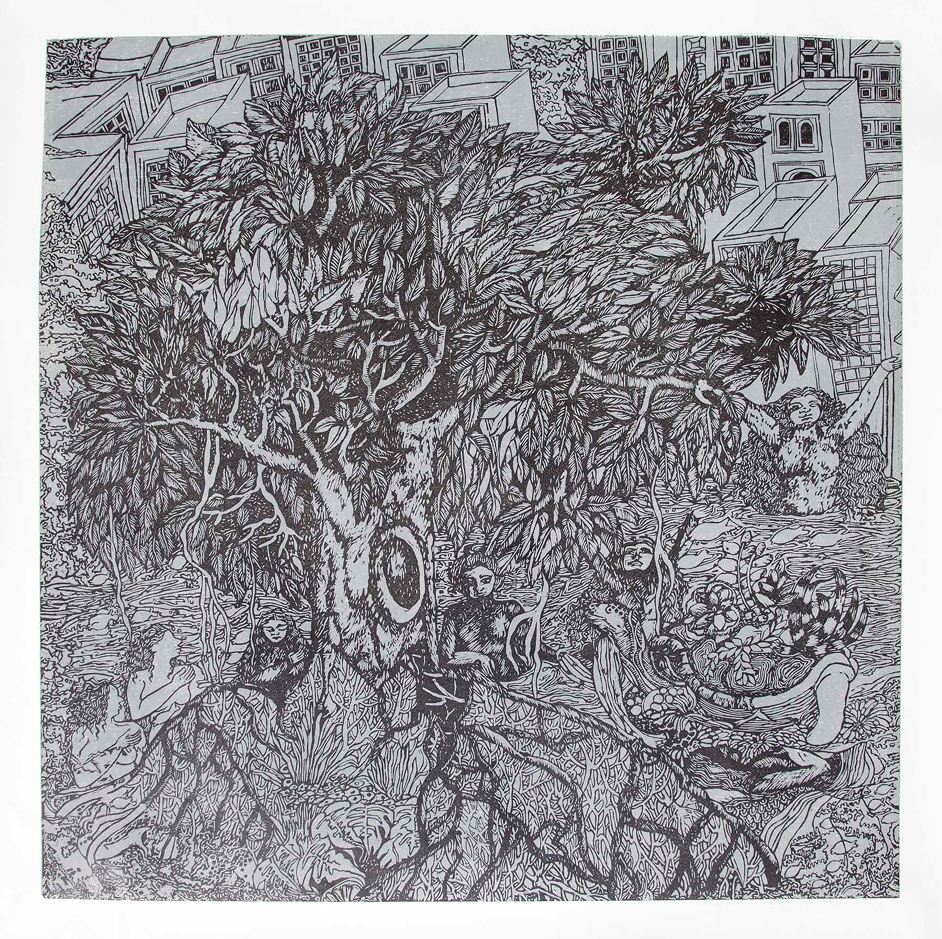
Shridharani Gallery at Triveni Kala Sangam, presented by Gallerie Nvya, Delhi

Lalit Kala Akademi, Chennai

National Gallery of Modern Art, Bengaluru

Seema Kohli Studio, New Delhi and The Partition Museum, Delhi


Sculptures, Bronze


Canvas, Acrylic on Canvas
Canvas, Acrylic on Canvas

Paperworks, Paintings
Paperworks, Etching
Sculptures, Bronze

Sculptures, Bronze

Canvas, Acrylic on Canvas
Canvas, Acrylic on Canvas

Sculptures, Bronze

Sculptures, Bronze


Canvas, Acrylic on Canvas
Sculptures, Bronze
Paperworks, Paintings
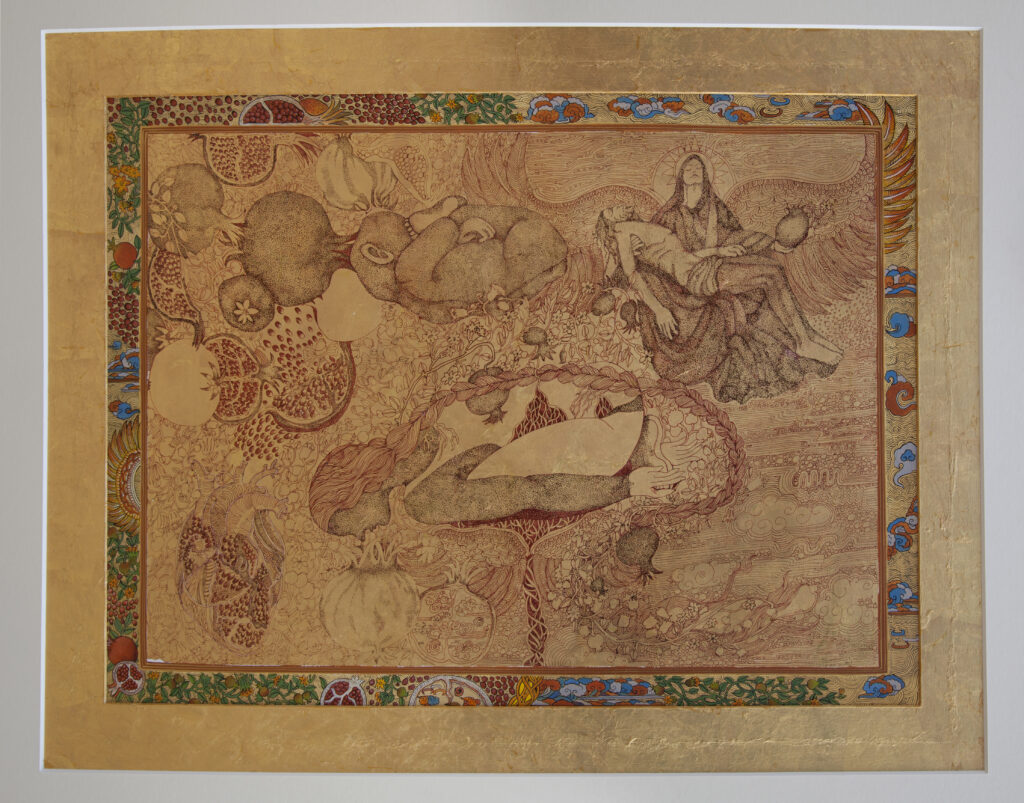
Paperworks, Paintings
Paperworks, Paintings
Paperworks, Paintings
Paperworks, Paintings


Paperworks, Paintings
Paperworks, Paintings
Canvas, Acrylic on Canvas

Canvas, Acrylic on Canvas

Canvas, Acrylic on Canvas

Sculptures, Bronze





Paperworks, Etching
Paperworks, Paintings
Paperworks, Paintings

Paperworks, Etching

Paperworks, Etching

Paperworks, Etching

Paperworks, Etching

Paperworks, Archival Photographic Works / Drawings

Paperworks, Archival Photographic Works / Drawings

Paperworks, Archival Photographic Works / Drawings

Paperworks, Archival Photographic Works / Drawings

Paperworks, Archival Photographic Works / Drawings

Paperworks, Archival Photographic Works / Drawings

Paperworks, Archival Photographic Works / Drawings

Canvas, Acrylic on Canvas

Canvas, Acrylic on Canvas

Canvas, Acrylic on Canvas

Canvas, Acrylic on Canvas


Sculptures, Glass-Reinforced Polymer

Canvas, Acrylic on Canvas

Threadworks, Cloth
Threadworks, Cloth
Canvas, Acrylic on Canvas
Canvas, Acrylic on Canvas
Canvas, Acrylic on Canvas
Paperworks, Paintings
Paperworks, Etching
Paperworks, Etching
Paperworks, Etching
Paperworks, Etching
Paperworks, Archival Photographic Works / Drawings
Paperworks, Archival Photographic Works / Drawings
Paperworks, Archival Photographic Works / Drawings
Paperworks, Archival Photographic Works / Drawings
Paperworks, Archival Photographic Works / Drawings
Paperworks, Archival Photographic Works / Drawings
Paperworks, Archival Photographic Works / Drawings
Paperworks, Etching
Paperworks, Etching

Canvas, Acrylic on Canvas
Canvas, Acrylic on Canvas

Canvas, Acrylic on Canvas

Canvas, Acrylic on Canvas

Threadworks, Embroidery

Threadworks, Embroidery

Threadworks, Embroidery

Threadworks, Embroidery

Threadworks, Embroidery

Threadworks, Embroidery

Threadworks, Embroidery

Threadworks, Embroidery

Threadworks, Embroidery

Threadworks, Embroidery

Threadworks, Embroidery

Threadworks, Embroidery

Threadworks, Embroidery

Threadworks, Embroidery

Threadworks, Embroidery

Threadworks, Embroidery

Threadworks, Embroidery

Threadworks, Embroidery

Threadworks, Embroidery

Threadworks, Embroidery

Threadworks, Embroidery

Threadworks, Embroidery

Threadworks, Embroidery

Threadworks, Embroidery

Threadworks, Embroidery
Threadworks, Embroidery

Threadworks, Embroidery

Threadworks, Embroidery

Sculptures, Bronze

Sculptures, Bronze

Sculptures, Bronze

Sculptures, Glass-Reinforced Polymer

Sculptures, Glass-Reinforced Polymer

Sculptures, Glass-Reinforced Polymer

Sculptures, Glass-Reinforced Polymer

Canvas, Acrylic on Canvas

Canvas, Acrylic on Canvas

Canvas, Acrylic on Canvas
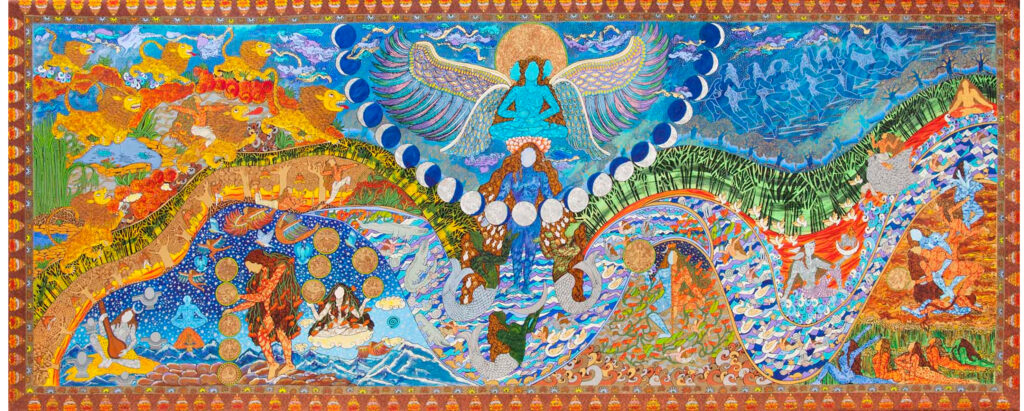
Canvas, Acrylic on Canvas

Canvas, Acrylic on Canvas

Canvas, Acrylic on Canvas
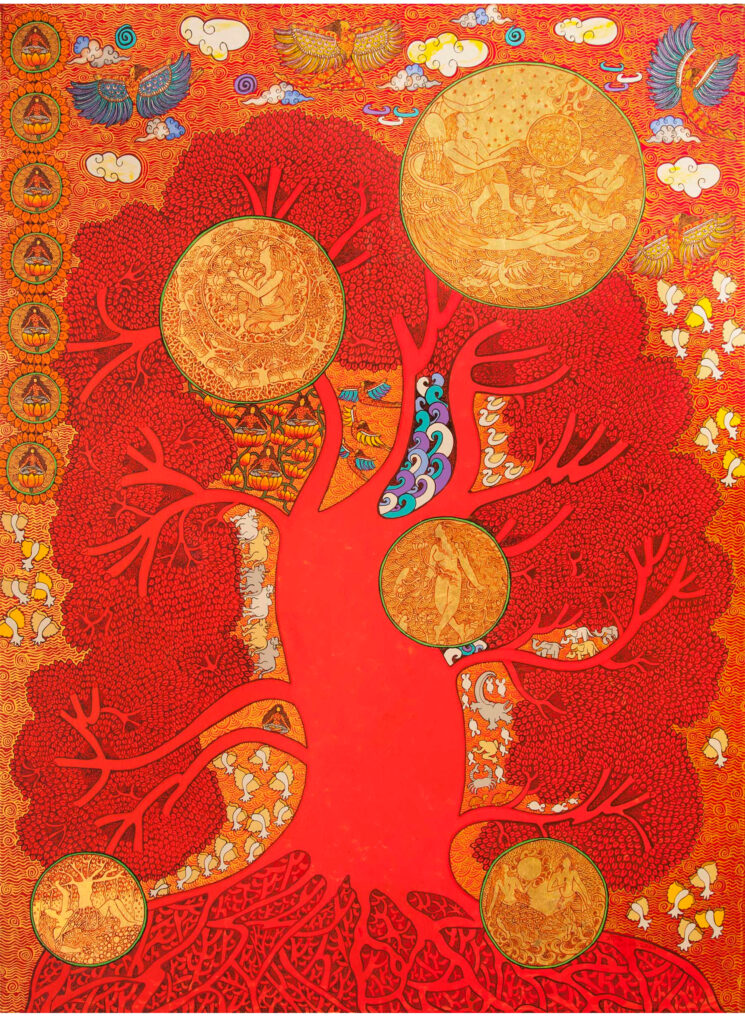
Canvas, Acrylic on Canvas

Canvas, Acrylic on Canvas

Canvas, Acrylic on Canvas

Canvas, Acrylic on Canvas
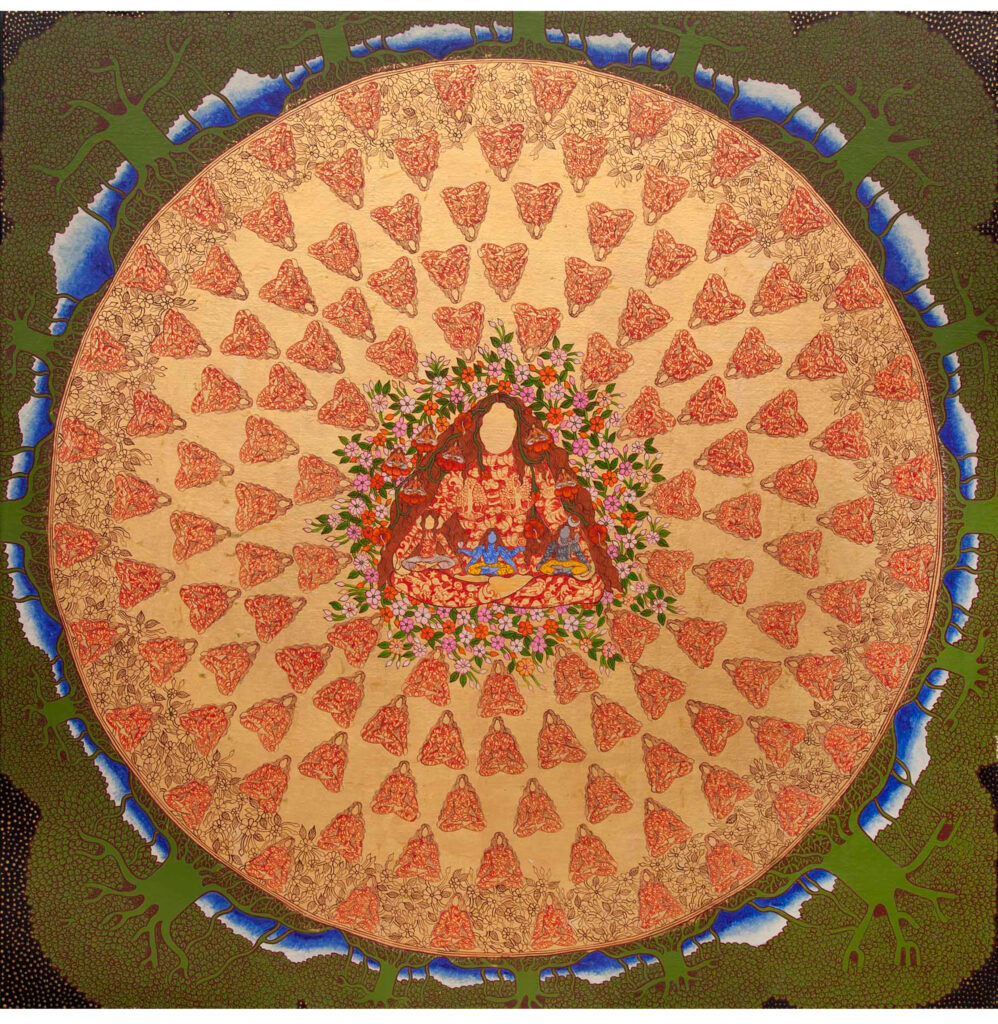
Canvas, Acrylic on Canvas

Canvas, Acrylic on Canvas

Canvas, Acrylic on Canvas

Canvas, Acrylic on Canvas

Canvas, Acrylic on Canvas

Canvas, Acrylic on Canvas

Canvas, Acrylic on Canvas

Canvas, Acrylic on Canvas

Canvas, Acrylic on Canvas

Canvas, Acrylic on Canvas
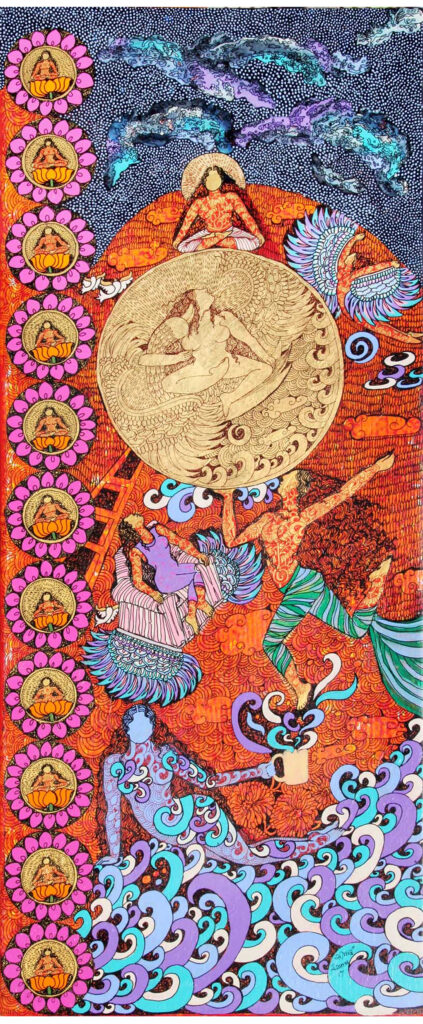

Canvas, Acrylic on Canvas

Canvas, Acrylic on Canvas

Canvas, Acrylic on Canvas

Canvas, Acrylic on Canvas





Canvas, Acrylic on Canvas


Canvas, Acrylic on Canvas

Canvas, Acrylic on Canvas

Canvas, Acrylic on Canvas

Canvas, Acrylic on Canvas

Canvas, Acrylic on Canvas
Canvas, Acrylic on Canvas

Canvas, Acrylic on Canvas

Canvas, Acrylic on Canvas
Canvas, Acrylic on Canvas

Canvas, Acrylic on Canvas

Canvas, Acrylic on Canvas
Canvas, Acrylic on Canvas

Paperworks, Paintings

Paperworks, Paintings

Paperworks, Paintings

Paperworks, Paintings

Paperworks, Paintings

Paperworks, Paintings

Canvas, Oil On Canvas

Canvas, Oil On Canvas

Canvas, Oil On Canvas

Canvas, Acrylic on Canvas
Canvas, Acrylic on Canvas

Canvas, Acrylic on Canvas

Canvas, Acrylic on Canvas

Canvas, Acrylic on Canvas

Canvas, Acrylic on Canvas

Canvas, Acrylic on Canvas






Canvas, Acrylic on Canvas

Canvas, Acrylic on Canvas

Canvas, Acrylic on Canvas

Canvas, Acrylic on Canvas

Canvas, Acrylic on Canvas

Woodworks, Acrylic On Wood

Woodworks, Acrylic On Wood



Canvas, Acrylic on Canvas


Sculptures, Bronze


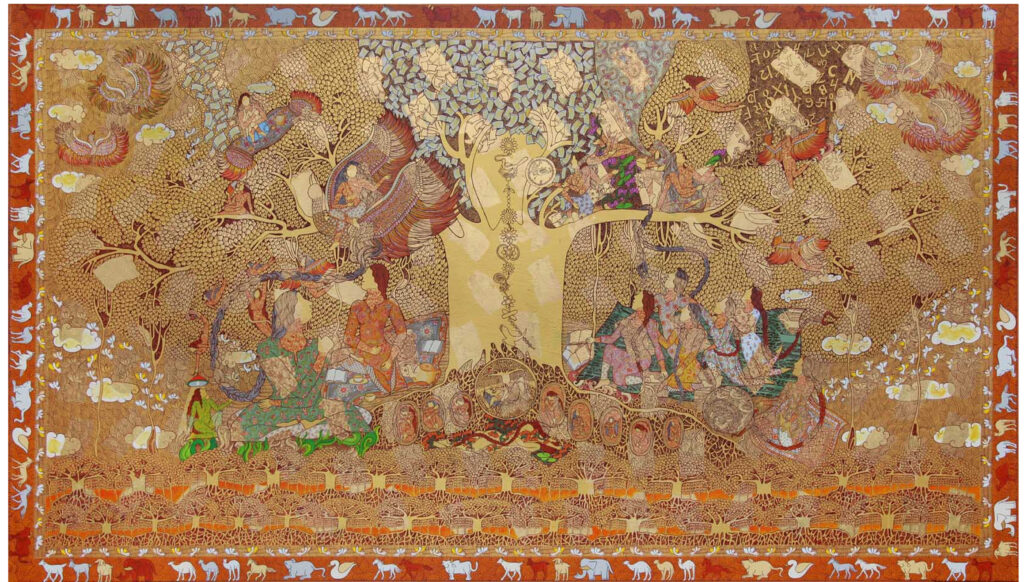
Canvas, Acrylic on Canvas
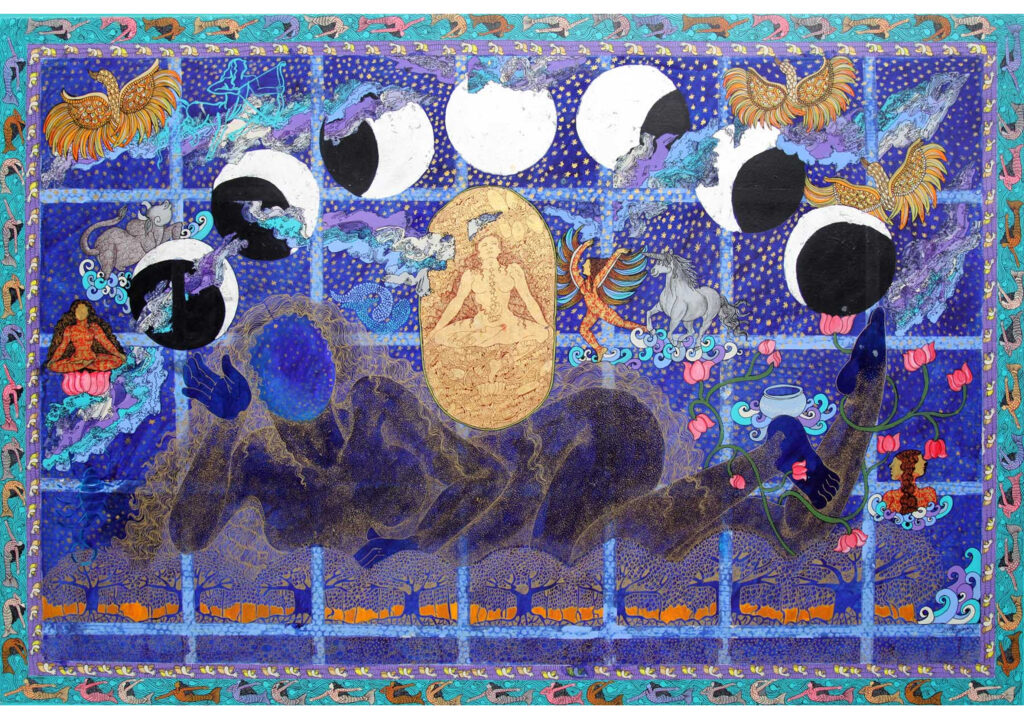
Canvas, Acrylic on Canvas
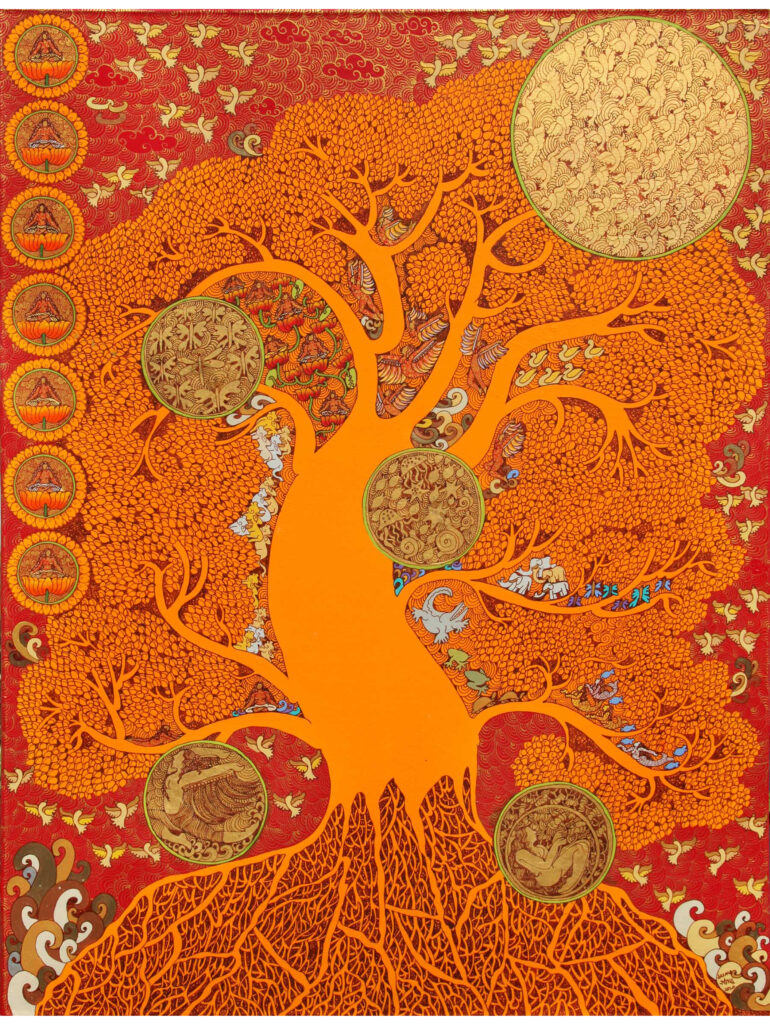
Canvas, Acrylic on Canvas

Canvas, Acrylic on Canvas
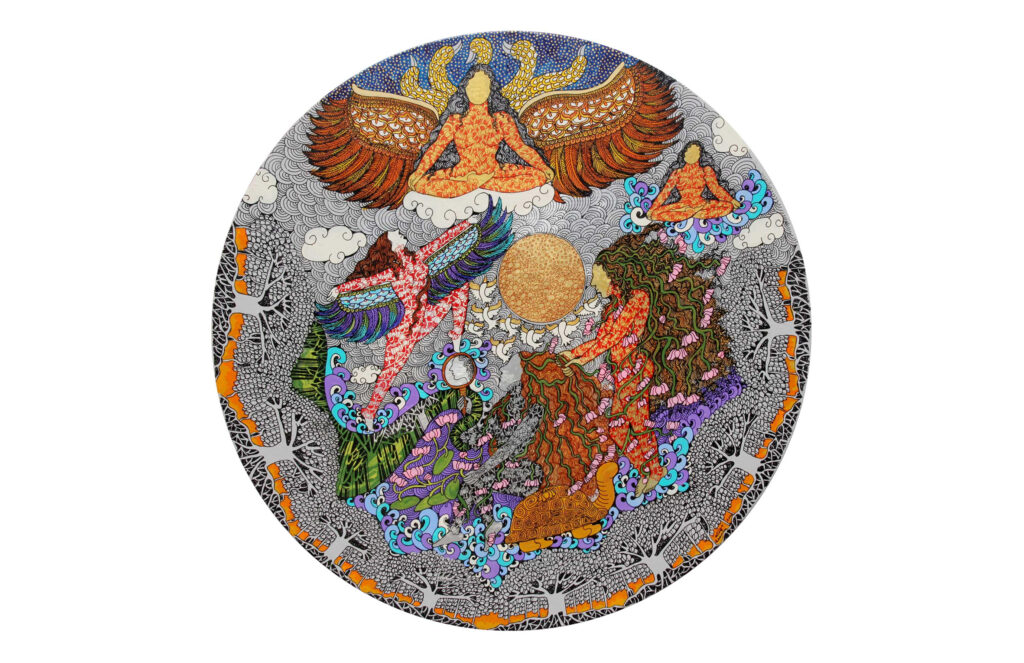
Canvas, Acrylic on Canvas


Canvas, Acrylic on Canvas

Canvas, Acrylic on Canvas

Canvas, Acrylic on Canvas


Canvas, Acrylic on Canvas
Canvas, Acrylic on Canvas

Canvas, Acrylic on Canvas

Canvas, Acrylic on Canvas

Canvas, Acrylic on Canvas

Canvas, Acrylic on Canvas

Canvas, Acrylic on Canvas

Canvas, Acrylic on Canvas
Canvas, Acrylic on Canvas

Canvas, Acrylic on Canvas

Paperworks, Etching


Canvas, Archival Print
Canvas, Acrylic on Canvas

Canvas, Acrylic on Canvas

Canvas, Acrylic on Canvas

Canvas, Acrylic on Canvas

Canvas, Acrylic on Canvas

Canvas, Acrylic on Canvas

Canvas, Acrylic on Canvas

Canvas, Acrylic on Canvas

Canvas, Acrylic on Canvas

Canvas, Acrylic on Canvas

Canvas, Acrylic on Canvas

Canvas, Acrylic on Canvas
Canvas, Acrylic on Canvas


Sculptures, Paintings

Threadworks, Cloth

Paperworks, Paintings

Paperworks, Paintings










Canvas, Acrylic on Canvas
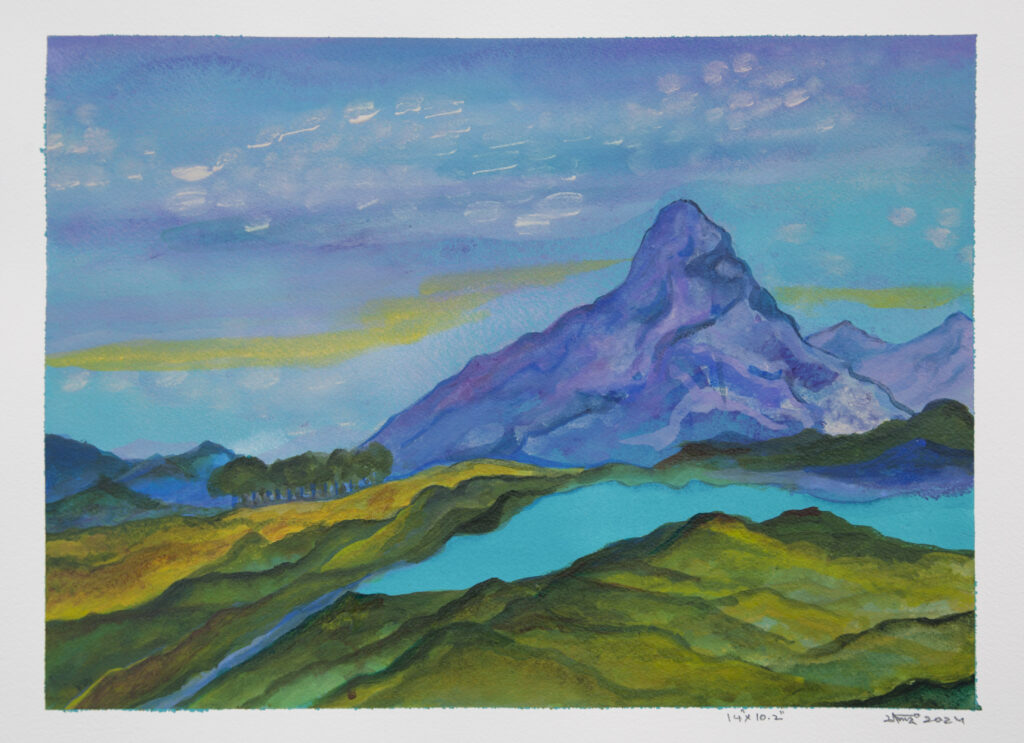
Canvas, Acrylic on Canvas


Canvas, Acrylic on Canvas

Paperworks, Lithographs
Paperworks, Lithographs


Paperworks, Lithographs


Canvas, Acrylic on Canvas

Canvas, Acrylic on Canvas

Canvas, Acrylic on Canvas

Canvas, Acrylic on Canvas

Canvas, Acrylic on Canvas


Threadworks, Embroidery

Threadworks, Embroidery

Threadworks, Embroidery

Threadworks, Embroidery

Threadworks, Embroidery

Threadworks, Embroidery

Threadworks, Embroidery

Threadworks, Embroidery

Threadworks, Embroidery

Threadworks, Embroidery

Threadworks, Embroidery

Threadworks, Embroidery

Threadworks, Embroidery

Threadworks, Embroidery

Threadworks, Embroidery

Threadworks, Embroidery

Threadworks, Embroidery

Threadworks, Embroidery
Threadworks, Embroidery

Threadworks, Embroidery

Threadworks, Embroidery

Threadworks, Embroidery

Threadworks, Embroidery

Threadworks, Embroidery

Threadworks, Embroidery

Threadworks, Embroidery

Threadworks, Embroidery
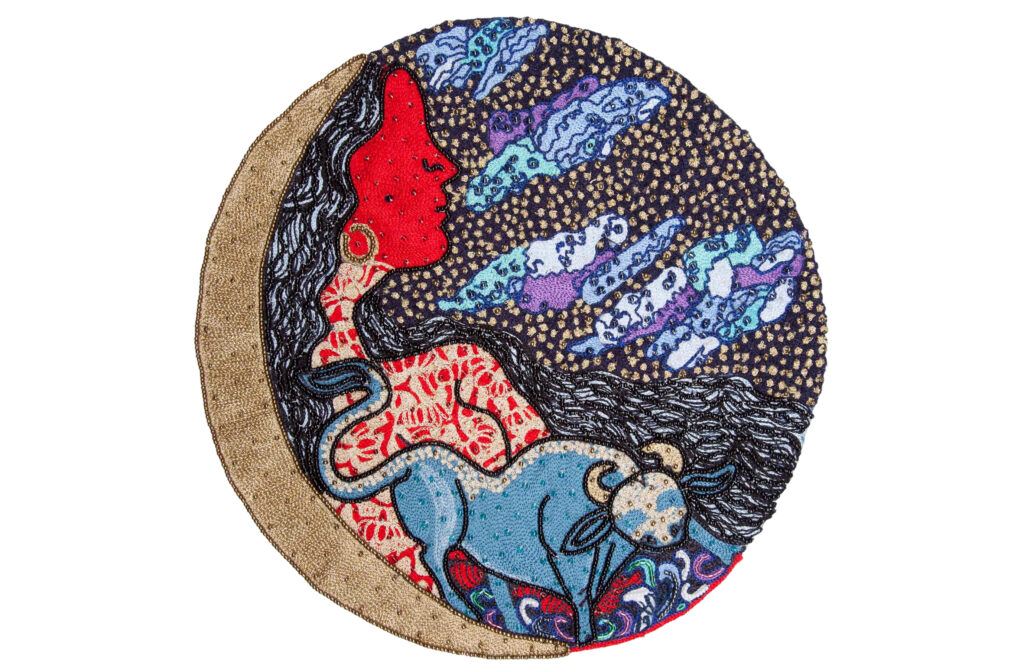
Threadworks, Embroidery

Threadworks, Embroidery

Paperworks, Zinc Plate Intaglio Print

Paperworks, Zinc Plate Intaglio Print

Paperworks, Zinc Plate Intaglio Print

Paperworks, Zinc Plate Intaglio Print

Paperworks, Zinc Plate Intaglio Print

Paperworks, Zinc Plate Intaglio Print

Paperworks, Zinc Plate Intaglio Print
Paperworks, Zinc Plate Intaglio Print

Paperworks, Zinc Plate Intaglio Print

Paperworks, Zinc Plate Intaglio Print


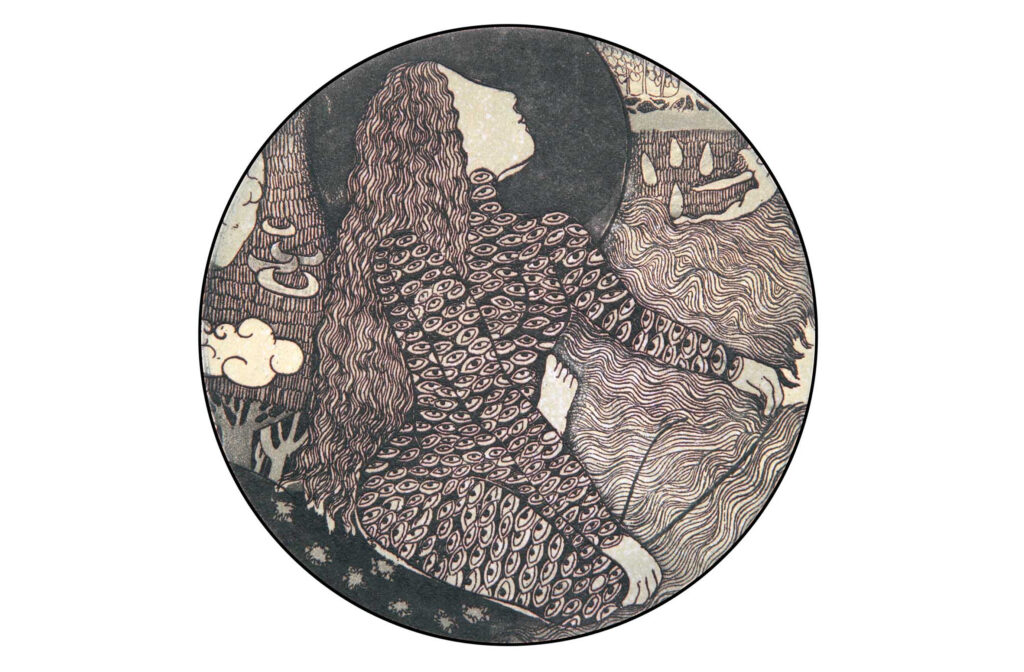

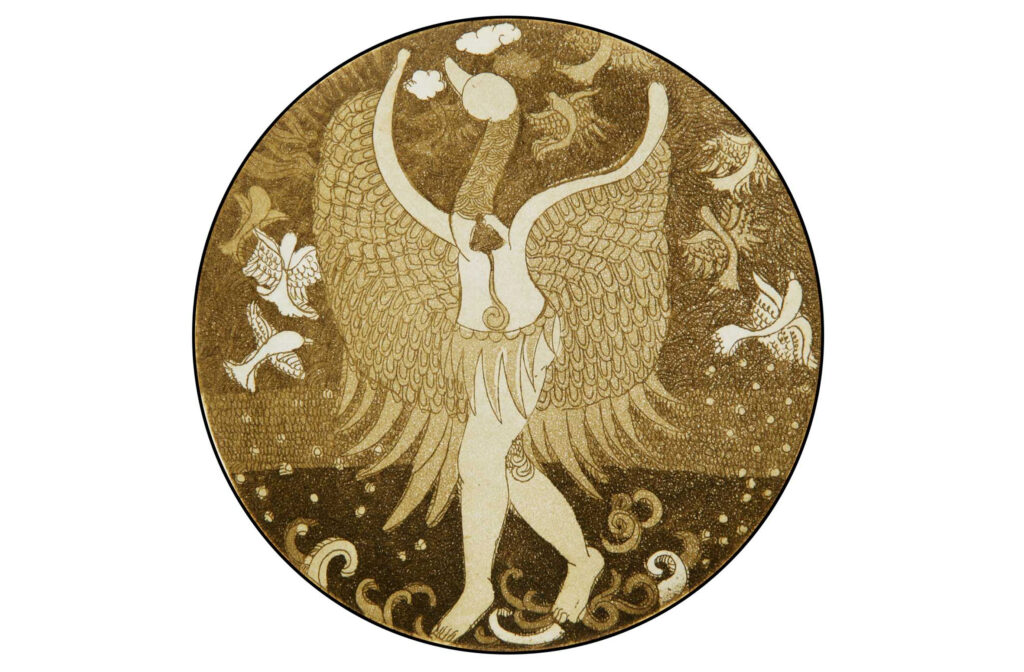


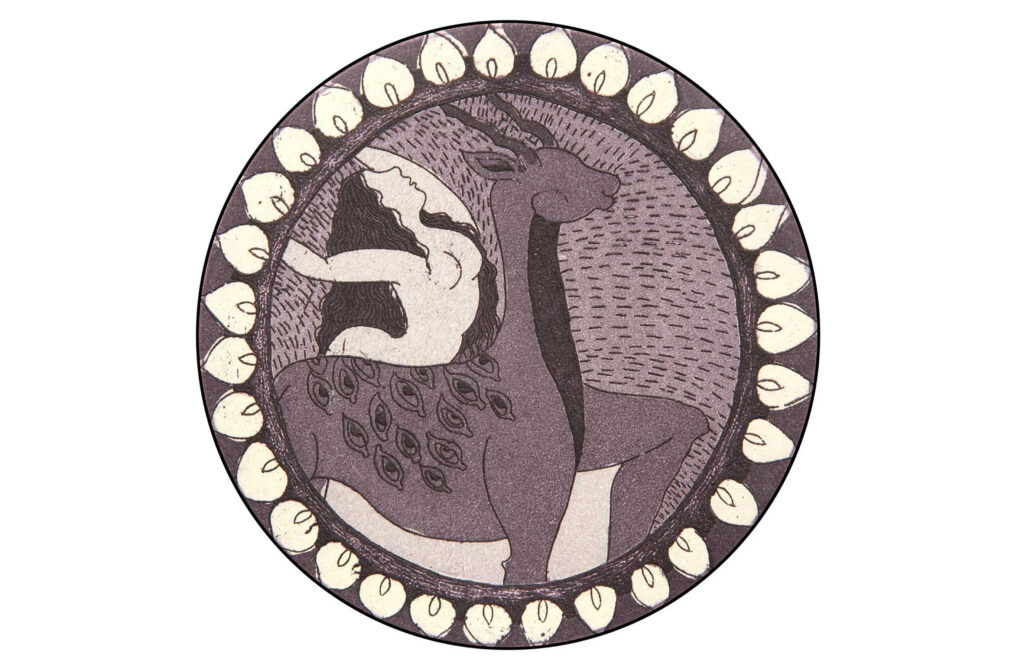


Paperworks, Etching


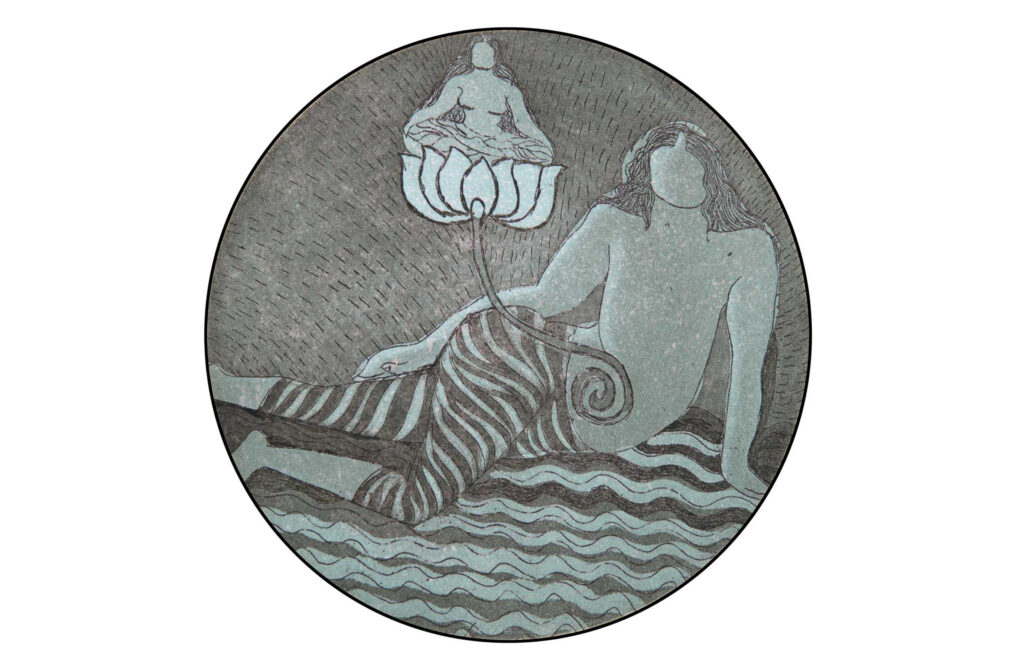


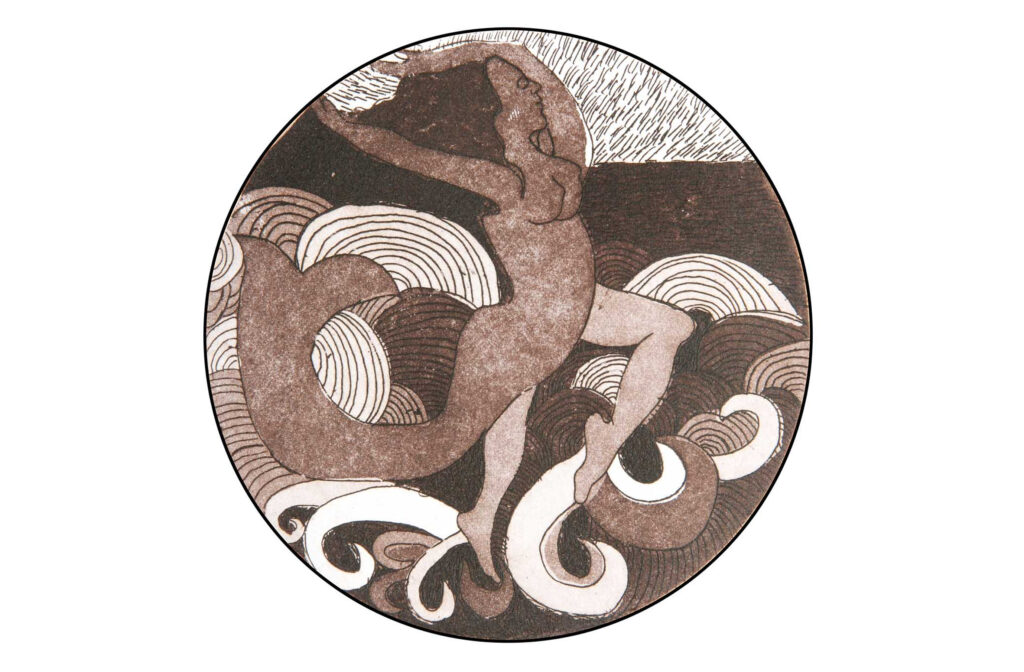




Canvas, Acrylic on Canvas
Canvas, Acrylic on Canvas


Canvas, Acrylic on Canvas


Canvas, Acrylic on Canvas

Canvas, Acrylic on Canvas

Threadworks, Embroidery

Threadworks, Embroidery

Threadworks, Embroidery

Threadworks, Embroidery

Threadworks, Embroidery

Threadworks, Embroidery

Threadworks, Embroidery


Threadworks, Embroidery

Threadworks, Embroidery

Sculptures, Wooden

Sculptures, Sandstone

Sculptures, Sandstone

Sculptures, Sandstone

Sculptures, Sandstone

Sculptures, Sandstone

Sculptures, Sandstone

Sculptures, Sandstone

Sculptures, Sandstone

Sculptures, Sandstone

Sculptures, Sandstone

Sculptures, Sandstone

Sculptures, Sandstone

Sculptures, Sandstone

Sculptures, Sandstone

Sculptures, Sandstone

Sculptures, Sandstone

Sculptures, Sandstone

Sculptures, Sandstone

Sculptures, Sandstone

Sculptures, Sandstone

Sculptures, Sandstone

Sculptures, Sandstone

Sculptures, Sandstone
Sculptures, Sandstone

Sculptures, Sandstone

Sculptures, Sandstone

Sculptures, Sandstone

Sculptures, Sandstone

Sculptures, Sandstone

Sculptures, Sandstone

Sculptures, Sandstone
Sculptures, Sandstone

Sculptures, Sandstone

Sculptures, Sandstone

Sculptures, Sandstone

Sculptures, Sandstone

Sculptures, Sandstone

Sculptures, Sandstone

Sculptures, Sandstone

Sculptures, Bronze
Sculptures, Bronze

Sculptures, Bronze









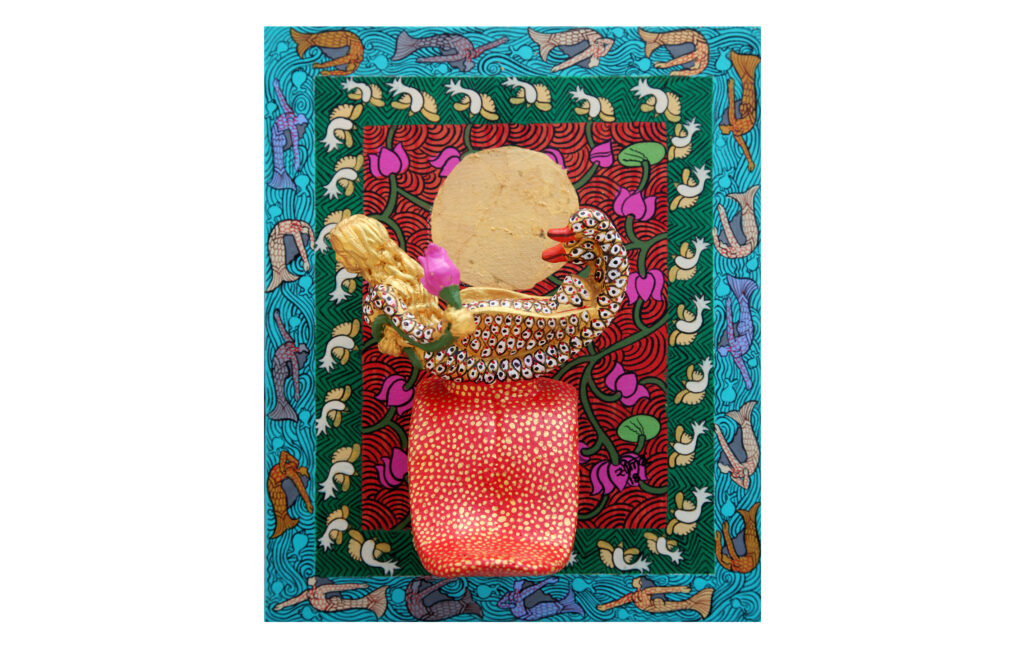


Canvas, Acrylic on Canvas

Canvas, Acrylic on Canvas

Canvas, Acrylic on Canvas

Canvas, Acrylic on Canvas

Canvas, Acrylic on Canvas

Canvas, Acrylic on Canvas

Canvas, Acrylic on Canvas

Canvas, Acrylic on Canvas

Canvas, Acrylic on Canvas

Canvas, Acrylic on Canvas

Canvas, Acrylic on Canvas

Canvas, Acrylic on Canvas

Canvas, Acrylic on Canvas

Canvas, Acrylic on Canvas

Canvas, Acrylic on Canvas

Canvas, Acrylic on Canvas

Canvas, Acrylic on Canvas

Canvas, Acrylic on Canvas

Canvas, Acrylic on Canvas

Canvas, Acrylic on Canvas

Canvas, Acrylic on Canvas


Canvas, Acrylic on Canvas

Canvas, Acrylic on Canvas


Canvas, Acrylic on Canvas


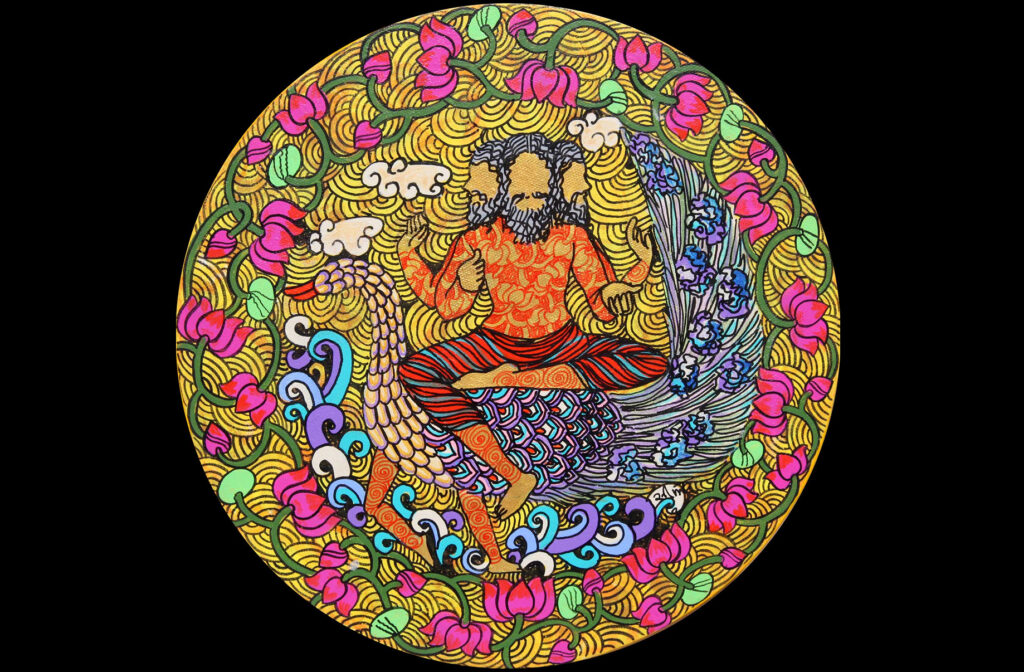


Paperworks, Archival Photographic Works / Drawings


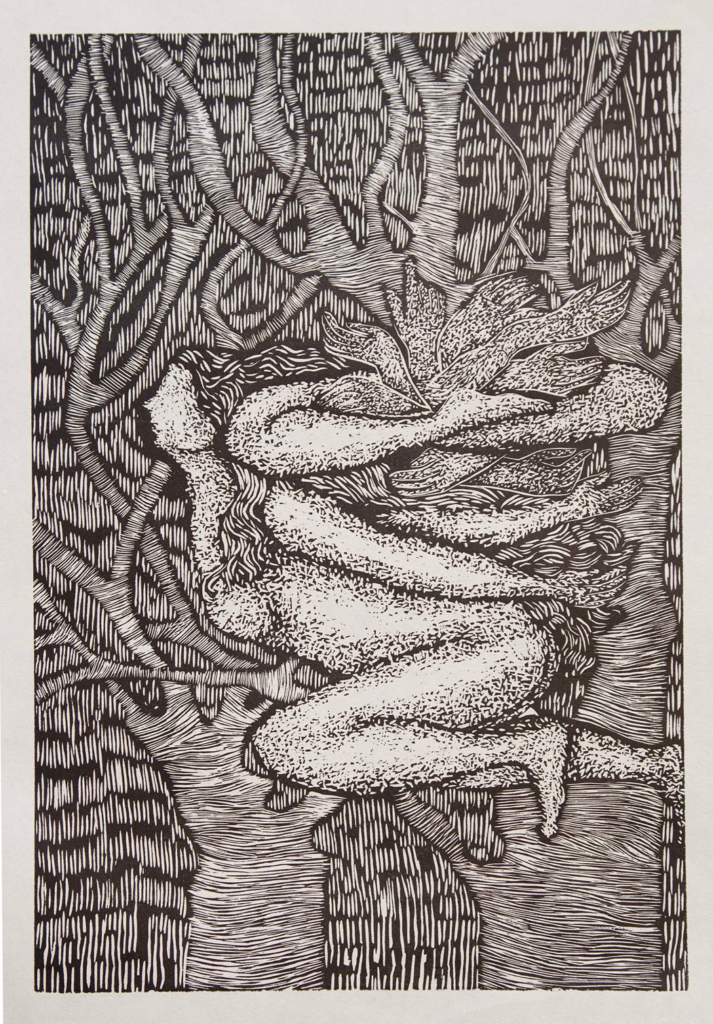
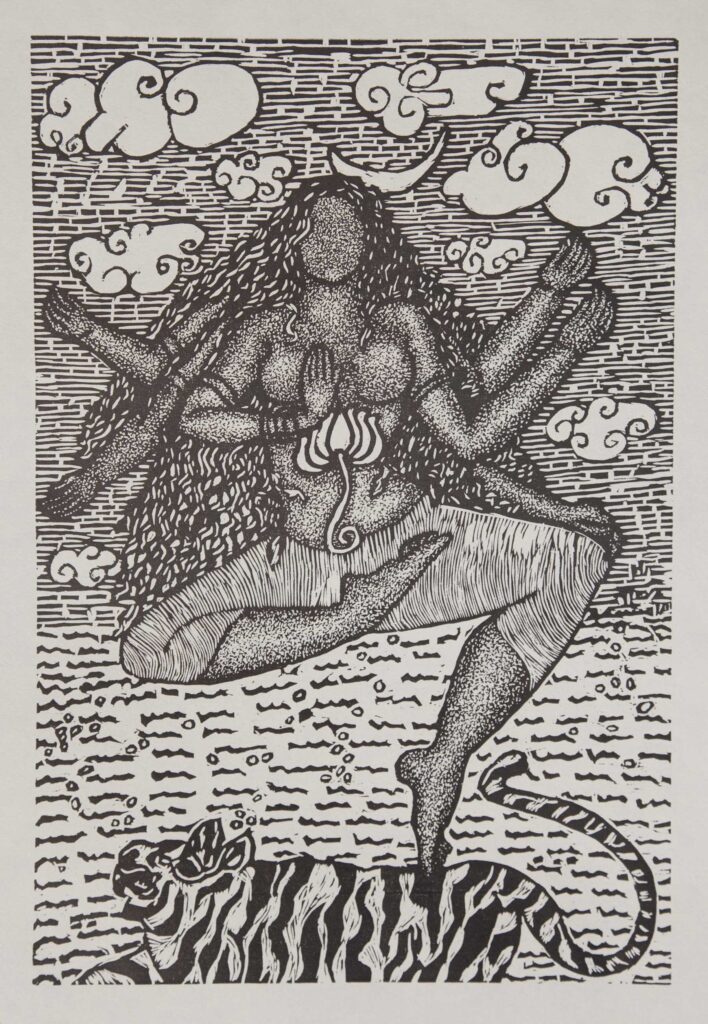
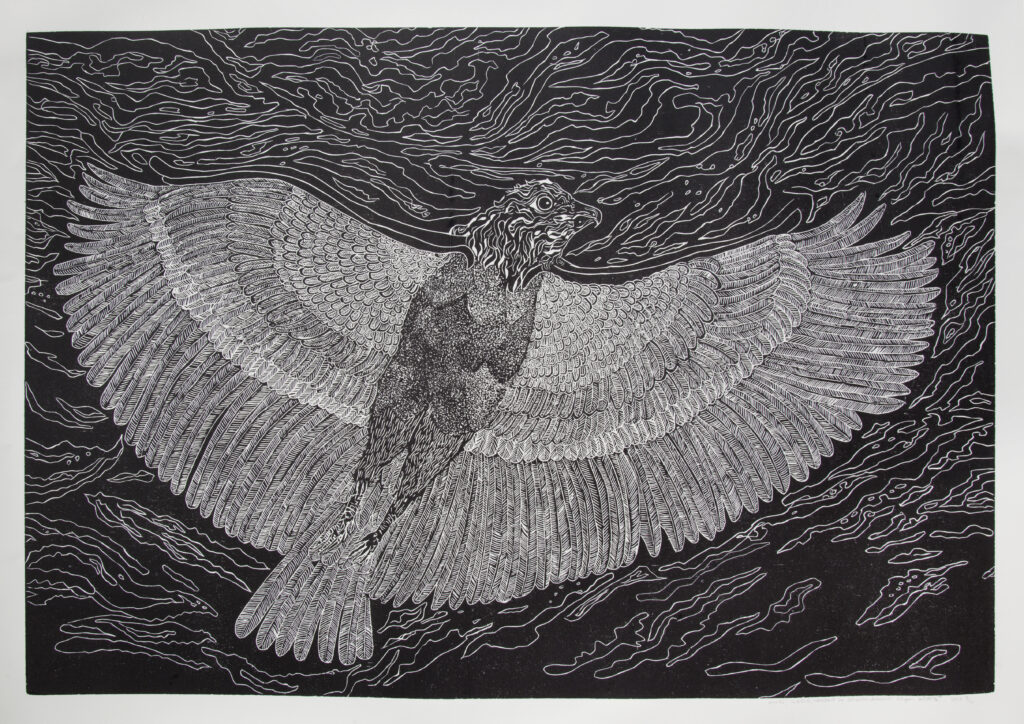
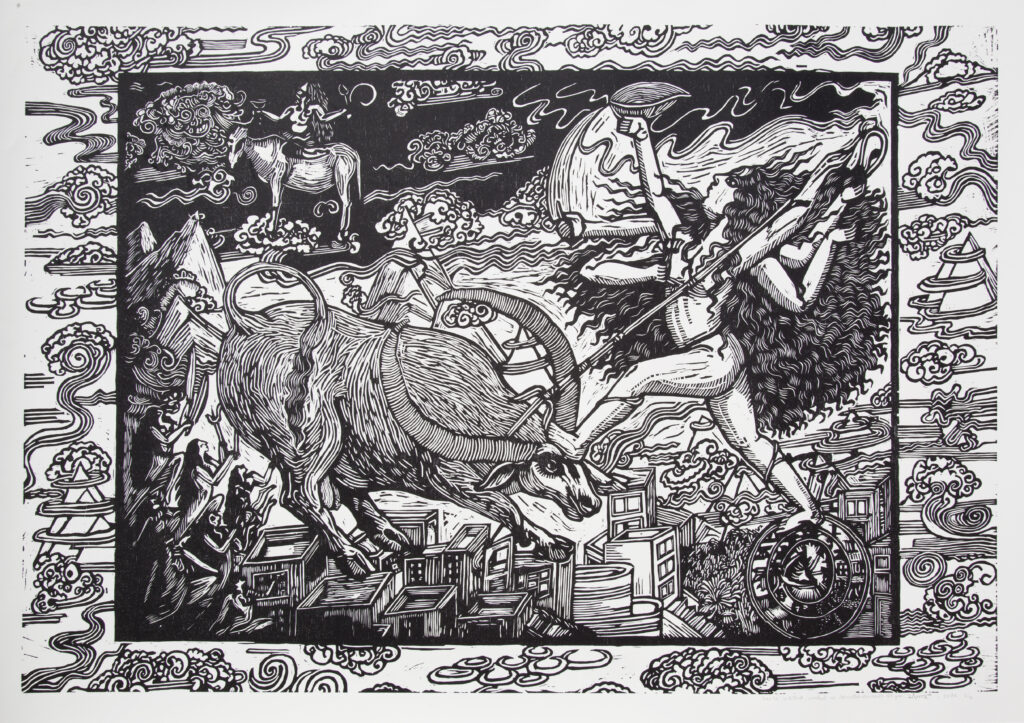
Paperworks, Woodcut

Paperworks, Woodcut

Paperworks, Woodcut

Paperworks, Woodcut

Paperworks, Woodcut

Paperworks, Woodcut

Paperworks, Woodcut

Paperworks, Woodcut

Paperworks, Woodcut

Paperworks, Woodcut

Paperworks, Woodcut

Paperworks, Woodcut
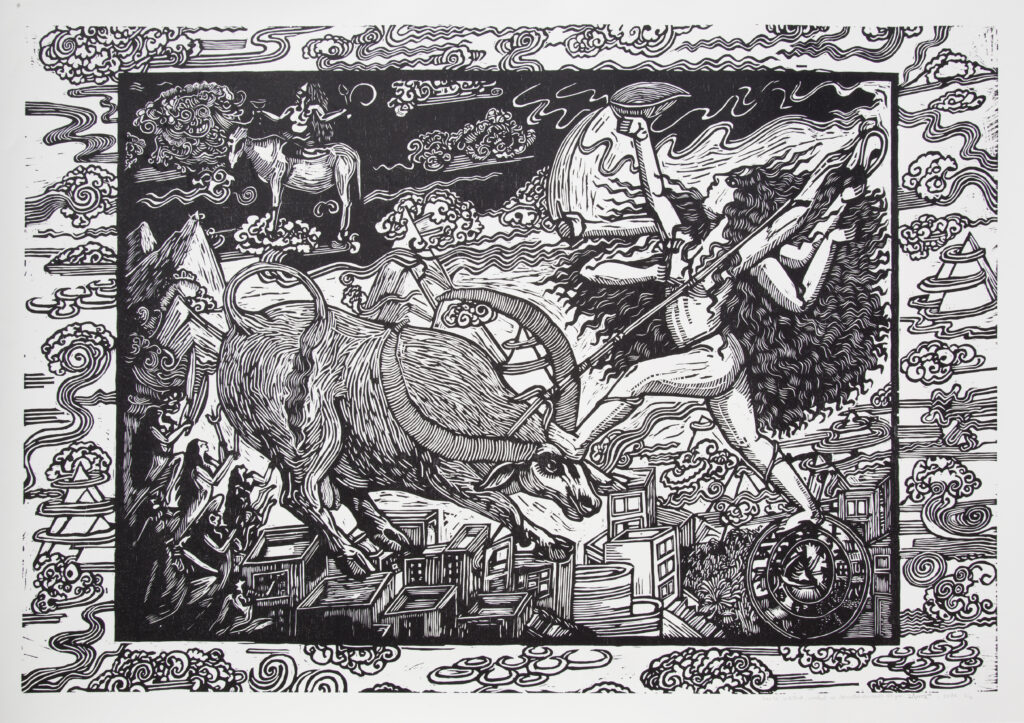
Paperworks, Woodcut

Paperworks, Woodcut

Threadworks, Embroidery
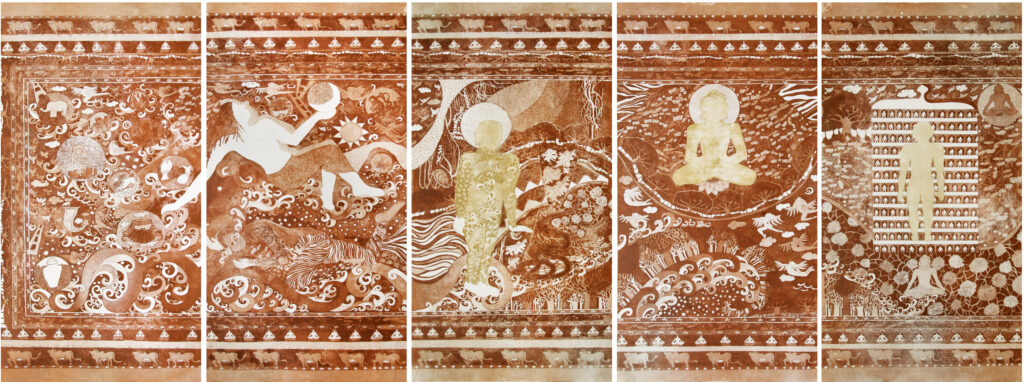
Paperworks, Etching


Canvas, Acrylic on Canvas

Canvas, Acrylic on Canvas
Canvas, Acrylic on Canvas

Canvas, Acrylic on Canvas

Canvas, Acrylic on Canvas

Threadworks, Embroidery

Threadworks, Embroidery

Threadworks, Embroidery

Threadworks, Embroidery


Sculptures, Bronze

Sculptures, Bronze

Sculptures, Bronze

Sculptures, Bronze

Sculptures, Bronze

Sculptures, Bronze

Sculptures, Bronze

Sculptures, Bronze

Sculptures, Bronze

Paperworks, Archival Photographic Works / Drawings

Paperworks, Archival Photographic Works / Drawings
Paperworks, Archival Photographic Works / Drawings


Paperworks, Archival Photographic Works / Drawings
Paperworks, Archival Photographic Works / Drawings


Paperworks, Archival Photographic Works / Drawings

Paperworks, Archival Photographic Works / Drawings

Paperworks, Archival Photographic Works / Drawings


Khula Aasman
Khula Aasman
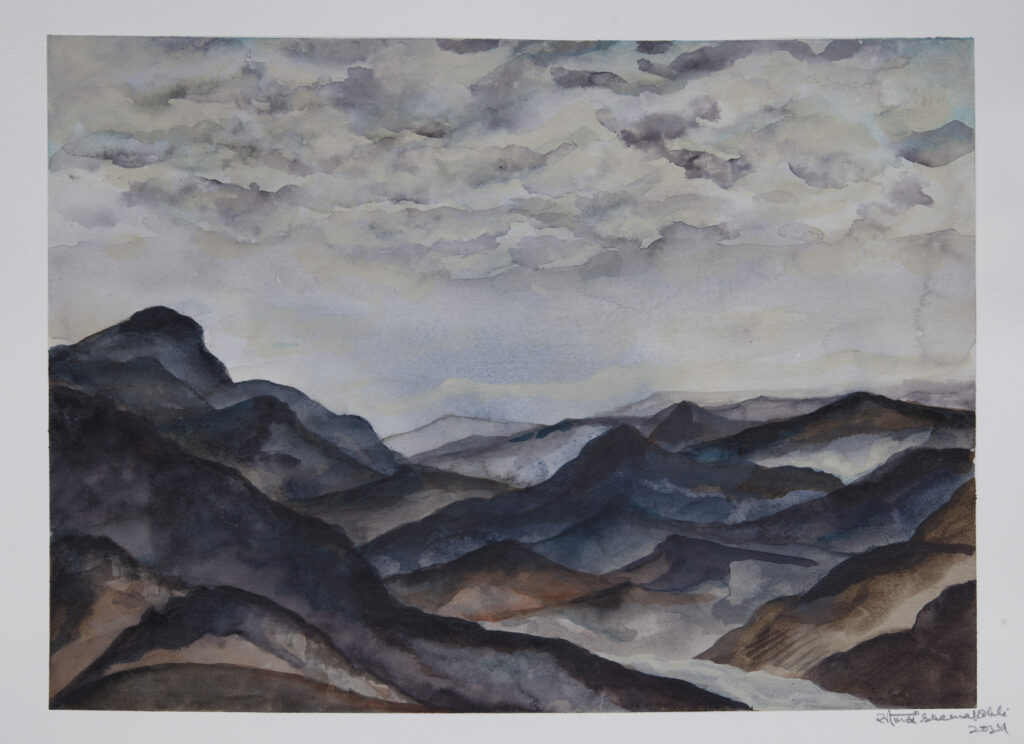
Khula Aasman
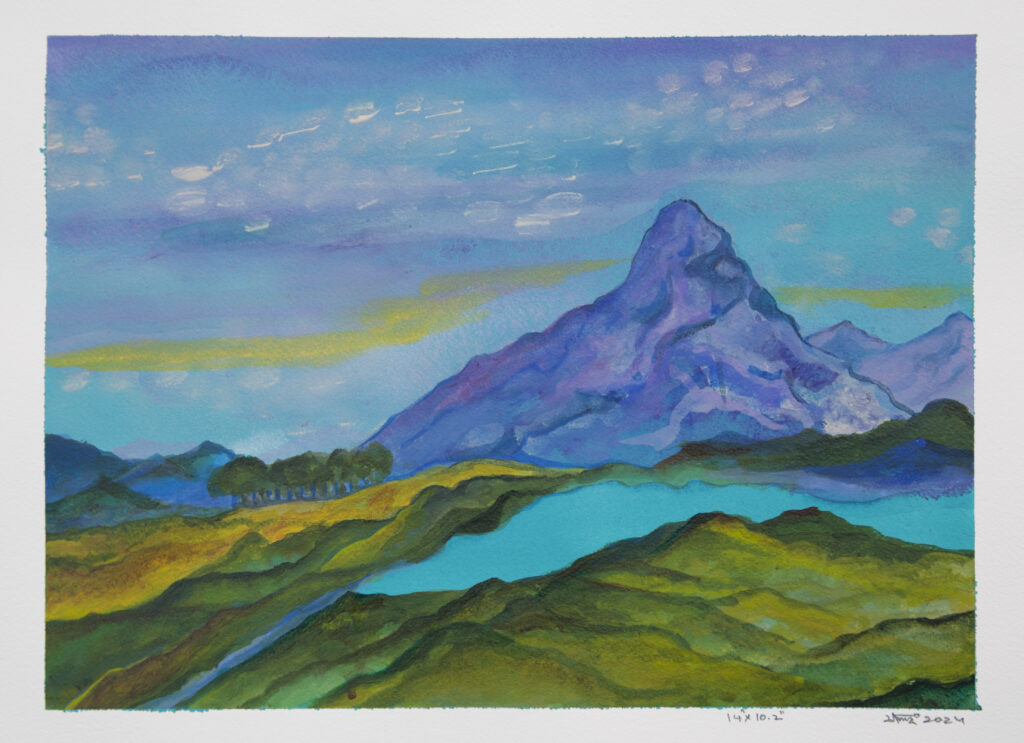
Khula Aasman
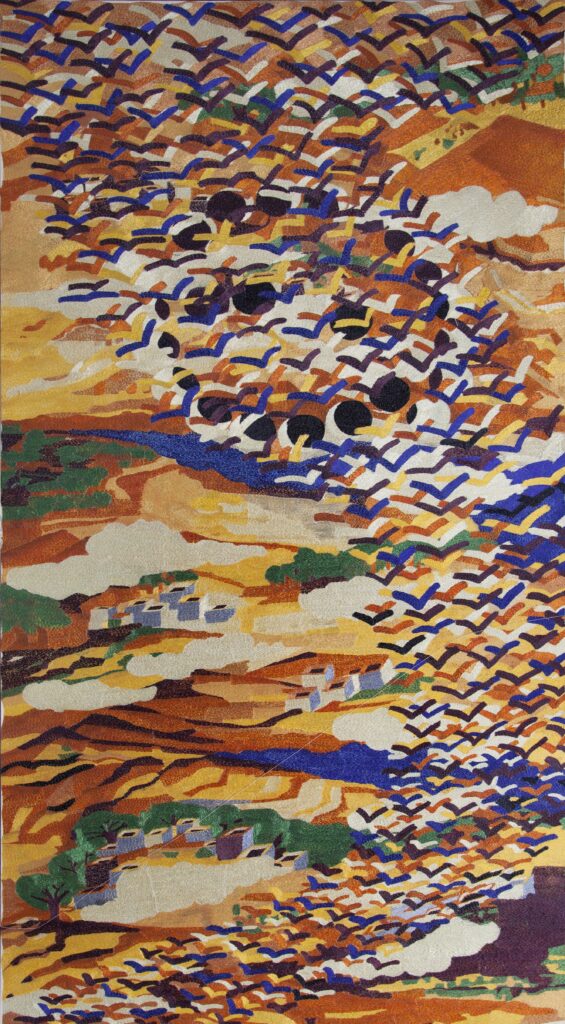
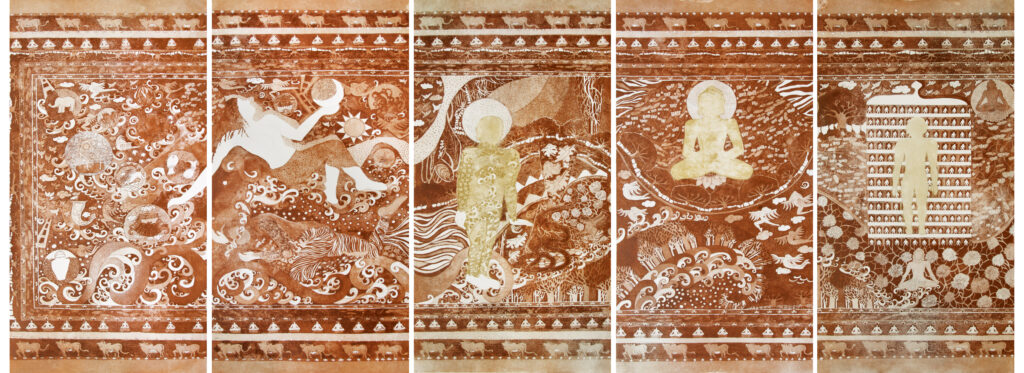
The Golden Womb Series
Khula Aasman
Khula Aasman
Khula Aasman
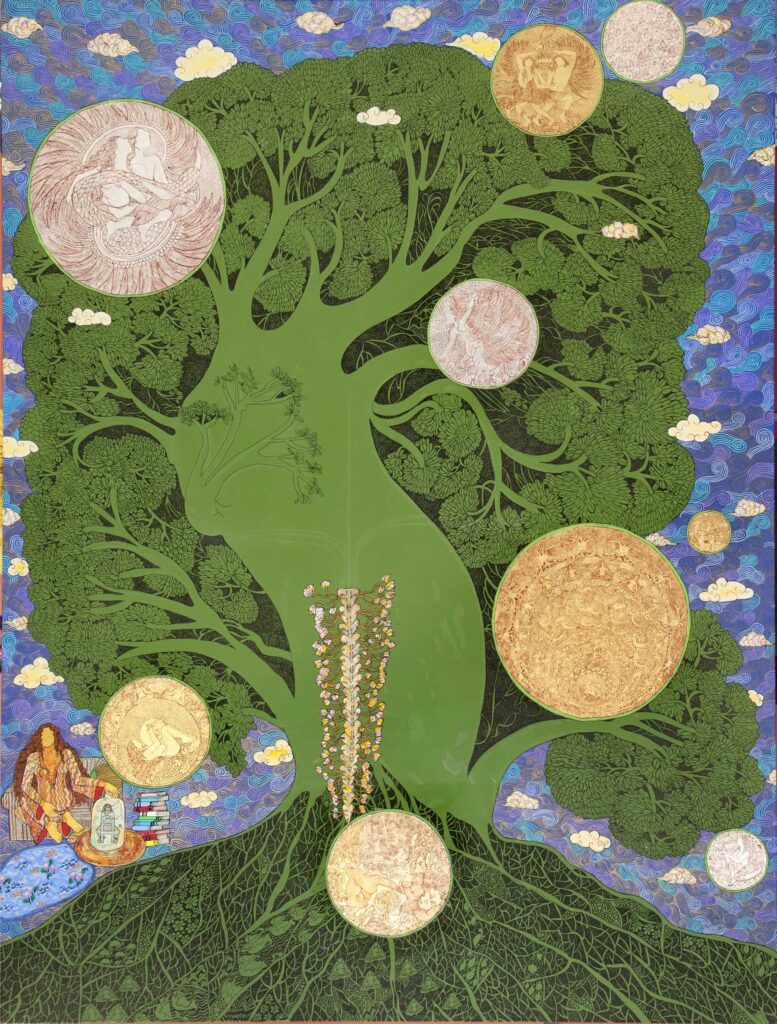
Tree of life
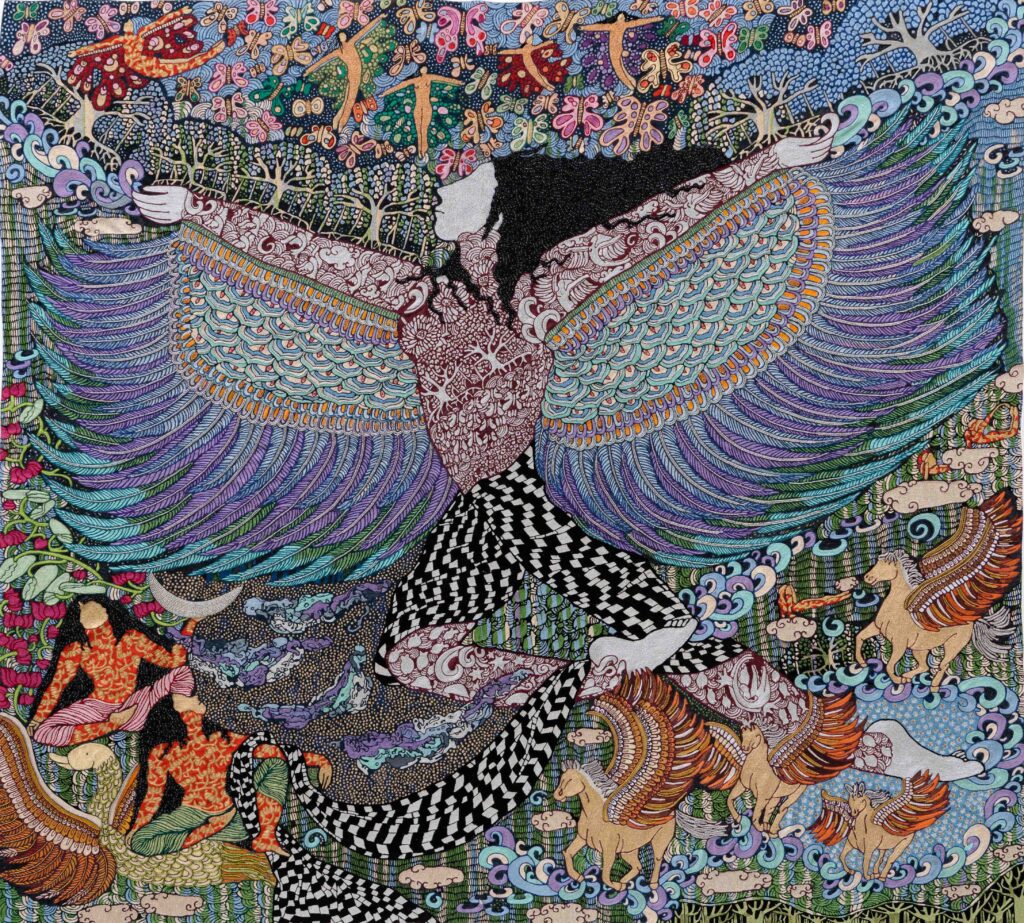
Khula Aasman
This website uses cookies to make it work, to understand how visitors use it, and to improve your experience. Strictly necessary cookies are always on. You can accept all cookies, reject non-essential ones, or choose which to allow. Learn more in our Cookie Policy and Privacy Policy.
We use different types of cookies for different purposes. Strictly necessary cookies are required for the website to function and cannot be turned off. For all other cookies, you can choose whether to allow them below. You can change these settings at any time.
Strictly necessary cookies: Required for core functions like page navigation, security, and completing a purchase. The website cannot work properly without them.